Loading page, please wait…
What are the Key Findings of the Study on Nicobarese Tribe? - UPSC Social Issues
What is What are the Key Findings of the Study on Nicobarese Tribe? in UPSC Social Issues?
What are the Key Findings of the Study on Nicobarese Tribe? is a key topic under Social Issues for UPSC Civil Services Examination. Key points include: New DNA analysis revises Nicobarese migration to ~5,000 years ago, not 11,000+.. Nicobarese share genetic ties with Laos-Thailand's Htin Mai community, confirming Southeast Asian origin.. Geographical isolation preserved Nicobarese genetic identity, aiding precise ancestral tracing.. Understanding this topic is essential for both UPSC Prelims and Mains preparation.
Why is What are the Key Findings of the Study on Nicobarese Tribe? important for UPSC exam?
What are the Key Findings of the Study on Nicobarese Tribe? is a Medium-level topic in UPSC Social Issues. It is tested in both Prelims (factual MCQs) and Mains (analytical answer writing). Previous year UPSC questions have frequently covered aspects of What are the Key Findings of the Study on Nicobarese Tribe?, making it essential for comprehensive IAS preparation.
How to prepare What are the Key Findings of the Study on Nicobarese Tribe? for UPSC?
To prepare What are the Key Findings of the Study on Nicobarese Tribe? for UPSC: (1) Study the comprehensive notes covering all key concepts on Vaidra. (2) Practice previous year questions on this topic. (3) Connect it with current affairs using daily updates. (4) Revise using key takeaways and mind maps available for Social Issues. (5) Write practice answers linking What are the Key Findings of the Study on Nicobarese Tribe? to related GS Paper topics.
Key takeaways of What are the Key Findings of the Study on Nicobarese Tribe? for UPSC
- New DNA analysis revises Nicobarese migration to ~5,000 years ago, not 11,000+.
- Nicobarese share genetic ties with Laos-Thailand's Htin Mai community, confirming Southeast Asian origin.
- Geographical isolation preserved Nicobarese genetic identity, aiding precise ancestral tracing.
- Linguistic continuity (Austroasiatic, Khmuic branch) reinforces Southeast Asian connection.
- Genetic and linguistic evidence combined offers a robust understanding of tribal origins and cultural heritage.
What are the Key Findings of the Study on Nicobarese Tribe?
Medium⏱️ 8 min read
social issues
📖 Introduction
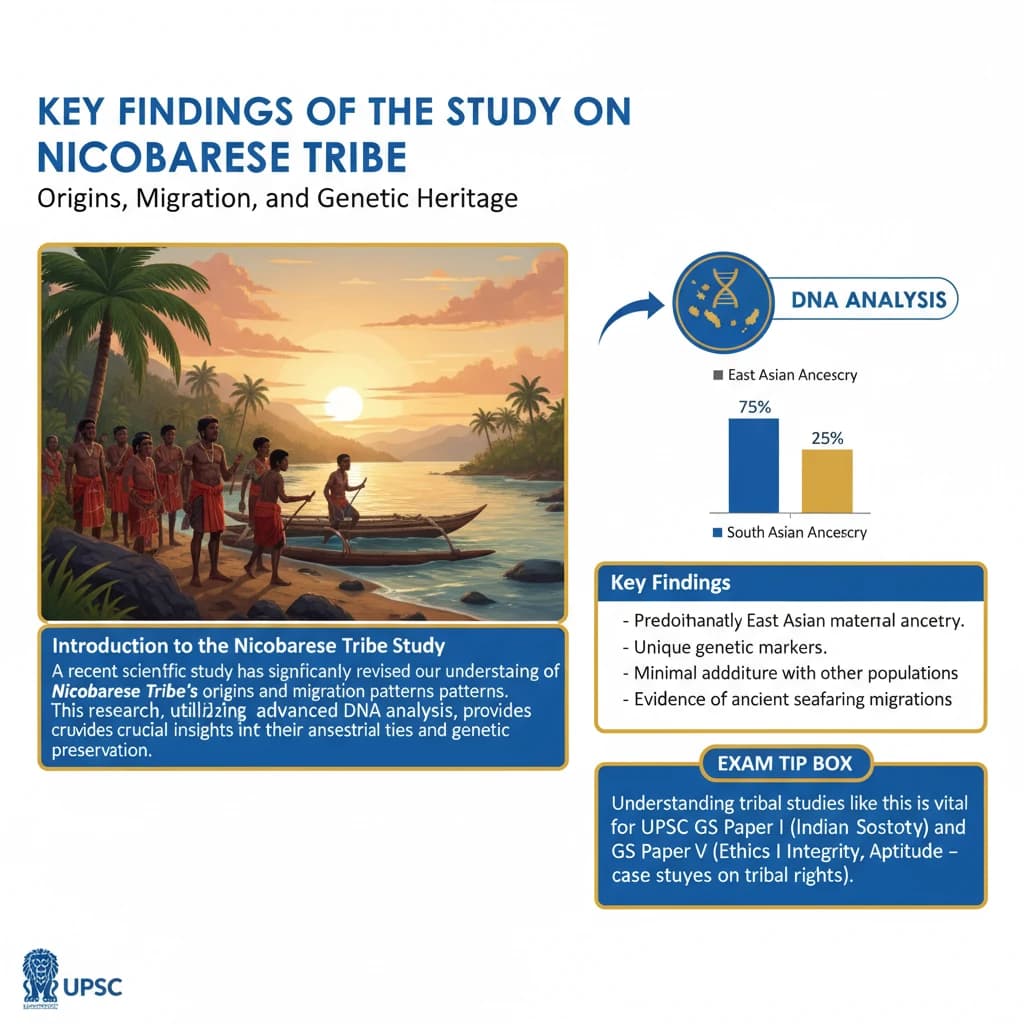
Introduction to the Nicobarese Tribe Study
A recent scientific study has significantly revised our understanding of the Nicobarese Tribe's origins and migration patterns. This research, utilizing advanced DNA analysis, provides crucial insights into their ancestral ties and genetic preservation.
Understanding tribal studies like this is vital for UPSC GS Paper I (Indian Society, History) and GS Paper II (Social Justice, Vulnerable Sections). Focus on methodological advancements and implications for indigenous populations.
Revised Migration Timeline
Previous anthropological studies had estimated that the Austroasiatic ancestors of the Nicobarese arrived in the Nicobar Islands over 11,000 years ago.
The new study, leveraging sophisticated deoxyribonucleic acid (DNA) analysis, has recalibrated this timeline. It suggests a much more recent migration.
New Estimate: The ancestors of the Nicobarese are now estimated to have arrived approximately 5,000 years ago.
Genetic Link to Southeast Asia
The research established a clear genetic link between the Nicobarese and the Htin Mai community, an ethnic group indigenous to the Laos-Thailand region.
This finding strongly supports the hypothesis that the ancestors of the Nicobarese migrated from Southeast Asia. It refutes earlier theories suggesting a migration from South Asia.
The genetic evidence points definitively towards a Southeast Asian origin for the Nicobarese, highlighting the importance of genetic studies in tracing human migration paths.
Preservation of Genetic Identity
A significant finding is the remarkable preservation of the Nicobarese's genetic identity. This is primarily attributed to their prolonged geographical isolation.
Minimal external genetic influence has allowed researchers to trace their ancestry with greater precision and confidence.
Impact of Isolation: The isolation of the Nicobar Islands acted as a natural barrier, limiting intermingling and thus preserving a unique genetic signature.
Linguistic Continuity
Despite the long period since migration, the Nicobarese have maintained their Austroasiatic language roots. Specifically, their language belongs to the Khmuic branch.
This linguistic continuity further reinforces their connection to other populations in Southeast Asia, complementing the genetic evidence.
The consistency between genetic ties and linguistic heritage provides a robust understanding of the Nicobarese's origins and cultural trajectory.
💡 Key Takeaways
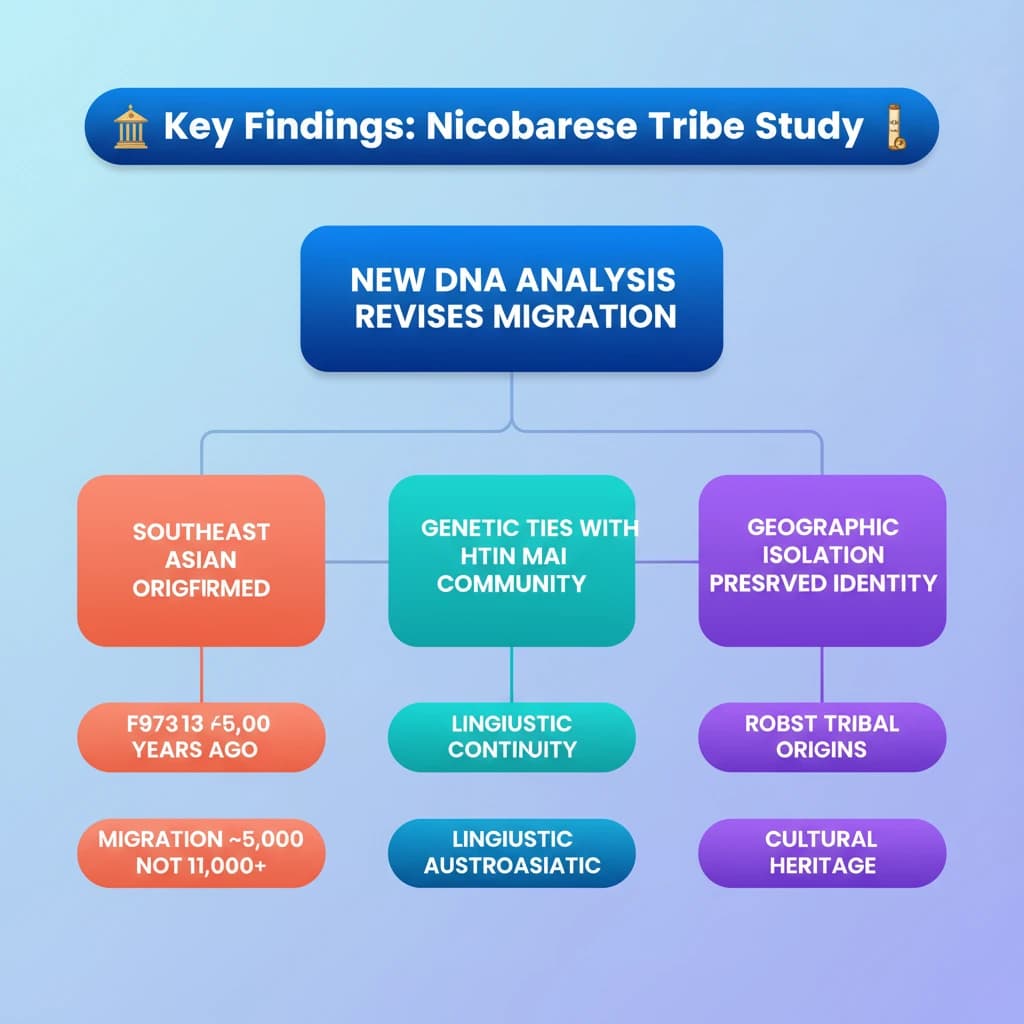
- •New DNA analysis revises Nicobarese migration to ~5,000 years ago, not 11,000+.
- •Nicobarese share genetic ties with Laos-Thailand's Htin Mai community, confirming Southeast Asian origin.
- •Geographical isolation preserved Nicobarese genetic identity, aiding precise ancestral tracing.
- •Linguistic continuity (Austroasiatic, Khmuic branch) reinforces Southeast Asian connection.
- •Genetic and linguistic evidence combined offers a robust understanding of tribal origins and cultural heritage.
🧠 Memory Techniques

95% Verified Content