Loading page, please wait…
What is the Immoral Traffic (Prevention) Act of 1956? - UPSC Social Issues
What is What is the Immoral Traffic (Prevention) Act of 1956? in UPSC Social Issues?
What is the Immoral Traffic (Prevention) Act of 1956? is a key topic under Social Issues for UPSC Civil Services Examination. Key points include: The ITP Act, 1956, aims to prevent commercial sexual exploitation and trafficking.. It does NOT criminalize individual, consensual sex work, but targets organized prostitution.. Running brothels, public soliciting, and profiting from others' prostitution are illegal.. Understanding this topic is essential for both UPSC Prelims and Mains preparation.
Why is What is the Immoral Traffic (Prevention) Act of 1956? important for UPSC exam?
What is the Immoral Traffic (Prevention) Act of 1956? is a Medium-level topic in UPSC Social Issues. It is tested in both Prelims (factual MCQs) and Mains (analytical answer writing). Previous year UPSC questions have frequently covered aspects of What is the Immoral Traffic (Prevention) Act of 1956?, making it essential for comprehensive IAS preparation.
How to prepare What is the Immoral Traffic (Prevention) Act of 1956? for UPSC?
To prepare What is the Immoral Traffic (Prevention) Act of 1956? for UPSC: (1) Study the comprehensive notes covering all key concepts on Vaidra. (2) Practice previous year questions on this topic. (3) Connect it with current affairs using daily updates. (4) Revise using key takeaways and mind maps available for Social Issues. (5) Write practice answers linking What is the Immoral Traffic (Prevention) Act of 1956? to related GS Paper topics.
Key takeaways of What is the Immoral Traffic (Prevention) Act of 1956? for UPSC
- The ITP Act, 1956, aims to prevent commercial sexual exploitation and trafficking.
- It does NOT criminalize individual, consensual sex work, but targets organized prostitution.
- Running brothels, public soliciting, and profiting from others' prostitution are illegal.
- The Act evolved from international conventions and was amended in 1986.
- It's a key tool against human trafficking but also sparks debates on sex work decriminalization.
What is the Immoral Traffic (Prevention) Act of 1956?
Medium⏱️ 8 min read
social issues
📖 Introduction
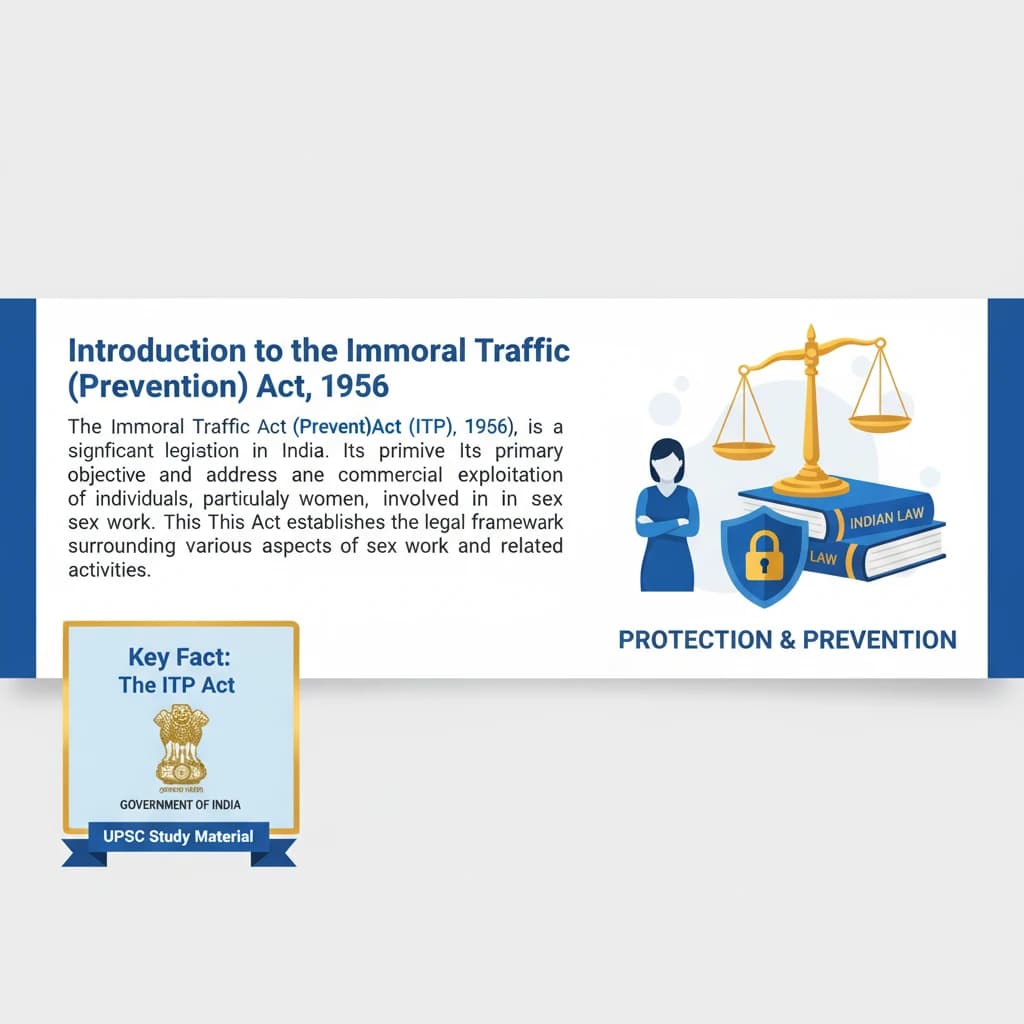
Introduction to the Immoral Traffic (Prevention) Act, 1956
The Immoral Traffic (Prevention) Act (ITP), 1956, is a significant piece of legislation in India. Its primary objective is to address and prevent the commercial exploitation of individuals, particularly women, involved in sex work. This Act establishes the legal framework surrounding various aspects of sex work and related activities.
Key Fact: The ITP Act was enacted in 1956. It replaced the earlier Suppression of Immoral Traffic in Women and Girls Act, 1956, expanding its scope to cover both men and women, though its primary focus remains on women.
Primary Aims of the ITP Act
The core aim of the ITP Act is to prevent the commercialisation of vices. This means it targets organized prostitution, trafficking for sexual exploitation, and activities that facilitate such exploitation. It seeks to protect victims while also regulating the environment around sex work.
Important Concept: The Act aims to prevent the trafficking of females for commercial sexual exploitation. It focuses on the exploitation aspect rather than the individual act of prostitution itself.
Legality of Sex Work vs. Related Activities
A crucial distinction within the ITP Act is between engaging in sex work and activities that promote or organize it. The Act does not declare sex work itself illegal when performed by consenting adults privately. However, it criminalizes various associated activities.
While an individual engaging in prostitution is legally recognized, certain actions are strictly prohibited. These prohibitions are designed to dismantle the infrastructure that facilitates exploitation and coercion in the sex trade.
Prohibited Activities under ITP Act
- Running Brothels: The establishment, maintenance, or management of a brothel is explicitly illegal under the Act. This targets organized prostitution rings.
- Soliciting: Actively approaching or luring people into sexual activities in public places is considered illegal. This includes public solicitation and procurement.
- Living off Earnings of Prostitution: Profiting from the prostitution of another person is also a criminal offense. This aims to target pimps and those who exploit sex workers.
- Trafficking: The Act is a primary tool for combating human trafficking for commercial sexual exploitation, making it illegal to procure, induce, or take a person for prostitution.
UPSC Insight: Understanding the nuance between the legality of individual sex work and the illegality of organized prostitution and related exploitative activities is crucial for Mains answers, especially in GS-I (Social Issues) and GS-II (Governance, Social Justice). The Act's focus is on prevention of exploitation, not criminalizing the individual sex worker.
💡 Key Takeaways
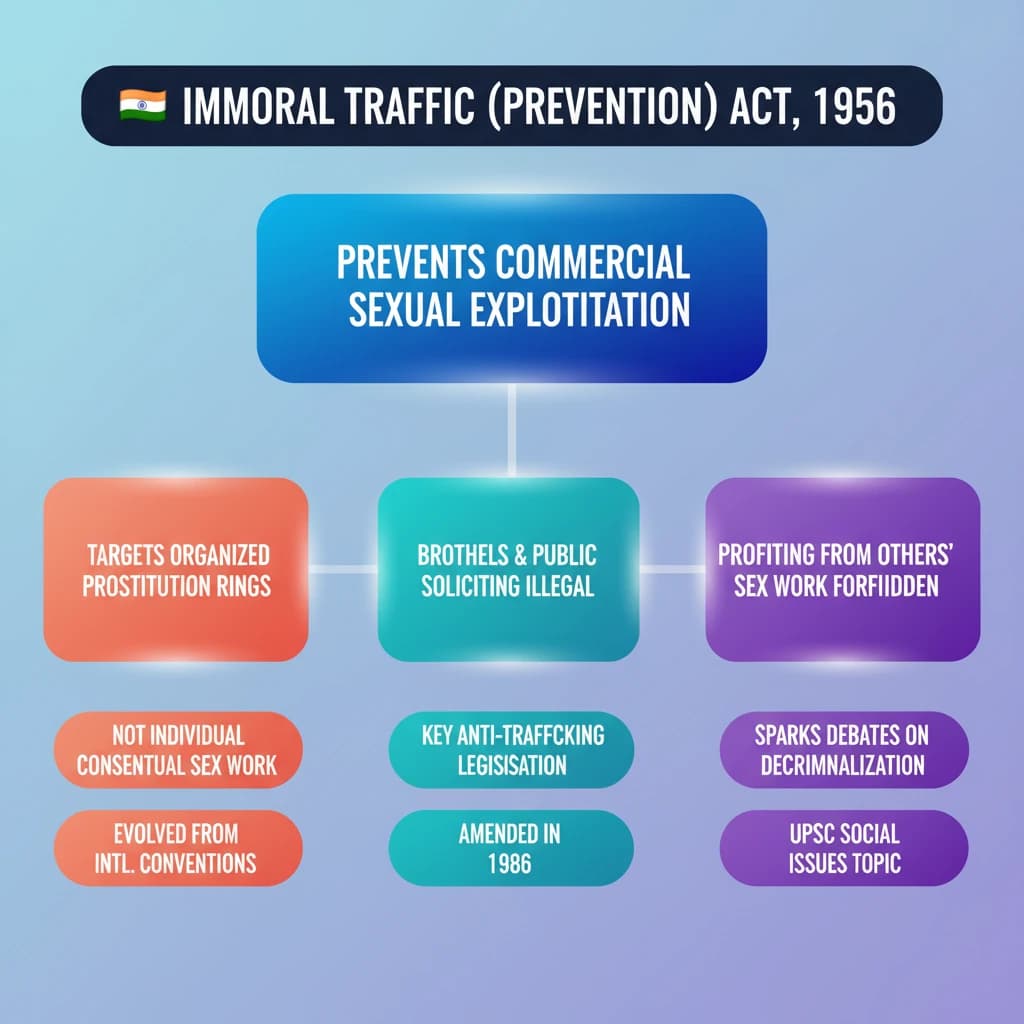
- •The ITP Act, 1956, aims to prevent commercial sexual exploitation and trafficking.
- •It does NOT criminalize individual, consensual sex work, but targets organized prostitution.
- •Running brothels, public soliciting, and profiting from others' prostitution are illegal.
- •The Act evolved from international conventions and was amended in 1986.
- •It's a key tool against human trafficking but also sparks debates on sex work decriminalization.
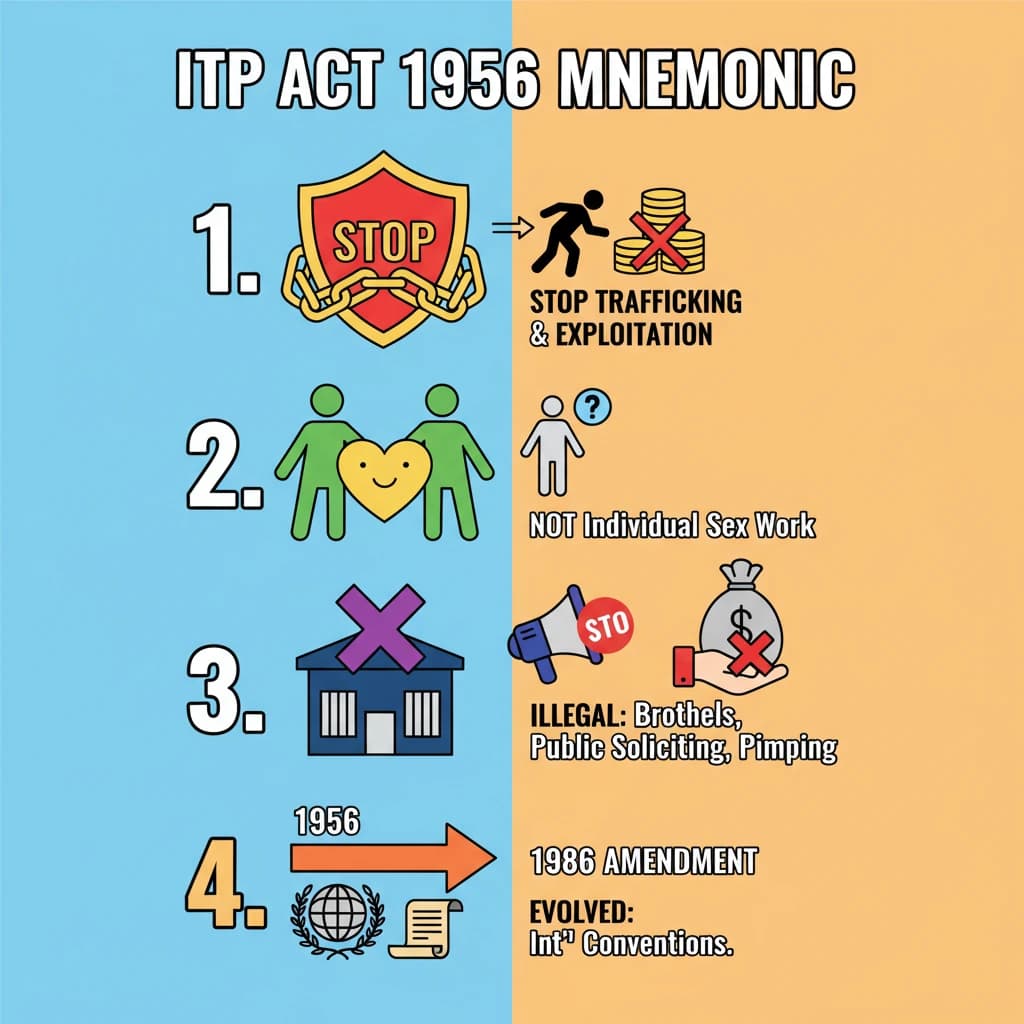
🧠 Memory Techniques
95% Verified Content
📚 Reference Sources
•Ministry of Women and Child Development, Government of India reports
•Supreme Court of India judgments on sex workers' rights
•Parliamentary debates and committee reports on human trafficking