Overview
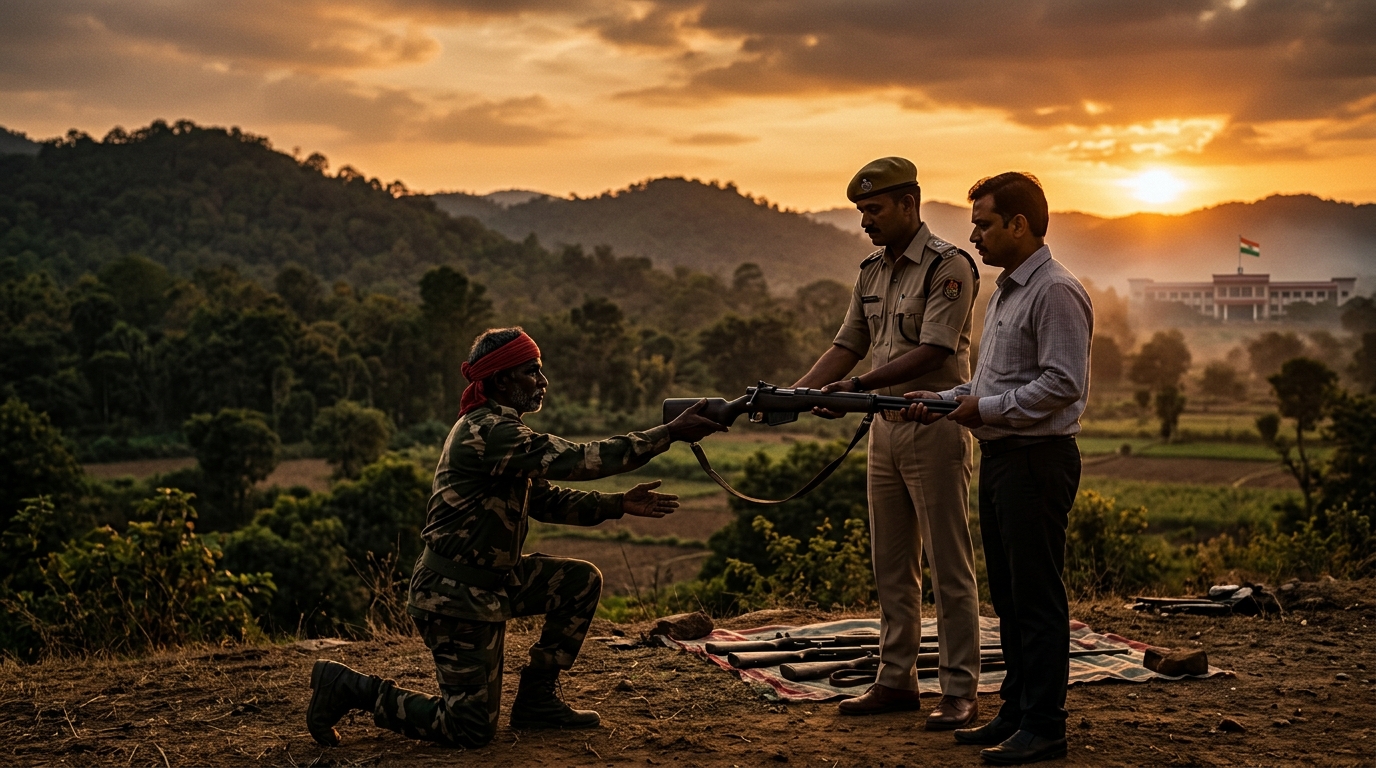
In a letter dated February 23, 2026, the Bolangir‑Bargarh‑Mahasamund (BBM) division of the banned Communist Party of India (Maoist) signalled its willingness to lay down arms and surrender to the Chhattisgarh government. The communication, addressed to Deputy Chief Minister Vijay Sharma, requested a radio broadcast guaranteeing safety for the surrendering cadres. The move comes amid a broader wave of surrenders in the central‑Indian left‑wing extremism (LWE) scenario, notably the recent surrender of senior Maoist leaders in Telangana.
Key Developments
- Letter to the State: The BBM division, active along the Chhattisgarh‑Odisha border, announced that 15 cadres were ready to join the mainstream and asked for a radio message to be aired before they emerged on March 2‑3, 2026.
- Government Response: Deputy CM Vijay Sharma, who also holds the Home portfolio, acknowledged receipt and confirmed that a radio broadcast would be made on the same day, assuring “red‑carpet” treatment, health, security and comfort for the surrendering cadres.
- Broader Surrender Trend: The letter referenced the recent surrender of the Maoist General Secretary Tippiri Tirupati (Devji), senior leader Malla Raji Reddy and others in Telangana’s Asifabad district on February 22, 2026. It also raised concerns about the treatment of earlier surrenderees, especially those held in barracks and facing pending legal cases.
Important Facts
- Statistics (last two years): According to Governor Ramen Deka, 532 Maoists have been neutralised, 2,704 surrendered, and 2,004 arrested across Chhattisgarh.
- MMC Special Zone Issue: The BBM division questioned why cadres from the Maharashtra‑Madhya Pradesh‑Chhattisgarh (MMC) special zone continue to be combed and targeted despite media reports of their surrender.
Exam Relevance
This development touches upon several UPSC syllabus components: Geography (LWE‑prone regions of central India), Polity & Governance (state‑centre coordination on security and rehabilitation), Internal Security (Maoist insurgency, surrender‑rehabilitation policy, legal framework), and Socio‑Economic Development (impact of LWE on development indices). Potential questions may ask for analysis of the effectiveness of surrender‑rehabilitation schemes, the role of political negotiations in counter‑insurgency, or the implications of recognizing a former insurgent group as a political party.
Way Forward
For sustainable peace, the government must address the grievances highlighted in the letter: ensure timely release and legal closure for surrenderees, integrate them through robust rehabilitation programmes, and consider a political solution that could involve de‑criminalising erstwhile insurgent activities under a constitutional framework. Continuous monitoring of the MMC zone and transparent communication with local communities will be crucial to prevent relapse into violence.