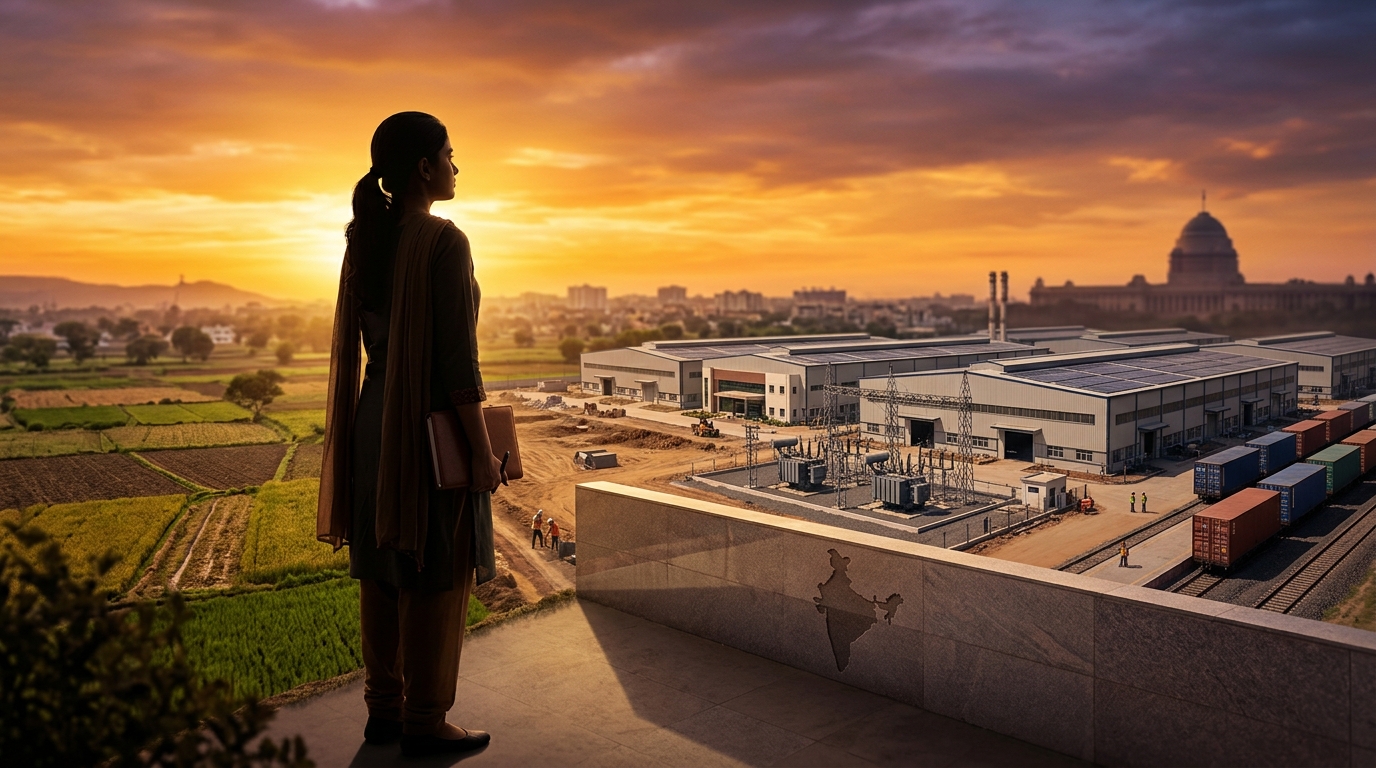
Overview of the BHAVYA and RELIEF Schemes
The Union Cabinet has sanctioned the BHAVYA with an outlay of Rs 33,660 crore. The objective is to create 100 industrial parks ranging from 100 to 1,000 acres, each equipped with core and external infrastructure. Simultaneously, the Ministry of Commerce and Industry launched a RELIEF scheme to aid exporters facing logistics bottlenecks.
Key Developments under BHAVYA
- Financial assistance of up to Rs 1 crore per acre for internal infrastructure such as roads, underground utilities, drainage, common treatment facilities, ICT and administrative systems.
- External infrastructure support up to 25 % of the project cost, covering connectivity, power, and water supply.
- Implementation through a challenge mode, ensuring high‑quality projects.
- Three‑way partnership among the Centre, State governments and the private sector.
- Development of ready‑built factory sheds, built‑to‑suit units, testing labs, warehousing, and worker housing.
- Alignment with PM GatiShakti principles for seamless logistics.
- Implementation overseen by the NICDC, a nodal agency of the DPIIT.
Important Facts at a Glance
- Total outlay: Rs 33,660 crore
- Number of parks: 100
- Park size: 100–1,000 acres
- Financial support per acre: Rs 1 crore
- External infrastructure support: 25 % of project cost
- Coverage: All States & Union Territories
- Nodal agency: NICDC
RELIEF Scheme Highlights
- Budget: Rs 497 crore to cushion exporters affected by the West‑Asia crisis.
- Automatic extension of export obligations and logistical support for consignments to UAE, Saudi Arabia, Qatar, Oman, Bahrain, Iraq, Iran, Israel and Yemen.
- Implementation agency: ECGC under the Export Promotion Mission (EPM).
- Enhanced insurance coverage: up to 100 % risk cover for shipments between 14 Feb‑15 Mar 2026.
- Future shipments (16 Mar‑15 Jun 2026): up to 95 % risk cover with government support.
- MSME relief: reimbursement of up to 50 % of increased freight and insurance costs, capped at ₹50 lakh per exporter.
Exam Relevance
Both schemes intersect with several GS papers. BHAVYA illustrates the government's push for a ‘Make in India 2.0’ strategy, addressing industrial infrastructure gaps and job creation. Understanding the NLP and its linkage with PM GatiShakti is essential for questions on logistics reforms. The RELIEF scheme tests knowledge of trade‑related measures, export credit insurance, and the impact of external geopolitical events on India’s economy.
Way Forward
For aspirants, focus on:
- Comparative analysis of BHAVYA with earlier schemes like Industrial Corridors and Smart Cities Mission.
- Potential challenges in land acquisition, state‑centre coordination, and private sector participation.
- Monitoring the effectiveness of the RELIEF scheme in stabilising export volumes and its fiscal implications.
- Linkages with broader initiatives such as Make in India and the NICDP.
Keeping abreast of implementation reports and state‑wise progress will help answer both factual and analytical UPSC questions.