Loading page, please wait…
HomeCurrent AffairsEditorialsGovt SchemesLearning ResourcesUPSC SyllabusPricingAboutBest UPSC AIUPSC AI ToolAI for UPSCUPSC ChatGPT

© 2026 Vaidra. All rights reserved.

PrivacyTerms
Vaidra Logo
Vaidra

Top 4 items + smart groups

UPSC GPT
New
Current Affairs
Daily Solutions
Daily Puzzle
Mains Evaluator

Version 2.0.0 • Built with ❤️ for UPSC aspirants

Bhupender Yadav Announces Shekha Jheel as India’s 99th Ramsar Site – UP Wetlands Now 12

Bhupender Yadav Announces Shekha Jheel as India’s 99th Ramsar Site – UP Wetlands Now 12
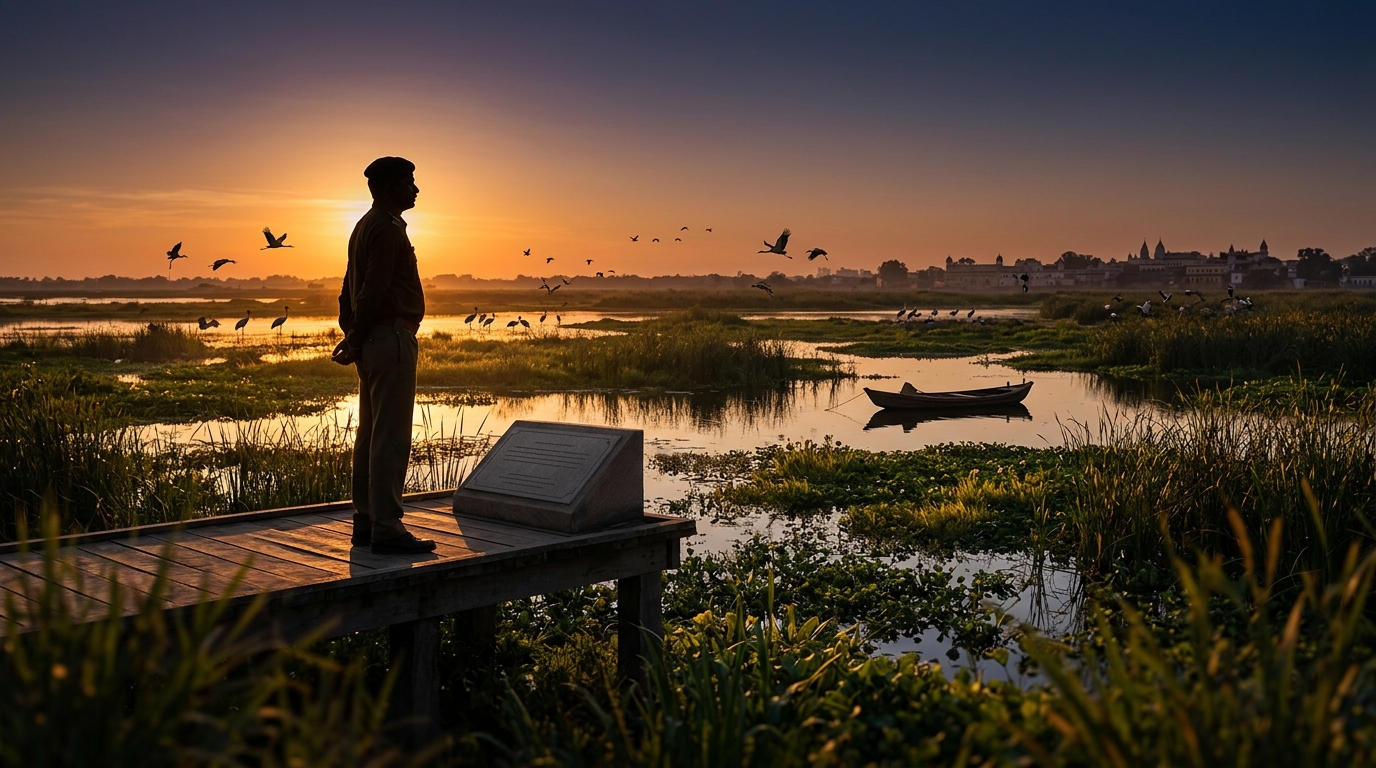
On 22 April 2026, Union Minister Bhupender Yadav announced the designation of Shekha Jheel Bird Sanctuary in Uttar Pradesh as India’s 99th <span class="key-term" data-definition="Ramsar site — Wetland of international importance recognised under the Ramsar Convention; crucial for biodiversity, water security and climate mitigation (GS3: Environment)">Ramsar site</span>, raising the state’s count to twelve. The move highlights the sanctuary’s importance on the Central Asian Flyway, supports migratory bird habitats, and advances India’s goal of reaching 100 Ramsar wetlands, a key point for UPSC environmental and policy studies.
On 22 April 2026 , Union Minister Bhupender Yadav declared the designation of Shekha Jheel Bird Sanctuary in Aligarh, Uttar Pradesh as India’s 99th Ramsar site . The move raises Uttar Pradesh’s tally of Ramsar sites to twelve, underscoring the state’s growing role in wetland conservation. Key Developments Shekha Jheel officially added to the global Ramsar list, bringing India’s total to 99. Uttar Pradesh’s count of Ramsar sites climbs to 12, the highest among Indian states. The announcement highlights the site’s role as a stop‑over on the Central Asian Flyway , supporting species such as the Bar‑headed Goose, Painted Stork and several duck species. Minister Yadav linked the designation to improved local livelihoods, water security and climate resilience. Important Facts Location: Aligarh district, Uttar Pradesh. Ecological type: wetland and bird sanctuary. Key species: Bar‑headed Goose, Painted Stork, various migratory ducks. Conservation authority: MoEFCC . National significance: Marks India’s progress toward the historic goal of 100 Ramsar sites. UPSC Relevance The designation touches upon several GS topics. In GS 2 (Polity) , it illustrates the functioning of a Union ministry and the role of a cabinet minister in policy implementation. In GS 3 (Environment) , it underscores the importance of wetlands, migratory routes, and international conventions like Ramsar for biodiversity conservation and climate mitigation. Understanding the ecological value of the migratory birds that use Shekha Jheel helps answer questions on habitat protection and sustainable development. Way Forward To maximise the benefits of the Ramsar status, the government should: Develop a detailed management plan for habitat restoration and visitor regulation. Engage local communities in eco‑tourism and livelihood programmes linked to wetland health. Strengthen monitoring mechanisms to track water quality, species diversity and climate impacts. Promote awareness campaigns about the Central Asian Flyway and the role of Ramsar sites in global biodiversity networks. These steps will ensure that Shekha Jheel not only contributes to India’s target of 100 Ramsar sites but also serves as a model for integrated wetland management across the country.
  1. Home
  2. Prepare
  3. Current Affairs
  4. Bhupender Yadav Announces Shekha Jheel as India’s 99th Ramsar Site – UP Wetlands Now 12
Login to bookmark articles
Login to mark articles as complete

Overview

gs.gs376% UPSC Relevance

Shekha Jheel becomes India’s 99th Ramsar site, underscoring wetland policy and climate resilience.

Key Facts

  1. Shekha Jheel Bird Sanctuary in Aligarh, Uttar Pradesh was declared India's 99th Ramsar site on 22 April 2026.
  2. The designation raises Uttar Pradesh's total Ramsar sites to 12, the highest among Indian states.
  3. Shekha Jheel lies on the Central Asian Flyway, supporting migratory species such as Bar‑headed Goose, Painted Stork and several ducks.
  4. The site is managed by the Ministry of Environment, Forest and Climate Change (MoEFCC) under the Ramsar Convention (1971).
  5. India aims to achieve 100 Ramsar sites; Shekha Jheel brings the nation within one site of the target.
  6. Ramsar status is linked to improved water security, climate resilience and livelihood opportunities for local communities.

Background & Context

Wetlands are critical for biodiversity, flood control, groundwater recharge and carbon sequestration. Under the Ramsar Convention, member countries designate wetlands of international importance, integrating conservation with climate and livelihood goals—key themes in GS‑3 and GS‑2 of the UPSC syllabus.

UPSC Syllabus Connections

Essay•Environment and SustainabilityPrelims_GS•Ecology and BiodiversityEssay•Media, Communication and InformationGS3•Conservation, environmental pollution and degradation

Mains Answer Angle

GS‑3 (Environment) – Discuss the role of Ramsar‑designated wetlands like Shekha Jheel in achieving climate resilience, biodiversity conservation and sustainable livelihoods; a likely question could ask for an integrated wetland management framework.

Full Article

<p>On <strong>22 April 2026</strong>, <strong><span class="key-term" data-definition="Union Minister for Environment, Forest and Climate Change — Cabinet‑level minister heading the Ministry of Environment, Forest and Climate Change (GS2: Polity)">Union Minister Bhupender Yadav</span></strong> declared the designation of <strong>Shekha Jheel Bird Sanctuary</strong> in Aligarh, Uttar Pradesh as India’s <strong>99th <span class="key-term" data-definition="Ramsar site — Wetland of international importance recognised under the Ramsar Convention; crucial for biodiversity, water security and climate mitigation (GS3: Environment)">Ramsar site</span></strong>. The move raises Uttar Pradesh’s tally of Ramsar sites to twelve, underscoring the state’s growing role in wetland conservation.</p> <h3>Key Developments</h3> <ul> <li>Shekha Jheel officially added to the global <span class="key-term" data-definition="Ramsar site — Wetland of international importance recognised under the Ramsar Convention; crucial for biodiversity, water security and climate mitigation (GS3: Environment)">Ramsar</span> list, bringing India’s total to 99.</li> <li>Uttar Pradesh’s count of Ramsar sites climbs to 12, the highest among Indian states.</li> <li>The announcement highlights the site’s role as a stop‑over on the <span class="key-term" data-definition="Central Asian Flyway — One of the world’s major migratory routes for birds, extending from Siberia through Central Asia to South Asia (GS3: Environment)">Central Asian Flyway</span>, supporting species such as the Bar‑headed Goose, Painted Stork and several duck species.</li> <li>Minister Yadav linked the designation to improved local livelihoods, water security and climate resilience.</li> </ul> <h3>Important Facts</h3> <ul> <li><strong>Location:</strong> Aligarh district, Uttar Pradesh.</li> <li><strong>Ecological type:</strong> <span class="key-term" data-definition="Wetland — Land area permanently or seasonally saturated with water, supporting aquatic flora and fauna; vital for flood control, groundwater recharge and carbon sequestration (GS3: Environment)">wetland</span> and bird sanctuary.</li> <li><strong>Key species:</strong> Bar‑headed Goose, Painted Stork, various migratory ducks.</li> <li><strong>Conservation authority:</strong> <span class="key-term" data-definition="Ministry of Environment, Forest and Climate Change — Central ministry responsible for formulation and implementation of environmental policy, forest management and climate action (GS2: Polity)">MoEFCC</span>.</li> <li><strong>National significance:</strong> Marks India’s progress toward the historic goal of 100 Ramsar sites.</li> </ul> <h3>UPSC Relevance</h3> <p>The designation touches upon several GS topics. In <strong>GS 2 (Polity)</strong>, it illustrates the functioning of a Union ministry and the role of a cabinet minister in policy implementation. In <strong>GS 3 (Environment)</strong>, it underscores the importance of wetlands, migratory routes, and international conventions like Ramsar for biodiversity conservation and climate mitigation. Understanding the ecological value of the <span class="key-term" data-definition="Migratory birds — Bird species that travel seasonally between breeding and non‑breeding grounds, often relying on wetlands as stop‑overs (GS3: Environment)">migratory birds</span> that use Shekha Jheel helps answer questions on habitat protection and sustainable development.</p> <h3>Way Forward</h3> <p>To maximise the benefits of the Ramsar status, the government should:</p> <ul> <li>Develop a detailed management plan for habitat restoration and visitor regulation.</li> <li>Engage local communities in eco‑tourism and livelihood programmes linked to wetland health.</li> <li>Strengthen monitoring mechanisms to track water quality, species diversity and climate impacts.</li> <li>Promote awareness campaigns about the <span class="key-term" data-definition="Central Asian Flyway — One of the world’s major migratory routes for birds, extending from Siberia through Central Asia to South Asia (GS3: Environment)">Central Asian Flyway</span> and the role of Ramsar sites in global biodiversity networks.</li> </ul> <p>These steps will ensure that Shekha Jheel not only contributes to India’s target of 100 Ramsar sites but also serves as a model for integrated wetland management across the country.</p>
Read Original on pib

Analysis

Practice Questions

Prelims
Easy
Prelims MCQ

International Environmental Conventions

1 marks
4 keywords
GS3
Medium
Mains Short Answer

Wetland Conservation and Sustainable Development

10 marks
5 keywords
GS3
Hard
Mains Essay

Integrated Environmental Governance

250 marks
5 keywords
Related:Daily•Weekly

Loading related articles...

Loading related articles...

Tip: Click articles above to read more from the same date, or use the back button to see all articles.

Quick Reference

Key Insight

Shekha Jheel becomes India’s 99th Ramsar site, underscoring wetland policy and climate resilience.

Key Facts

  1. Shekha Jheel Bird Sanctuary in Aligarh, Uttar Pradesh was declared India's 99th Ramsar site on 22 April 2026.
  2. The designation raises Uttar Pradesh's total Ramsar sites to 12, the highest among Indian states.
  3. Shekha Jheel lies on the Central Asian Flyway, supporting migratory species such as Bar‑headed Goose, Painted Stork and several ducks.
  4. The site is managed by the Ministry of Environment, Forest and Climate Change (MoEFCC) under the Ramsar Convention (1971).
  5. India aims to achieve 100 Ramsar sites; Shekha Jheel brings the nation within one site of the target.
  6. Ramsar status is linked to improved water security, climate resilience and livelihood opportunities for local communities.

Background

Wetlands are critical for biodiversity, flood control, groundwater recharge and carbon sequestration. Under the Ramsar Convention, member countries designate wetlands of international importance, integrating conservation with climate and livelihood goals—key themes in GS‑3 and GS‑2 of the UPSC syllabus.

UPSC Syllabus

  • Essay — Environment and Sustainability
  • Prelims_GS — Ecology and Biodiversity
  • Essay — Media, Communication and Information
  • GS3 — Conservation, environmental pollution and degradation

Mains Angle

GS‑3 (Environment) – Discuss the role of Ramsar‑designated wetlands like Shekha Jheel in achieving climate resilience, biodiversity conservation and sustainable livelihoods; a likely question could ask for an integrated wetland management framework.

Explore:Current Affairs·Editorial Analysis·Govt Schemes·Study Materials·Previous Year Questions·UPSC GPT
Bhupender Yadav Announces Shekha Jheel as ... | UPSC Current Affairs