Loading page, please wait…
HomeCurrent AffairsEditorialsGovt SchemesLearning ResourcesUPSC SyllabusPricingAboutBest UPSC AIUPSC AI ToolAI for UPSCUPSC ChatGPT

© 2026 Vaidra. All rights reserved.

PrivacyTerms
Vaidra Logo
Vaidra

Top 4 items + smart groups

UPSC GPT
New
Current Affairs
Daily Solutions
Daily Puzzle
Mains Evaluator

Version 2.0.0 • Built with ❤️ for UPSC aspirants

Bio‑Bitumen from Crop Residue to Cut ₹40,000 Cr Bitumen Imports – MoS Jitendra Singh Announces — UPSC Current Affairs | March 30, 2026
Bio‑Bitumen from Crop Residue to Cut ₹40,000 Cr Bitumen Imports – MoS Jitendra Singh Announces
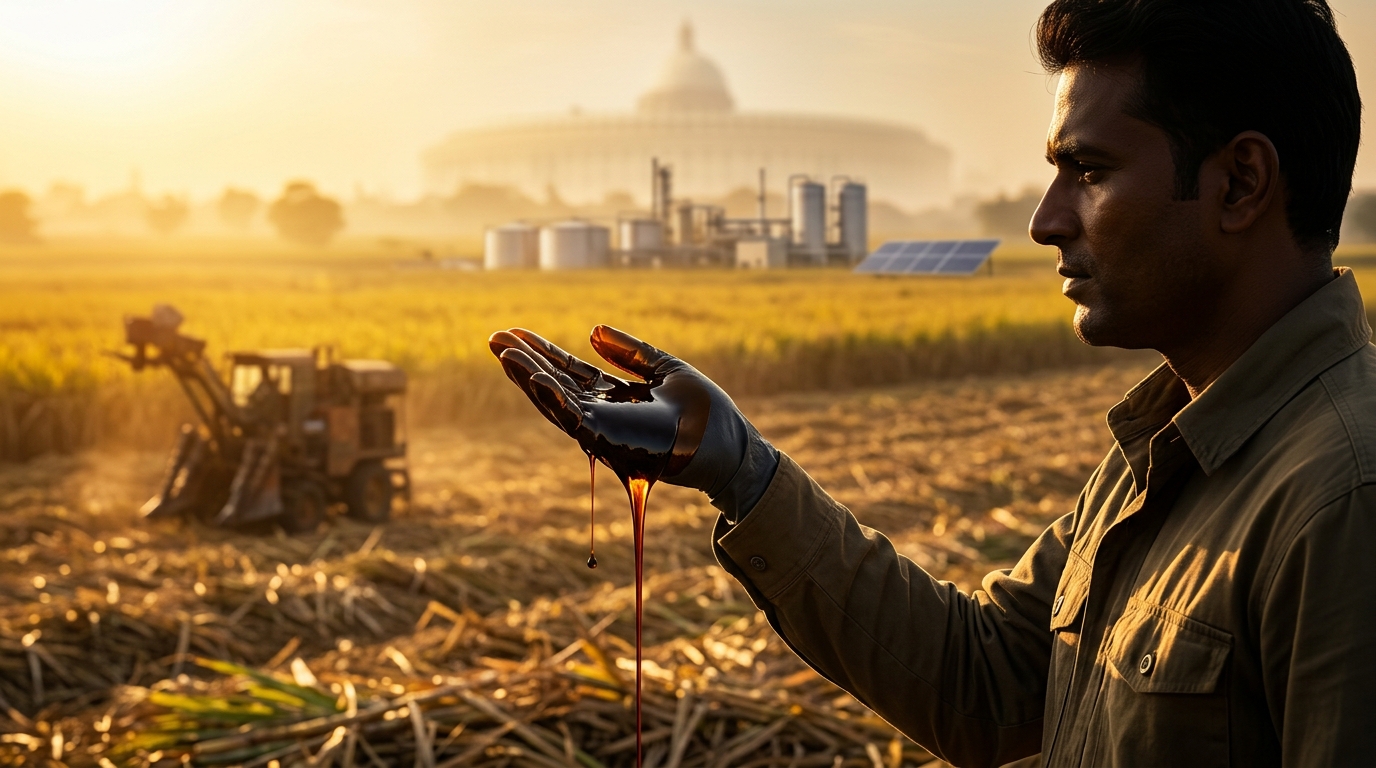
Union Minister of State (Independent Charge) for Science & Technology <strong>Dr. Jitendra Singh</strong> announced that converting India's 600 million tonnes of annual <span class="key-term" data-definition="Crop residue — agricultural waste such as rice straw or wheat straw left after harvest; its open burning causes air pollution (GS3: Environment, Agriculture)">crop residue</span> into <span class="key-term" data-definition="Bio‑bitumen — a renewable binder derived from lignocellulosic biomass, used as an alternative to petroleum‑based bitumen in road construction (GS3: Economy, Environment)">bio‑bitumen</span> can save roughly <strong>₹40,000 crore</strong> in bitumen imports, reduce stubble‑burning pollution, and support the Atmanirbhar Bharat agenda. The indigenous technology, developed by <span class="key-term" data-definition="CSIR — Council of Scientific and Industrial Research, India's premier R&D organization that develops and transfers technologies to industry (GS3: Science & Technology)">CSIR</span>, exemplifies public‑private collaboration and offers a practical case for UPSC questions on economy, environment, and science‑technology policy.
Bio‑Bitumen Initiative – Overview The Union Minister of State (Independent Charge) for Science &amp; Technology, Dr. Jitendra Singh , announced that converting agricultural crop residue into bio‑bitumen can save India about ₹40,000 crore in annual imports. The technology, developed by CSIR ‑CRRI and CSIR‑IIP, converts lignocellulosic biomass through a thermochemical pyrolysis process into a renewable binder that can replace up to 30% of conventional bitumen. Key Developments India produces ~ 600 million tonnes of crop residue annually; most is burnt, causing severe air‑quality issues. Annual bitumen demand stands at ~ 88 lakh tonnes , with 50‑58% imported at a cost of ₹25,000‑30,000 crore. The bio‑bitumen process can substitute up to 30% of conventional bitumen without compromising road performance, cutting import bills and emissions. Successful pilot stretches have been constructed; large‑scale industry adoption is underway following a CSIR‑organized technology‑transfer event. The initiative aligns with Atmanirbhar Bharat and India’s Net‑Zero commitments. Important Facts Feedstock : Rice straw, wheat straw and other lignocellulosic residues. Process : Pyrolysis converts biomass into a binder with lower carbon intensity. Economic Impact : Potential annual savings of ~₹40,000 crore and additional income streams for farmers. Environmental Impact : Reduces stubble‑burning pollution, cuts CO₂ emissions from bitumen production, and promotes a circular economy . Collaboration : Public‑private partnership involving ministries, CSIR, road transport ministry, and industry players. UPSC Relevance This case touches upon multiple GS papers: GS3 – Economy (import dependence, self‑reliance, cost‑benefit analysis), GS3 – Environment (air‑pollution, climate commitments), GS2 – Polity (role of Union Ministers, inter‑ministerial coordination), and GS3 – Science & Technology (indigenous R&amp;D, technology transfer). Understanding how scientific innovation can address simultaneous economic, environmental, and social challenges is crucial for answer writing in both essay and case‑study questions. Way Forward Scale‑up production facilities and create a standardized certification for bio‑bitumen quality. Incentivise farmers through subsidies or Minimum Support Prices for supplied crop residue , turning waste into income. Integrate bio‑bitumen specifications into the Ministry of Road Transport &amp; Highways procurement norms. Expand research to other biomass streams (e.g., used cooking oil, industrial slag) to broaden the circular economy ecosystem. Strengthen public‑private partnerships and create a dedicated fund for green infrastructure projects. By converting waste into a strategic resource, India not only curbs pollution but also moves closer to a self‑reliant, low‑carbon infrastructure future.
  1. Home
  2. Prepare
  3. Current Affairs
  4. Bio‑Bitumen from Crop Residue to Cut ₹40,000 Cr Bitumen Imports – MoS Jitendra Singh Announces
Login to bookmark articles
Login to mark articles as complete

Overview

Bio‑bitumen from crop residue could slash ₹40,000 cr bitumen imports, boosting self‑reliance and curbing pollution

Key Facts

  1. India generates ~600 million tonnes of crop residue annually, most of which is burnt, causing severe air‑pollution.
  2. Annual bitumen demand is ~88 lakh tonnes; 50‑58% is imported, costing ₹25,000‑30,000 crore per year.
  3. CSIR‑CRRI and CSIR‑IIP have developed a pyrolysis‑based bio‑bitumen that can replace up to 30% of conventional bitumen without compromising road performance.
  4. Substituting 30% bio‑bitumen could save India roughly ₹40,000 crore in import bills annually.
  5. The initiative aligns with Atmanirbhar Bharat and India’s Net‑Zero commitments, promoting a circular economy and additional farmer income.
  6. Pilot stretches using bio‑bitumen have been constructed; large‑scale industry adoption began after a CSIR technology‑transfer event in 2026.
  7. Ministry of Science & Technology, Ministry of Road Transport & Highways and private sector are collaborating under a public‑private partnership model.

Background & Context

Crop‑residue burning contributes to severe air‑quality degradation, while India remains heavily dependent on imported bitumen for road construction. The bio‑bitumen initiative integrates science‑technology, environmental sustainability and import‑substitution, resonating with the GS3 themes of economy, environment and S&T, and with GS2 aspects of inter‑ministerial coordination.

UPSC Syllabus Connections

GS2•Government policies and interventions for developmentGS3•Developments in science and technology and their applicationsEssay•Economy, Development and InequalityEssay•Environment and SustainabilityEssay•Science, Technology and SocietyPrelims_GS•National Current AffairsGS3•Indian Economy - Planning, mobilization of resources, growth, development and employmentGS3•Conservation, environmental pollution and degradationGS2•Functions and responsibilities of Union and StatesPrelims_GS•Environmental Issues and Climate Change

Mains Answer Angle

GS3 – Economy/Environment: Discuss how bio‑bitumen can simultaneously address import dependence, farmer livelihoods and climate goals, and evaluate the policy measures needed for large‑scale rollout.

Full Article

Read Original on pib

Analysis

Practice Questions

Prelims
Easy
Prelims MCQ

Import substitution in bitumen

1 marks
5 keywords
GS3
Medium
Mains Short Answer

Bio‑bitumen technology

20 marks
5 keywords
GS3
Hard
Case Study

Circular economy and green infrastructure

250 marks
6 keywords
Related:Daily•Weekly

Loading related articles...

Loading related articles...

Tip: Click articles above to read more from the same date, or use the back button to see all articles.

Explore:Current Affairs·Editorial Analysis·Govt Schemes·Study Materials·Previous Year Questions·UPSC GPT