Overview
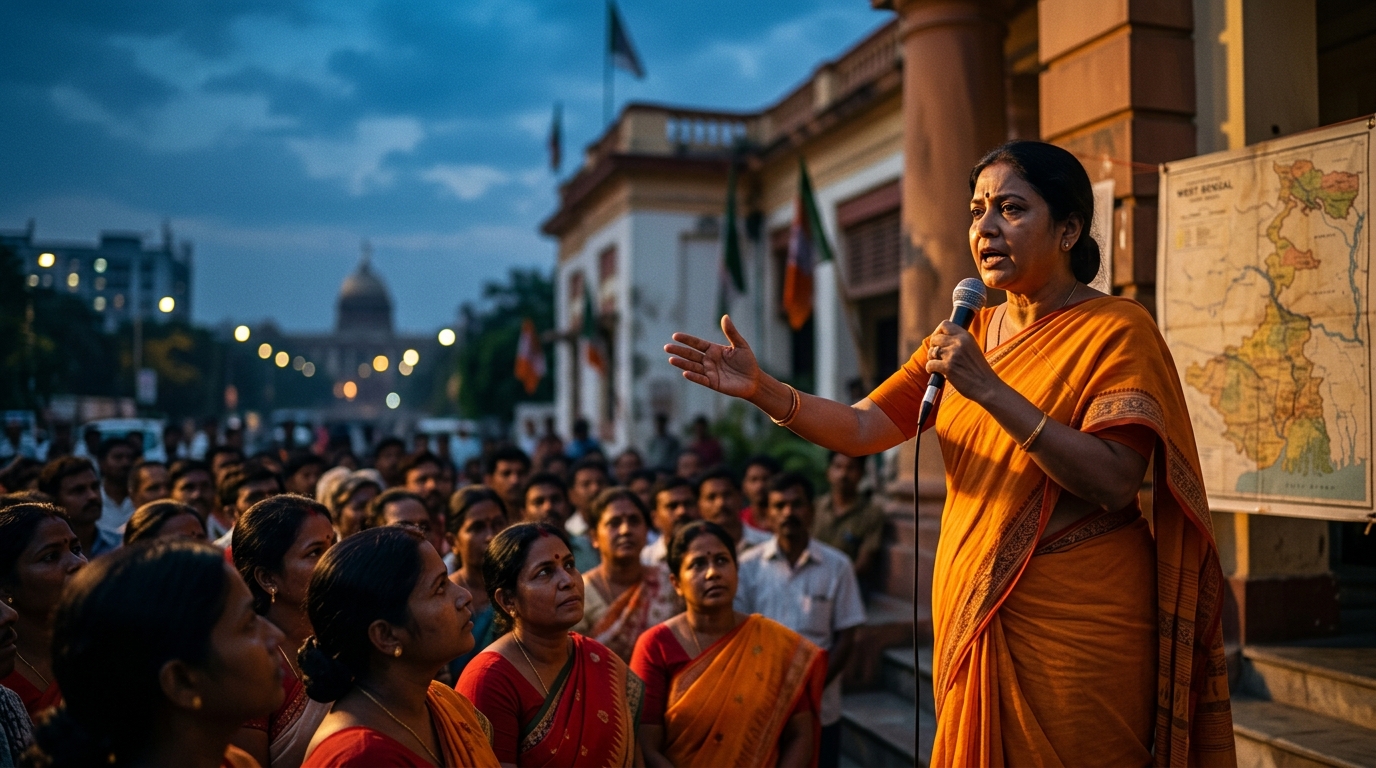
On 22 February 2026, Rekha Gupta, a senior leader of the Bharatiya Janata Party (BJP) and Delhi’s chief ministerial spokesperson, addressed the ‘Nari Sankalp Yatra’ at the Science City auditorium in Kolkata. She alleged that the Trinamool Congress (TMC) government, led by Mamata Banerjee, was attempting to stall the Special Investigation Report (SIR) exercise to conceal the influx of alleged infiltrators and to undermine women’s safety. Gupta’s speech intertwined issues of internal security, centre‑state relations, and gender‑based violence, making it a rich source for UPSC preparation.
Key Developments
- Alleged Supreme Court Intervention: Gupta claimed that Mamata Banerjee approached the Supreme Court to halt the SIR exercise, which aims to identify and deport illegal infiltrators ahead of elections.
- Women‑Safety Narrative: She highlighted three high‑profile crimes – the rape‑murder of a doctor at RG Kar Hospital, the alleged rape of a medic in Durgapur, and the assault on a law student in Kolkata – accusing the TMC of failing to protect women despite having a woman chief minister.
- Centre‑State Welfare Discrepancies: Gupta asserted that central schemes such as Ayushman Bharat, PM Awas Yojana and Jal Jeevan Mission were blocked in West Bengal, resulting in “lakhs of crores of rupees” not reaching the poor.
Important Facts
- Date of Speech: 22 February 2026 (06:37 pm IST).
- Key Policies Mentioned: SIR exercise, Kanyashree scheme, National Education Policy (NEP), and central welfare programmes (Ayushman Bharat, PM Awas Yojana, Jal Jeevan Mission).
Exam Relevance
This episode touches upon multiple UPSC syllabus areas. In GS II (Polity & Governance), it raises questions about the constitutional balance between state autonomy and central oversight, especially concerning the implementation of centrally sponsored schemes. In GS III (Security & Law Enforcement), the SIR exercise links to internal security, illegal migration, and electoral integrity. The discussion on women’s safety aligns with GS II (Women & Child Development) and the effectiveness of law‑and‑order mechanisms. Moreover, the political rhetoric offers material for GS I (Indian Society & Culture) and the analysis of identity politics, federalism, and the role of political narratives in elections.
Way Forward
For policymakers, ensuring transparent coordination between the centre and states on welfare schemes is essential to prevent resource leakage. Strengthening the legal framework for the SIR exercise, with judicial oversight, can safeguard electoral fairness while respecting civil liberties. Addressing women’s safety requires a multi‑pronged approach: robust policing, swift judicial processes, and community awareness. Politically, parties must move beyond polarising rhetoric and focus on evidence‑based governance to restore public confidence ahead of the upcoming West Bengal assembly elections.