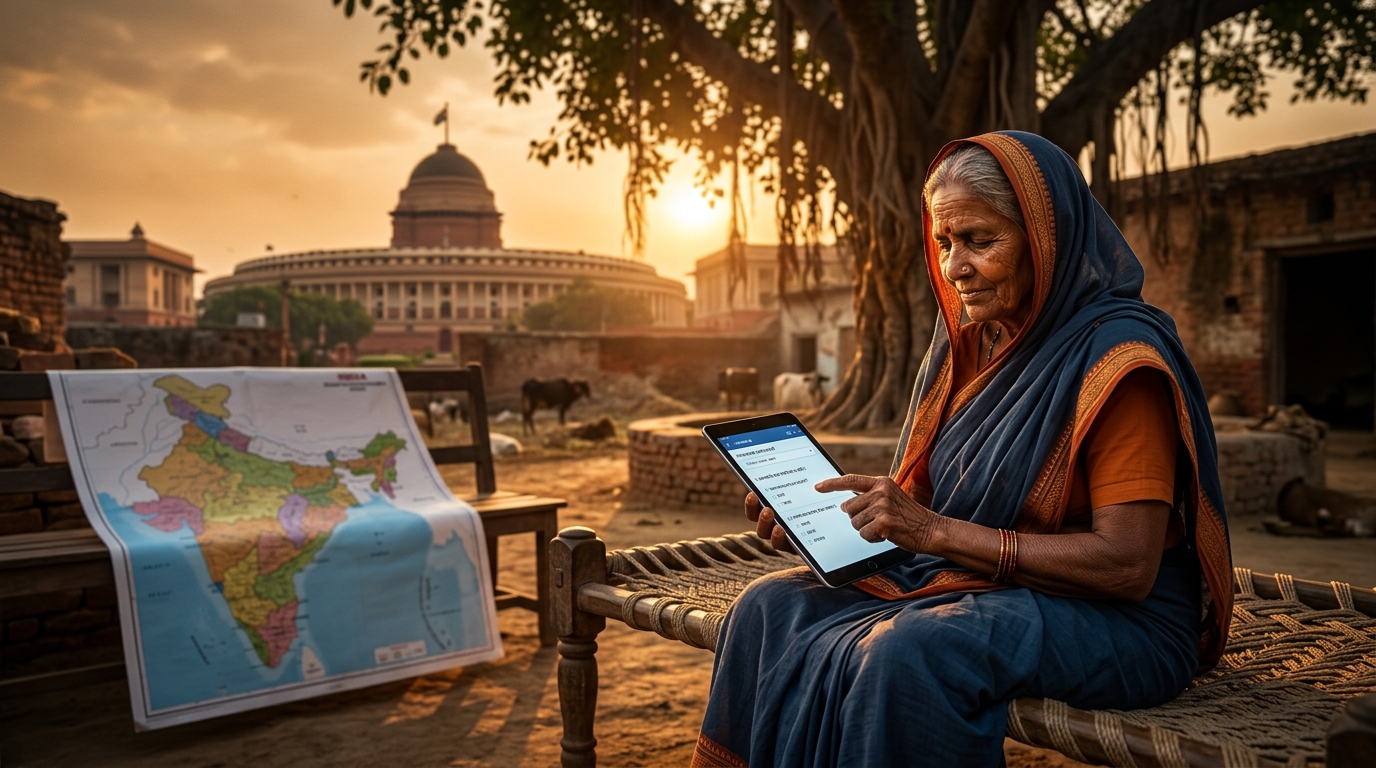
Census 2027 का अवलोकन
The Registrar General and Census Commissioner of India announced that the 16th Census (Census 2027) will be the world’s largest, carried out in two phases starting 1 April 2026. For the first time, the exercise will be fully digital and will offer a Self‑Enumeration option.
मुख्य विकास
- Phase I – HLO – runs from 16 April to 15 May 2026 in eight pilot states/UTs, preceded by a 15‑day Self‑Enumeration window (1‑15 April).
- Phase II – PE – scheduled for February 2027 (September 2026 for Ladakh, Jammu & Kashmir snow‑bound areas, Uttarakhand and Himachal Pradesh).
- Enumerators will use a Mobile App to record information directly on the ground.
- All digital platforms (Mobile App and Self‑Enumeration portal) will be available in 16 languages, ensuring accessibility across the country.
- The Union Government has approved an outlay of ₹11,718.24 crore for the Census, covering honoraria, training, IT infrastructure and logistics.
- More than **3 million** enumerators, supervisors and officials will be mobilised nationwide.
महत्वपूर्ण तथ्य
The Census is conducted under the Census Act, 1948 and the Census Rules, 1990 (as amended). The reference date for Census 2027 is 00:00 hrs on 1 March 2027, with a different reference date (1 Oct 2026) for Ladakh and snow‑bound areas of Jammu & Kashmir, Uttarakhand and Himachal Pradesh.
Administrative units have been frozen from 1 Jan 2026 to 31 Mar 2027. The exercise will cover 36 states/UTs, 7,092 sub‑districts, 5,128 statutory towns, 4,580 census towns and about 6,39,902 villages (as of 1 Jan 2026).
Training architecture: 100 national trainers → 2,000 master trainers → 45,000 field trainers → ~31 lakh enumerators and supervisors, delivered in regional lang