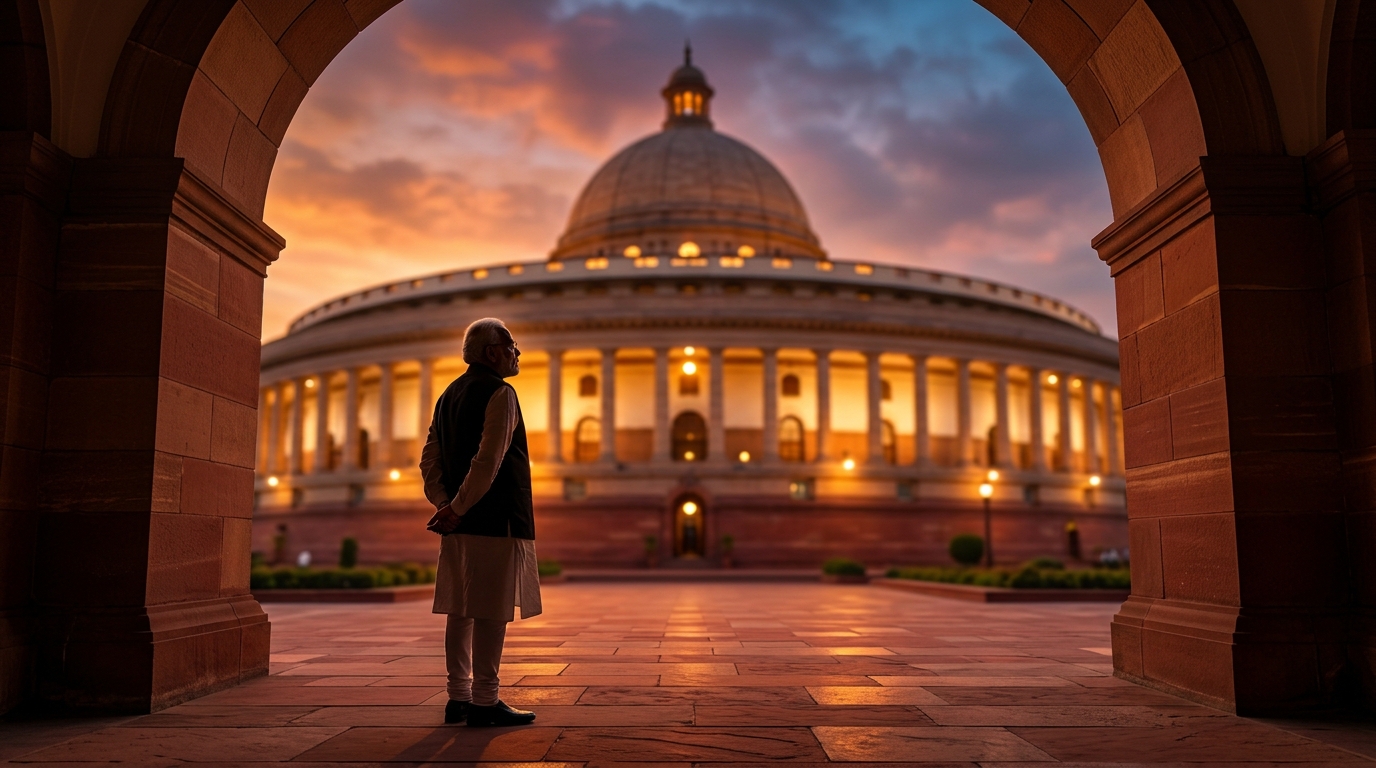
Key Highlights of the Constitution (131st Amendment) Bill, 2026
The Union Government is set to introduce a sweeping reform of the lower house of Parliament through the Constitution (One Hundred and Thirty First Amendment) Bill, 2026. The Bill will be debated in a Special Session of Parliament on 16‑17 April 2026, signalling a decisive move to reshape representation in India.
Key Developments
- Increase Lok Sabha seats from 543 to 850, with a maximum of 815 members from the States and up to 35 members from Union Territories.
- Amend Article 81 to reflect the new ceiling.
- Delete the third proviso of Article 82, thereby removing the mandatory link between delimitation and the post‑2026 Census.
- Amend Article 334A to enable immediate implementation of the 1/3rd women’s reservation once delimitation is completed.
- Introduce the Delimitation Commission under the accompanying Delimitation Bill, 2026.
Important Facts
The current allocation of Lok Sabha seats is based on the 1971 census, while constituency boundaries still rely on the 2001 census. The new Commission will use the latest census figures to:
- Determine seat distribution among States and Union Territories.
- Allocate seats for Scheduled Castes (SC) and Scheduled Tribes (ST).
- Redraw constituency boundaries ensuring geographic compactness, administrative convenience, and public accessibility.
- Reserve approximately one‑third of seats for women, rotating the reservation among constituencies, including separate rotation for women belonging to SC/ST categories.
Orders of the Commission, once published in the Gazette of India, will have the force of law and will not be subject to judicial review. However, existing members will retain their seats until the House is dissolved, and any by‑elections before dissolution will follow the old delimitation.
Exam Relevance
Understanding these amendments is crucial for Lok Sabha composition (GS2) and the constitutional mechanisms governing representation. The decoupling of delimitation from the census impacts the timing of demographic‑based redistricting, a frequent topic in GS2: Polity and GS3: Economy (population‑related policy). The 1/3rd women’s reservation aligns with gender‑equity debates and may feature in essay questions on social justice.
Way Forward
Parliamentarians must scrutinise the Bill’s implications for federal balance, especially the cap of 815 seats for States and the allocation of only 35 seats for Union Territories. The Centre will need to appoint a Supreme Court judge as Chair of the Delimitation Commission, along with the Chief Election Commissioner and State Election Commissioners. Stakeholders, including political parties and civil‑society groups, should prepare for the rotational reservation mechanism, which could reshape electoral strategies ahead of the next general election.
In summary, the 2026 amendment seeks to modernise parliamentary representation, accelerate women’s empowerment, and untether constituency redrawing from the census timetable, thereby offering a more flexible framework for India’s evolving demographic landscape.