Overview
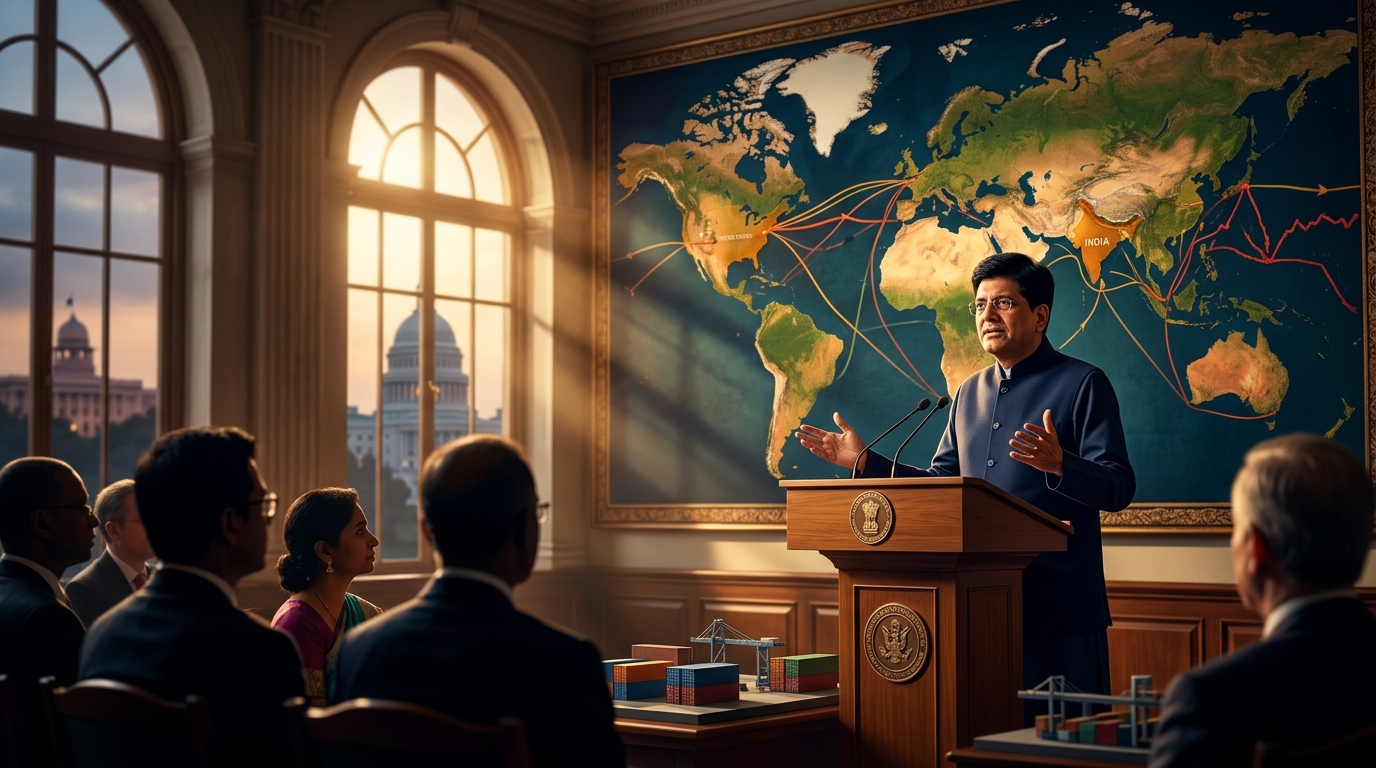
On April 2 2026, India’s Commerce Minister Piyush Goyal reiterated that India‑US relations remain "very robust and deep" across technology, defence, trade and investment. He stressed that India expects preferential market access as promised in the February 2026 joint statement, despite the turbulent history of the so‑called ‘Liberation Day’ tariffs.
Key Developments
- U.S. tariffs on Indian goods, announced on April 2 2025 as part of the ‘Liberation Day’ tariffs, have been paused, raised to 50%, reduced to 25%, promised to fall to 18% under a trade deal, struck down by the U.S. Supreme Court, and temporarily set at 10% for all partners.
- February 13 2026 joint statement outlined an interim trade framework where the U.S. would cut tariffs from 50% to 18%; the Supreme Court’s February 20 ruling nullified the mechanism, leaving the deal in limbo.
- Goyal met his Chinese counterpart – the first such dialogue since India exited the Regional Comprehensive Economic Partnership (RCEP) – describing it as a "good start" for bilateral trade.
- Upcoming FTAs: New Zealand’s trade minister will visit in late April to sign a Free Trade Agreement (FTA); negotiations with Oman aim to activate the India‑Oman CEPA by 1 May 2026; talks with MERCOSUR, Chile and Peru are progressing, though Peru’s talks face a mismatch of aspirations.
Important Facts
- Current U.S. tariff on Indian imports stands at 10% for a six‑month period.
- India’s stance: the United States must meet its deadline to grant preferential access before India re‑engages on the broader trade deal.
- Ministry sources indicate the “ball is in the U.S. court,” emphasizing diplomatic leverage rather than unilateral concessions.
- Potential new trade partners: New Zealand, Oman, MERCOSUR (South American bloc), Chile, and possibly Peru.
Exam Relevance
Understanding the dynamics of India‑US trade negotiations is vital for GS3: Economy. The case illustrates how judicial decisions (Supreme Court of the United States) affect diplomatic leverage. Moreover, the shift towards diversified FTAs aligns with India’s ‘Act East’ and ‘Neighbourhood First’ policies, relevant for GS3 and GS1 (Geopolitics).
Way Forward
- India should maintain diplomatic pressure on the United States to honour the preferential‑access clause while keeping options open for alternative markets.
- Accelerate pending FTAs – especially with New Zealand and Oman – to offset any adverse impact from US tariff volatility.
- Monitor legal developments in the United States that could reshape the tariff regime, and prepare contingency strategies.
- Strengthen engagement with MERCOSUR and Chile to broaden export destinations for sectors like textiles, pharmaceuticals and engineering goods.