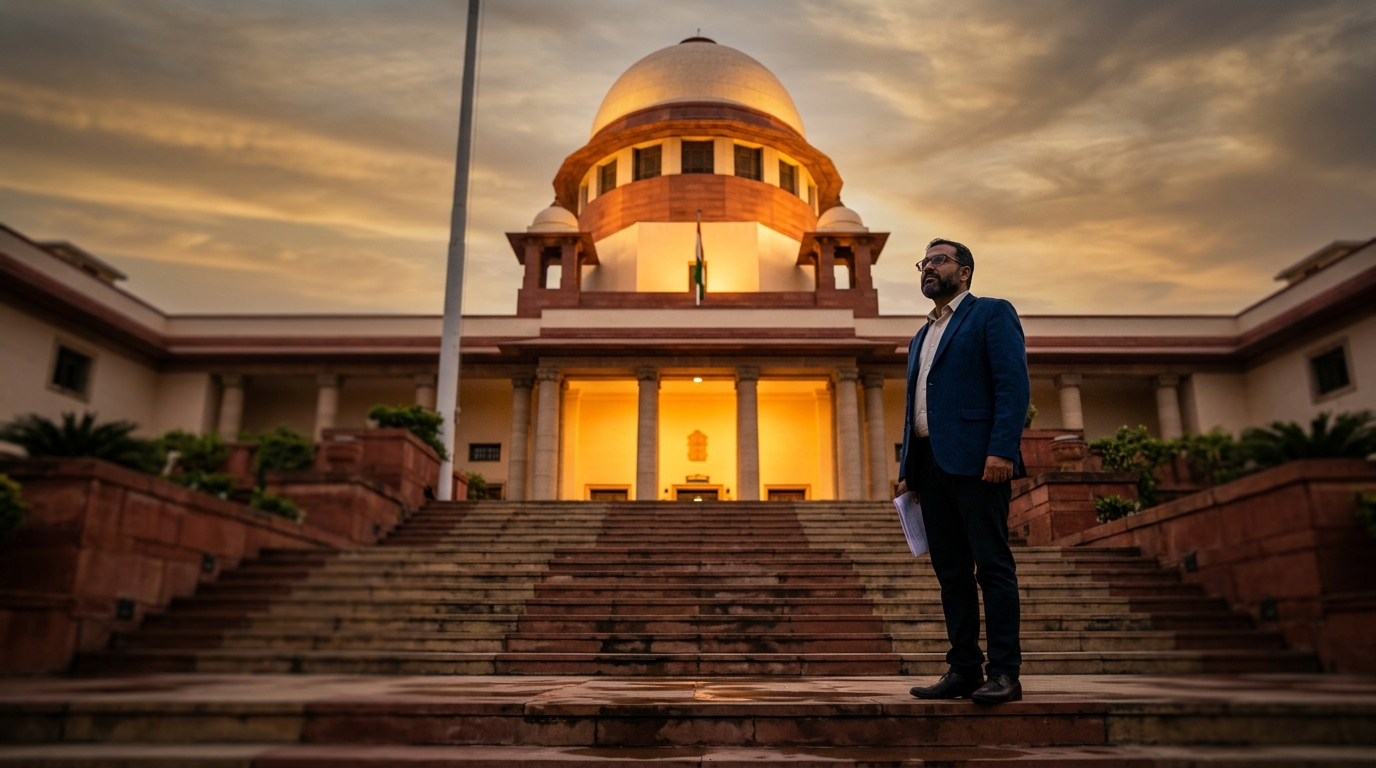
Dabholkar’s Son Seeks Supreme Court Intervention to Uphold 2018 Sabarimala Gender‑Equality Verdict — UPSC Current Affairs | March 15, 2026
Dabholkar’s Son Seeks Supreme Court Intervention to Uphold 2018 Sabarimala Gender‑Equality Verdict
The son of slain rationalist Dr. Narendra Dabholkar, along with activist Nandini Jadhav, has filed an intervention in the Supreme Court’s review of the 2018 Sabarimala judgment, urging dismissal of petitions that seek to reinstate the ban on women’s entry. The application stresses constitutional guarantees of equality, scientific temper and the limited scope of review under Article 137, and asks the Court to uphold the earlier decision allowing women of all ages to enter the shrine.
Overview The son of renowned rationalist Dr. Narendra Dabholkar , MANS activist Hamid Dabholkar , together with social activist Nandini Jadhav , has moved the Supreme Court to intervene in the pending review of the landmark 2018 judgment that struck down the ban on women’s entry to the Sabarimala temple . The intervention seeks dismissal of the review petitions and reaffirmation of the original decision. Key Developments Application filed by Hamid Dabholkar and Nandini Jadhav as interveners in the review proceedings. Petition urges the Court to apply the narrow scope of Article 137 and reject the review petitions. Emphasis on constitutional values: equality ( Article 14 ), dignity, fraternity and scientific temper . Argument against the “essential religious practices” doctrine, warning that the Court should not become a theological authority. Call to dismiss broader constitutional questions raised in the 2019 reference order, labeling them advisory and beyond the Court’s jurisdiction. Important Facts The 2018 Constitution Bench, comprising nine judges, held that excluding women aged 10‑50 from Sabarimala violated Article 14 , Article 15 , and was not protected under Article 25 . The review petitions argue that the original judgment erred in interpreting religious freedom, but the interveners contend that the judgment correctly identified menstruation‑based exclusion as sex discrimination. Dr. Dabholkar was assassinated in 2013, leading to Maharashtra’s Anti‑Superstition and Black Magic law, underscoring the link between rationalist activism and constitutional reform. UPSC Relevance Understanding this case helps aspirants grasp several core concepts of the Indian Constitution and its jurisprudence: Balancing equality with religious freedom . Interpretation of the “essential religious practices” doctrine and its limits. Scope of judicial review under Article 137 . Role of scientific temper in shaping public policy and legal discourse. Impact of civil‑society interventions on constitutional litigation. Way Forward The 9‑judge bench is scheduled to hear the matter on 7 April . If the Court dismisses the review petitions, the 2018 judgment will remain binding, reinforcing gender‑equality jurisprudence and limiting the scope of future challenges based on religious essentialism. Conversely, a reversal could reopen debates on the balance between personal law, religious practices, and constitutional rights, affecting future cases involving gender and religion. Aspirants should monitor the outcome as it will likely influence subsequent legislative and judicial approaches to similar disputes.
Login to bookmark articles
Login to mark articles as complete
Overview
Supreme Court’s review of Sabarimala verdict tests gender equality vs religious freedom
Key Facts
2018 Constitution Bench (9 judges) struck down Sabarimala ban on women aged 10‑50 under Articles 14, 15; not protected by Article 25.
Review petitions challenging the 2018 judgment were filed in 2023; Supreme Court scheduled hearing on 7 April 2024.
Hamid Dabholkar (son of Dr. Narendra Dabholkar) and activist Nandini Jadhav filed an intervenor application seeking dismissal of the review petitions under Article 137.
Article 137 empowers the Supreme Court to review its own judgments only in limited, exceptional circumstances.
The intervenors invoke constitutional values – equality (Art 14), dignity, scientific temper (Art 51A(h)) – and contest the “essential religious practices” doctrine.
Dr. Narendra Dabholkar’s 2013 assassination led to Maharashtra’s Anti‑Superstition and Black Magic Act, highlighting the link between rationalist activism and legal reform.
If the review is dismissed, the 2018 judgment stays binding, reinforcing gender‑equality jurisprudence; a reversal could revive religious‑essentialism debates.
Background & Context
The Sabarimala case sits at the intersection of constitutional law, gender justice and religious freedom – core topics of GS‑2. It tests the balance between Articles 14, 15 (equality) and 25 (freedom of religion) and probes the limits of the "essential religious practices" doctrine, while also illustrating how civil‑society interventions can shape judicial outcomes.
UPSC Syllabus Connections
Essay•Philosophy, Ethics and Human ValuesEssay•Society, Gender and Social JusticeGS2•Historical underpinnings, evolution, features, amendments, significant provisions and basic structureGS4•Dimensions of ethics - private and public relationshipsEssay•Science, Technology and SocietyPrelims_GS•Constitution and Political SystemPrelims_GS•Public Policy and Rights IssuesGS1•Political philosophies and their effects on societyGS1•Salient features of Indian Society and Diversity of IndiaGS4•Role of family, society and educational institutions in inculcating values
Mains Answer Angle
GS‑2: Discuss the challenges of reconciling gender‑equality provisions with religious‑freedom claims in India, using the Sabarimala verdict and its pending review as a case study. The answer can also touch upon the role of scientific temper and civil‑society activism.