Overview
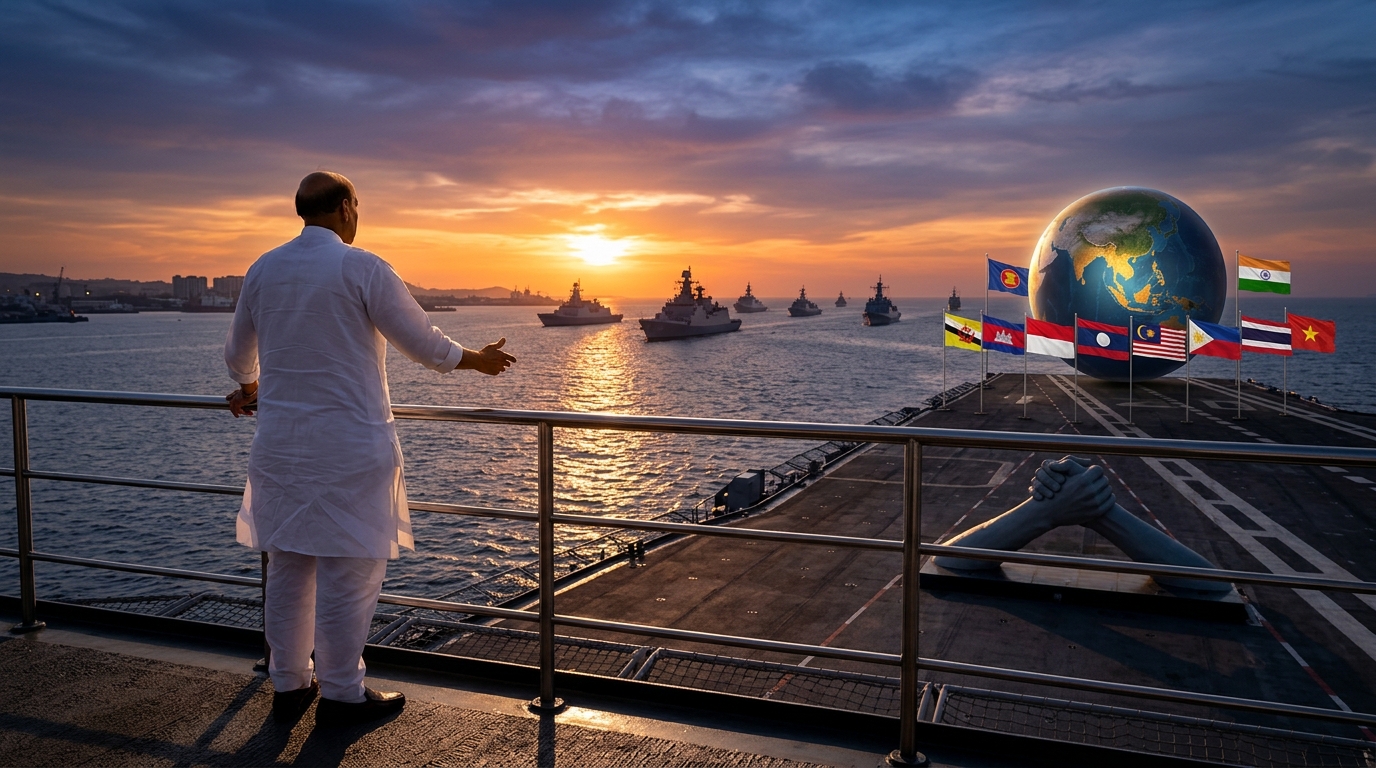
On 19 February 2026, Defence Minister Rajnath Singh hosted naval chiefs from nine ASEAN member states during the MILAN 2026 naval exercise in Visakhapatnam. The interaction highlighted India’s mature defence‑technology ecosystem, credited to the ‘Aatmanirbhar Bharat’ drive, and positioned the INS Vikrant and Visakhapatnam‑class destroyers as symbols of a “Builder’s Navy”. The meeting reinforced the Act East Policy and the MAHASAGAR vision for mutual security and growth across the Indo‑Pacific.
Key Developments
- Development 1: Invitation to ASEAN navies to participate in MILAN 2026, marking the largest edition with 74 nations involved, up from four in 1995.
- Development 2: Emphasis on India’s indigenous defence capabilities – the commissioning of INS Vikrant and the induction of Visakhapatnam‑class destroyers – underscoring a shift from a buyer to a builder navy.
- Development 3: Proposal to institutionalise the ASEAN‑India Defence Think‑Tank Interaction and youth‑officer exchange programmes to sustain long‑term maritime stability.
Important Facts
- Fact 1: MILAN 2026’s sea phase featured complex drills such as anti‑submarine warfare (ASW), air‑defence, and search‑and‑rescue operations, enhancing interoperability among Indo‑Pacific partners.
- Fact 2: The event coincided with the Indian Ocean Naval Symposium (IONS) Conclave of Chiefs and the International Fleet Review 2026, both aimed at building trust and operational familiarity.
Exam Relevance
This development touches upon several UPSC syllabus areas: GS Paper I (India’s foreign policy – Act East Policy, regional groupings like ASEAN), GS Paper II (defence production, maritime security, indigenous technology under ‘Aatmanirbhar Bharat’), and GS Paper III (security challenges in the Indo‑Pacific). Potential questions may explore India’s maritime strategy, the impact of indigenous defence manufacturing, or the role of multilateral naval exercises in regional security architecture.
Way Forward
India is likely to deepen defence cooperation with ASEAN through regular joint exercises, expanded think‑tank dialogues, and capacity‑building programmes for junior officers. Strengthening indigenous shipbuilding will further cement India’s status as a net‑security provider in the Indo‑Pacific, contributing to a free, open and inclusive maritime order.