Joint Statement on Strait of Hormuz Security and Energy Market Stabilisation
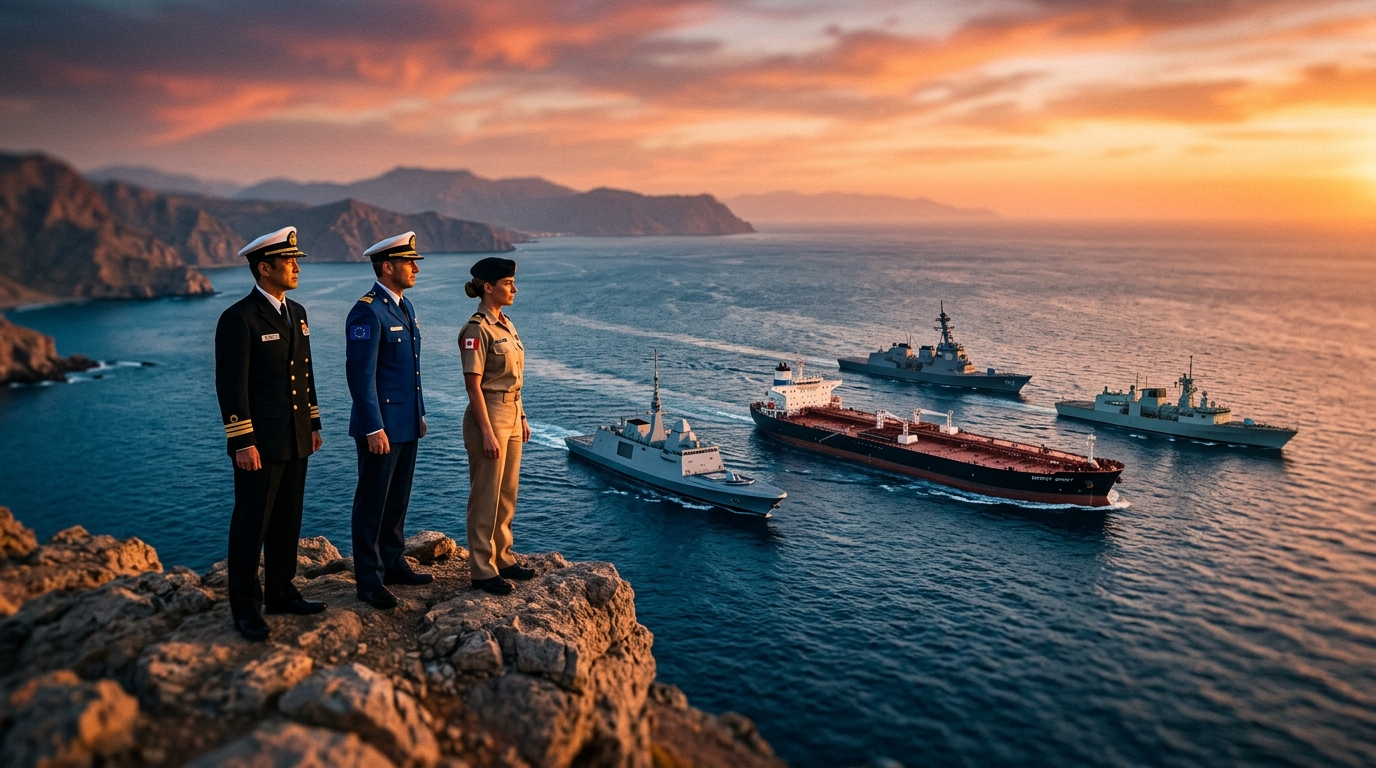
On 19 March 2026, a coalition of European powers (Britain, France, Germany, Italy, the Netherlands) together with Japan and Canada issued a joint statement condemning Iran’s recent attacks on commercial vessels and offshore energy infrastructure in the Gulf. The statement outlines their readiness to support safe navigation through the Strait of Hormuz and to take steps to stabilise volatile energy markets.
Key Developments
- Condemnation of Iran’s attacks on unarmed commercial ships, oil and gas installations, and the de‑facto closure of the Strait of Hormuz.
- Call for Iran to halt threats, mine‑laying, drone and missile strikes and to comply with UN Security Council Resolution 2817.
- Reaffirmation that freedom of navigation is a cornerstone of the United Nations Convention on the Law of the Sea (UNCLOS).
- Support for the International Energy Agency (IEA) decision to release strategic petroleum reserves (SPR).
- Commitment to work with oil‑producing nations to increase output and to assist the most affected countries through the United Nations and International Financial Institutions (IFIs).
Important Facts
The joint statement was signed by seven nations, reflecting a broad geopolitical consensus on the need to keep the Gulf’s maritime routes open. The coalition emphasised that any disruption to the Strait of Hormuz would have cascading effects on global energy supply, price stability, and vulnerable economies worldwide.
Exam Relevance
Understanding this development is crucial for multiple GS papers:
- GS 2 (Polity & International Relations): The role of the UN Security Council, the legal basis of freedom of navigation, and the collective diplomatic response to regional security threats.
- GS 3 (Economy): Impact of Gulf shipping disruptions on global oil markets, the function of the IEA and SPR, and the interplay between energy security and macro‑economic stability.
- GS 4 (Ethics & Integrity): The ethical dimension of protecting civilian infrastructure and ensuring equitable access to energy resources.
Way Forward
The coalition pledged to contribute to “appropriate efforts” for safe passage, which may include naval escorts, joint patrols, and diplomatic engagement with Tehran. They also signalled readiness to coordinate with other nations undertaking preparatory planning. In parallel, the IEA’s coordinated SPR release aims to cushion oil price spikes, while increased production from willing oil‑exporting countries should help rebalance supply‑demand dynamics. Continued multilateral cooperation through the UN and IFIs will be essential to support vulnerable states and to uphold the principles of international maritime law.
For UPSC aspirants, tracking the evolution of this diplomatic initiative offers insight into how major powers manage regional flashpoints, safeguard global energy security, and employ international legal frameworks to maintain peace and stability.