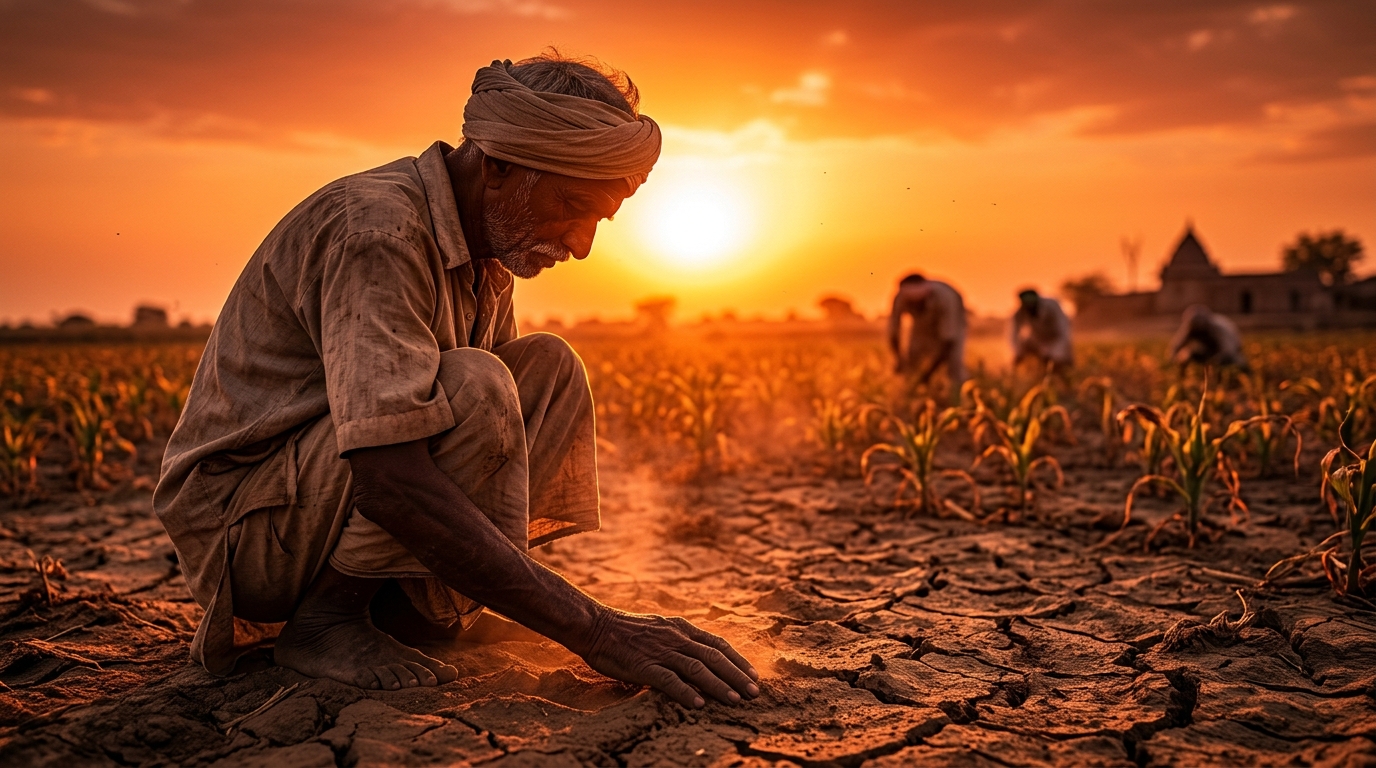
Recent findings from a joint United Nations report highlight that extreme heat is pushing the planet's agrifood systems to the brink. The report, prepared by the FAO and the World Meteorological Organization (WMO), warns that rising heatwaves are becoming more frequent, intense and prolonged. This trend jeopardises crops, livestock, fisheries and forests, putting the livelihoods of more than one billion people worldwide.
Key Developments
- Heatwave frequency and duration have risen sharply across major agricultural belts, according to the 2026 UN report.
- Yield losses are projected to increase by 10‑15% for staple crops such as wheat, rice and maize if heat trends continue.
- Livestock productivity is declining due to heat‑stress‑induced reduced feed intake and reproductive efficiency.
- Fisheries and forest ecosystems face heightened mortality, threatening food security and carbon sequestration.
- The report calls for immediate climate‑smart agricultural interventions and stronger international cooperation.
Important Facts
The joint FAO‑WMO assessment underscores that:
- Heat‑related crop failures have already affected more than 30 million hectares in the past five years.
- Regions most vulnerable include South Asia, Sub‑Saharan Africa and parts of Latin America.
- Adaptation gaps—such as limited access to drought‑resistant seeds and irrigation—exacerbate the risk.
- Economic losses could amount to several hundred billion dollars annually, amplifying poverty cycles.
Exam Relevance
Understanding the nexus between climate change and food security is essential for GS III (Economy & Environment) and GS II (Polity) questions. Aspirants should note:
- The role of FAO and WMO in shaping global agricultural and climate policies.
- Implications for India’s National Food Security Act, Pradhan Mantri Krishi Sinchayee Yojana and climate‑resilience strategies.
- Potential impact on India’s trade balance, rural employment and public health, linking to GS III and GS IV (Ethics) topics.
Way Forward
Policymakers must pursue a multi‑pronged approach:
- Scale up climate‑smart agriculture: promote heat‑tolerant crop varieties, precision irrigation and agro‑forestry.
- Strengthen early‑warning systems for heatwaves, leveraging WMO data.
- Invest in research and extension services to bridge adaptation gaps, especially for smallholder farmers.
- Enhance international cooperation on technology transfer, financing and capacity building.
- Integrate food‑security considerations into national climate‑action plans to safeguard the livelihoods of vulnerable populations.
Timely action will be critical to prevent a cascade of agricultural failures, economic distress and health crises that could destabilise societies worldwide.