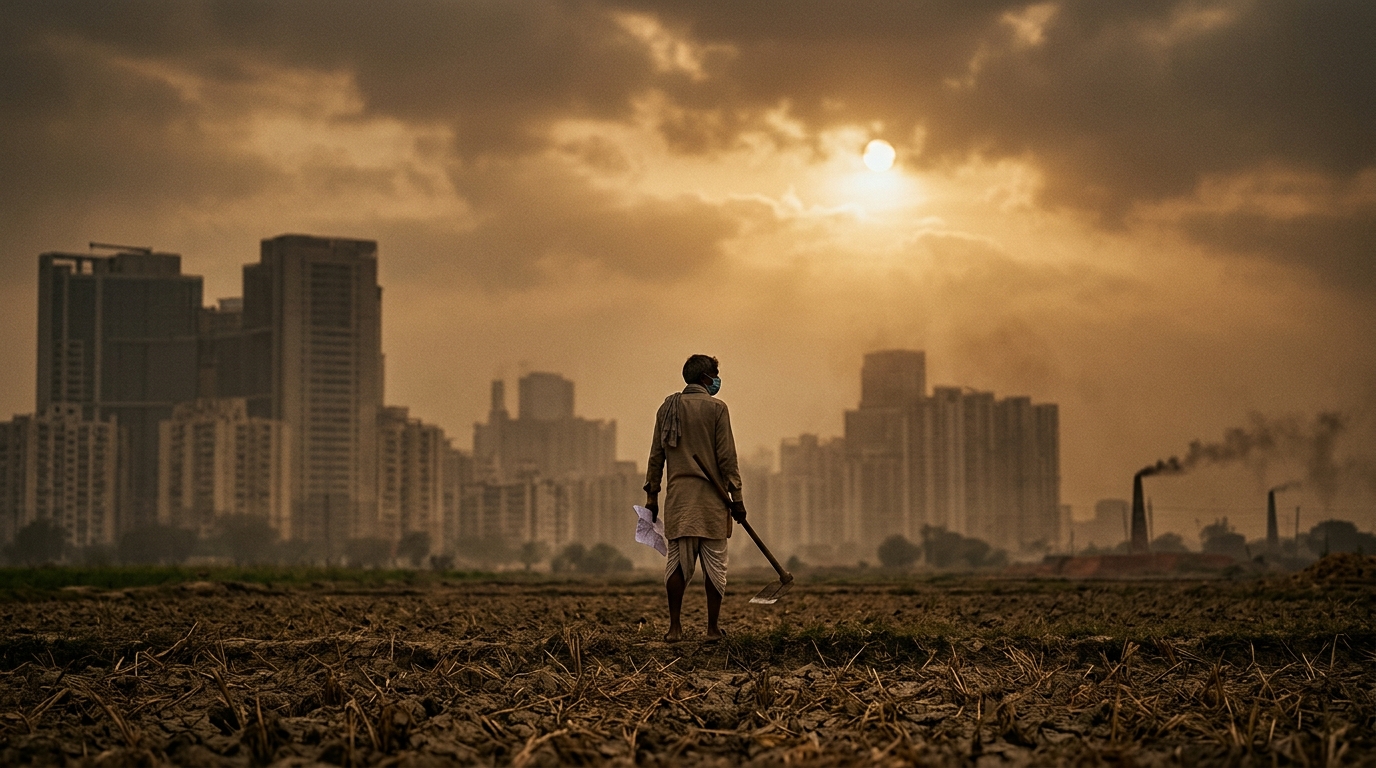
Overview
The Gurgaon recorded the highest monthly average PM2.5 of 116 µg/m³ in March 2026. A new report by the CREA shows that Haryana contributed four cities to the nation’s top‑10 most polluted list, underscoring regional disparities in air‑quality management.
Key Developments (March 2026)
- Gurgaon emerged as the most polluted city with a monthly average PM2.5 of 116 µg/m³.
- Four Haryana cities (Gurgaon, Bahadurgarh, Faridabad, Manesar) featured in the top‑10 list.
- Ghaziabad topped the FY 2025‑26 annual rankings.
- Haryana had the highest number of cities breaching the NAAQS (9 of 24), followed by Uttar Pradesh (8 of 21).
- Only a handful of cities met the NCAP targets after seven years of implementation.
Important Facts
- Top‑10 polluted cities (March 2026): Gurgaon, Bahadurgarh, Faridabad, Singrauli, Mandideep, Ghaziabad, Manesar, Bhiwadi, Noida, Nandesari.
- States with most cities exceeding NAAQS: Haryana (9), Uttar Pradesh (8).
- Cities showing >40% reduction in PM10 since the 2017‑18 baseline: 9 in Uttar Pradesh, 3 in Maharashtra, 2 each in West Bengal, Uttarakhand, Punjab, Rajasthan, and one each in Tamil Nadu, Jharkhand, Nagaland, J&K, Chhattisgarh, Bihar, Assam.
- States with rising non‑attainment status in PM10: Odisha (5 cities), Madhya Pradesh (2), Andhra Pradesh (2), plus one city each in Assam, Bihar, Chhattisgarh, Maharashtra, Tamil Nadu.
- Largest PM10 reduction: Dehradun (Uttarakhand) – 75% vs. 2017‑18 baseline.
- Highest PM10 increase: Visakhapatnam (Andhra Pradesh) – 73%.
- Delhi recorded a modest 17% reduction in PM10 over the same period.
Exam Relevance
Air‑quality management sits squarely within GS‑3 (Environment & Economy). The data illustrate:
- Implementation gaps in a flagship policy (NCAP), highlighting challenges of inter‑governmental coordination.
- Regional inequities – states like Haryana and Uttar Pradesh lag in compliance, a point of analysis for questions on federalism and environmental governance.
- The role of independent research agencies (CREA) in monitoring and informing policy, relevant for questions on data‑driven decision‑making.
- Health‑impact implications of high PM2.5 and PM10 levels, linking to public‑health and sustainable development goals.
Way Forward
Analysts recommend a multi‑pronged approach:
- Regional‑focused action plans that target dominant sources (vehicular emissions, industrial stacks, construction dust) identified through city‑level monitoring.
- Strengthening enforcement of NAAQS by empowering state pollution control boards with greater fiscal and technical resources.
- Expanding the NCAP framework to include emerging hotspots and to adopt a science‑based, funding‑targeted model.
- Promoting public‑awareness campaigns and incentivising clean‑technology adoption in high‑pollution corridors.
- Integrating air‑quality data with health surveillance to quantify economic costs and guide policy prioritisation.
Addressing the rising trend in several states will be crucial as India moves towards its 2030 sustainable development commitments.