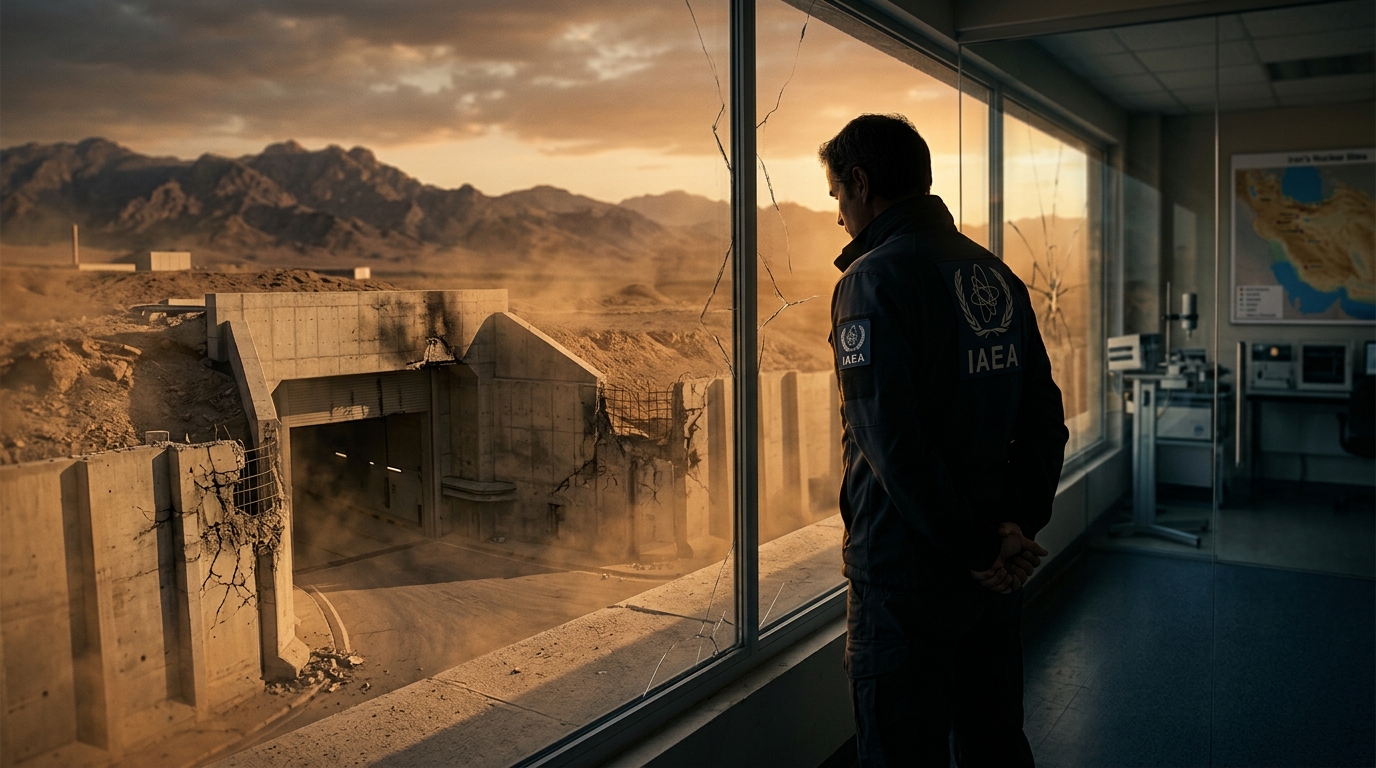
The International Atomic Energy Agency (IAEA) has verified that the entrance structures of Iran’s underground Natanz Fuel Enrichment Plant (FEP) were hit during the latest U.S.–Israeli military operation on 1 March 2026. While the plant’s core was already severely damaged in the June 2025 strikes, the recent attack caused additional structural harm but no new radiological fallout.
Key Developments
- IAEA, using recent satellite imagery, confirmed damage to the entrance buildings of the underground FEP.
- The agency stated that there will be no radiological consequence and no additional impact on the plant’s already compromised core.
- The findings align with a report by the Institute for Science and International Security (ISIS), which earlier described the strikes as “not major”.
- Iran announced the strike on 1 March 2026, prompting immediate diplomatic statements from the United States and Israel.
- The incident underscores the ongoing strategic contest over Iran’s uranium enrichment capabilities.
Important Facts
Iran operates three known uranium‑enrichment facilities; Natanz is the most sophisticated, featuring underground vaults to shield against aerial attacks. The June 2025 strikes had already crippled the plant’s centrifuge cascade, reducing its enrichment capacity. The recent damage is limited to peripheral structures, meaning the core remains non‑operational. The IAEA’s role is to monitor compliance with the Joint Comprehensive Plan of Action (JCPOA) and to provide transparent assessments to the international community.
Exam Relevance
- Understanding the function of the IAEA is essential for GS III topics on nuclear governance and international security.
- The incident illustrates the interplay of uranium enrichment technology with geopolitical strategy, a recurring theme in GS II (International Relations) and GS III (Science & Technology).
- Satellite‑based verification methods highlight the importance of modern intelligence tools, relevant for GS III (Technology) and GS II (Security).
- The role of think‑tanks like ISIS underscores the influence of research institutions on policy formulation, a point for GS II (Polity) and GS III.
Way Forward
For policymakers, the immediate priority is to ensure that any further damage does not trigger a radiological emergency. Diplomatically, the IAEA’s transparent reporting can serve as a confidence‑building measure to de‑escalate tensions and revive dialogue on the JCPOA. Strategically, India and other non‑aligned nations should monitor the evolving security dynamics in the Middle East, assess implications for regional stability, and consider the impact on global nuclear non‑proliferation regimes.