Loading page, please wait…
HomeCurrent AffairsEditorialsGovt SchemesLearning ResourcesUPSC SyllabusPricingAboutBest UPSC AIUPSC AI ToolAI for UPSCUPSC ChatGPT

© 2026 Vaidra. All rights reserved.

PrivacyTerms
Vaidra Logo
Vaidra

Top 4 items + smart groups

UPSC GPT
New
Current Affairs
Daily Solutions
Daily Puzzle
Mains Evaluator

Version 2.0.0 • Built with ❤️ for UPSC aspirants

IMD Issues Heatwave to Severe Heatwave Alerts Across Gujarat, Rajasthan, Delhi and Other Regions – March 11, 2026 — UPSC Current Affairs | March 12, 2026
IMD Issues Heatwave to Severe Heatwave Alerts Across Gujarat, Rajasthan, Delhi and Other Regions – March 11, 2026
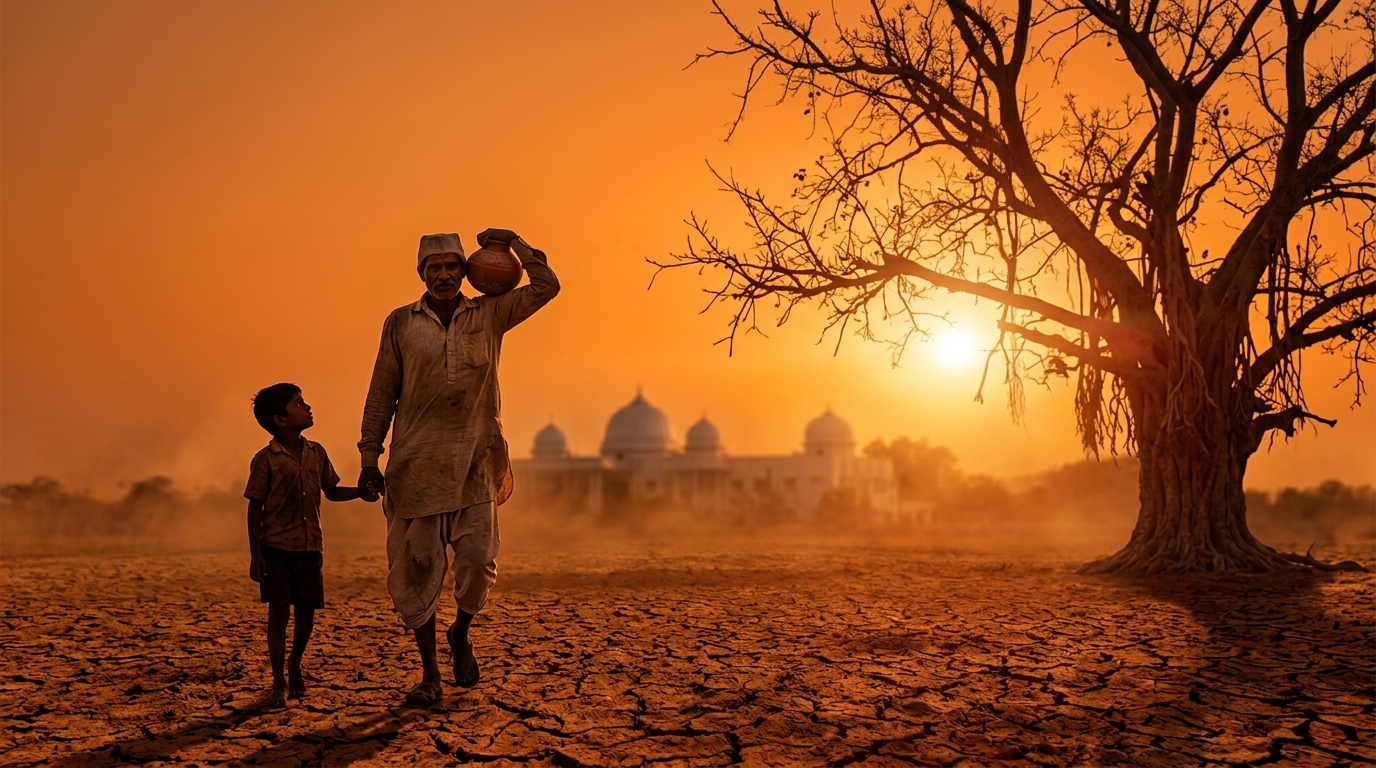
The India Meteorological Department warned of heatwave to severe heatwave conditions across Gujarat, Rajasthan, Delhi and several other states from 11‑13 March 2026, with temperatures exceeding normal by up to 7.2 °C. The alert underscores the relevance of climate‑related disaster management and public‑health challenges for UPSC aspirants.
Heatwave Alert Across Large Parts of India (11‑13 March 2026) The India Meteorological Department (IMD) reported that several states experienced heatwave to severe heatwave conditions on Wednesday, 11 March 2026 . The agency highlighted markedly above normal maximum temperatures in many regions, with some places exceeding the normal by more than 5 °C. Key Developments (11‑13 March) Heatwave to severe heatwave conditions persisted in Gujarat’s Saurashtra and Kutch regions. Isolated pockets in Maharashtra’s Vidarbha, Assam, Meghalaya, and Jammu‑Kashmir‑Ladakh reported similar spikes. Delhi, Haryana, Chandigarh, and large parts of Rajasthan, Punjab, Uttar Pradesh, Uttarakhand, Himachal Pradesh, Madhya Pradesh, Konkan, Goa, Chhattisgarh recorded temperatures 5.1 °C or more above normal. Gujarat’s capital Ahmedabad and Gandhinagar recorded 7.2 °C and 6.4 °C above normal respectively. The IMD’s monthly forecast of 28 February had already warned of above‑normal heatwave days from March to May. Important Facts Duration: The alert is expected to continue till 13 March 2026 for most affected zones. Geographical spread: Apart from Gujarat, the heatwave impacted both western (Rajasthan, Punjab) and eastern (Uttar Pradesh, Madhya Pradesh) belts, as well as the Himalayan foothills (Uttarakhand, Himachal Pradesh). Temperature deviation: Markedly above normal is defined as a deviation of ≥5.1 °C from the long‑term average. Health risk: Prolonged exposure can aggravate heat‑related illnesses, especially among vulnerable groups such as the elderly, outdoor workers, and children. UPSC Relevance Understanding extreme weather events is essential for several GS papers. IMD data feed into the nation’s disaster‑management framework, influencing policy decisions under GS III (Environment & Ecology) . Heatwaves intersect with public‑health (GS II), agriculture (GS III), and climate‑change mitigation strategies (GS III). Aspirants should link these events to India’s commitments under the Paris Agreement and the National Action Plan on Climate Change. Way Forward Immediate measures: Activation of heat‑action plans, setting up of cooling centres, and public awareness campaigns on hydration and sun‑avoidance. Medium‑term strategies: Strengthening urban green cover, promoting water‑efficient irrigation, and enhancing early‑warning systems through the IMD . Policy focus: Integrating heat‑wave risk assessment into the National Disaster Management Plan and aligning with climate‑resilience goals in the Five‑Year Plans. For UPSC candidates, tracking such meteorological alerts helps in answering questions on climate variability, disaster management, and their socio‑economic impacts.
  1. Home
  2. Prepare
  3. Current Affairs
  4. IMD Issues Heatwave to Severe Heatwave Alerts Across Gujarat, Rajasthan, Delhi and Other Regions – March 11, 2026
Login to bookmark articles
Login to mark articles as complete

Overview

Heatwave alerts underscore climate‑risk governance and health‑policy challenges for India

Key Facts

  1. IMD issued heatwave to severe heatwave alerts for Gujarat, Rajasthan, Delhi, Haryana, Punjab, UP, Uttarakhand, Himachal, MP, Konkan, Goa and Chhattisgarh (11‑13 March 2026).
  2. Ahmedabad recorded 7.2 °C above normal; Gandhinagar 6.4 °C above normal.
  3. "Markedly above normal" defined as temperature deviation ≥5.1 °C from long‑term average, triggering alerts in 20+ districts.
  4. Alert expected to continue till 13 March 2026; IMD’s 28‑Feb monthly forecast had warned of above‑normal heat days from March to May.
  5. Heatwave poses health risks to elderly, outdoor workers and children and stresses agriculture in Saurashtra, Kutch and Vidarbha.
  6. Immediate response: activation of heat‑action plans, cooling centres, public awareness; medium‑term: urban greening, water‑efficient irrigation, stronger early‑warning systems.
  7. Heat‑wave management aligns with India’s National Action Plan on Climate Change and Paris Agreement commitments.

Background & Context

Heatwaves are classified as extreme weather events under GS‑III (Environment & Ecology) and intersect with public‑health (GS‑II) and agriculture. The IMD’s early‑warning system feeds into the National Disaster Management Plan, making climate‑risk governance a key focus for sustainable development and climate‑change mitigation strategies.

Mains Answer Angle

GS‑III: Evaluate the effectiveness of India's heat‑action plans and suggest policy measures to strengthen climate‑resilience and disaster‑management integration.

Full Article

Read Original on hindu

Analysis

Practice Questions

GS3
Easy
Prelims MCQ

Definition of severe heatwave

1 marks
4 keywords
GS3
Medium
Mains Short Answer

Heat‑action plans and public‑health response

10 marks
5 keywords
GS3
Hard
Mains Essay

Disaster management, climate‑change policy, heat‑wave risk

250 marks
7 keywords
Related:Daily•Weekly

Loading related articles...

Loading related articles...

Tip: Click articles above to read more from the same date, or use the back button to see all articles.

Explore:Current Affairs·Editorial Analysis·Govt Schemes·Study Materials·Previous Year Questions·UPSC GPT