Loading page, please wait…
HomeCurrent AffairsEditorialsGovt SchemesLearning ResourcesUPSC SyllabusPricingAboutBest UPSC AIUPSC AI ToolAI for UPSCUPSC ChatGPT

© 2026 Vaidra. All rights reserved.

PrivacyTerms
Vaidra Logo
Vaidra

Top 4 items + smart groups

UPSC GPT
New
Current Affairs
Daily Solutions
Daily Puzzle
Mains Evaluator

Version 2.0.0 • Built with ❤️ for UPSC aspirants

IMD Warns of Above‑Normal Heatwave Days Across India (Mar‑May 2026) – Impact on Winter Crops and Wheat Export Outlook — UPSC Current Affairs | March 1, 2026
IMD Warns of Above‑Normal Heatwave Days Across India (Mar‑May 2026) – Impact on Winter Crops and Wheat Export Outlook
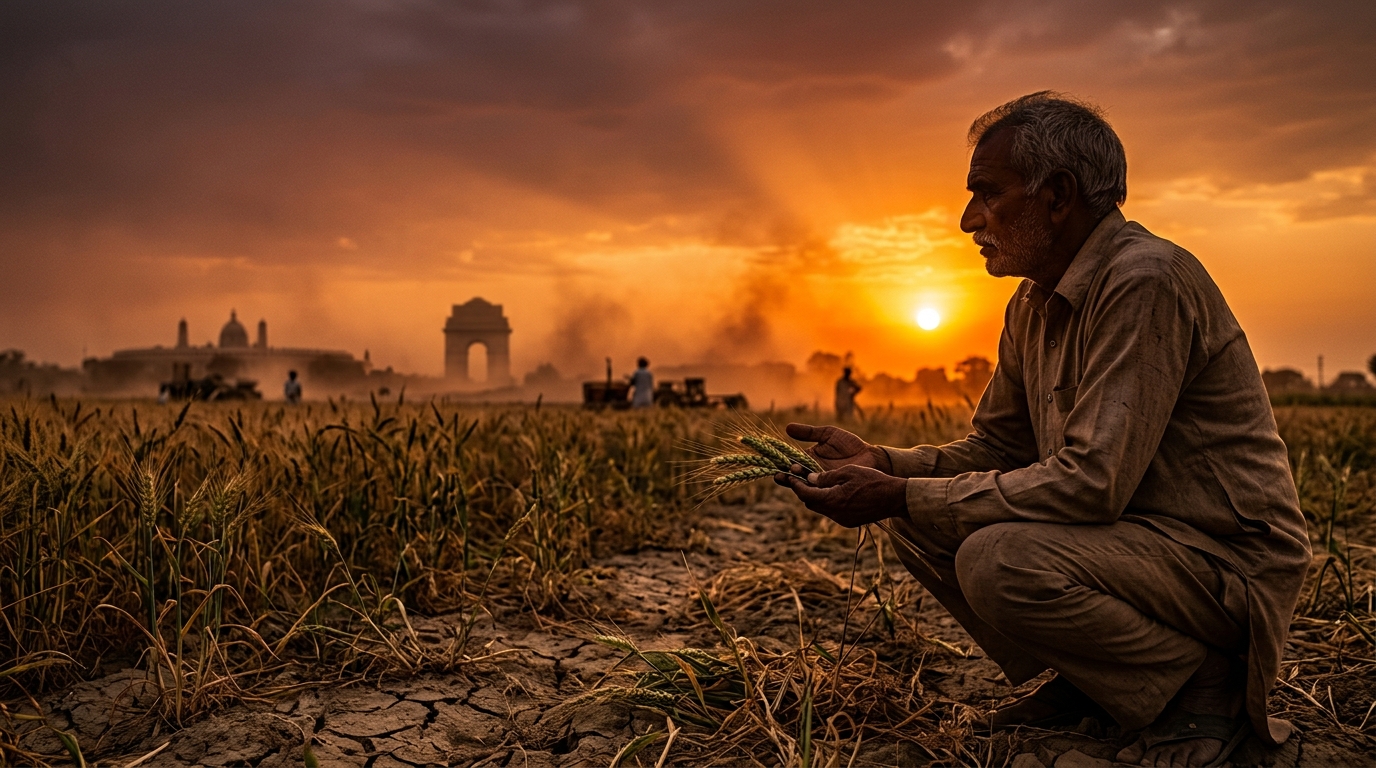
The India Meteorological Department forecasts above‑normal heatwave days across the country from March to May 2026, raising concerns over reduced yields of winter‑sown crops like wheat. This climatic stress could affect India's wheat export ambitions and increase reliance on imported edible oils, underscoring the need for proactive agricultural and trade policies.
Overview The India Meteorological Department (IMD) has projected a hotter‑than‑normal summer for 2026, with the number of heatwave days in March and May expected to exceed the seasonal average. This early rise in temperature follows a February that was the fifth‑warmest since records began in 1901. Key Developments Minimum temperatures in March will stay above average across most regions, according to Mr. Mohapatra . Both maximum and minimum temperatures in February were above normal, marking the fifth‑warmest February on record. Above‑average March temperatures risk reducing grain size and yields of winter‑sown crops like wheat, rapeseed and chickpeas. India, the world’s second‑largest wheat producer, hopes a bumper 2026 harvest will enable surplus exports and curb costly imports of edible oils . Important Facts • February 2026 recorded the fifth‑warmest temperature since 1901, with both daily highs and lows above the long‑term average. • March 2026 is expected to see minimum temperatures consistently above the seasonal norm across most states. • The projected increase in heatwave days could shrink grain size of wheat, potentially affecting overall yield despite a generally good monsoon outlook. UPSC Relevance GS‑3 (Environment & Climate): Understanding the role of IMD in climate monitoring and its impact on agriculture. GS‑3 (Agriculture & Food Security): Effects of temperature anomalies on winter crops and the consequent food‑grain security. GS‑3 (Economy): Implications for India’s wheat export potential and the need to reduce imports of edible oils , influencing trade balance. Way Forward Policymakers should consider early‑season advisories to farmers, promote heat‑resilient crop varieties, and strengthen storage infrastructure to mitigate yield losses. Simultaneously, the Ministry of Agriculture can explore strategic reserves of wheat to stabilise export commitments while diversifying edible‑oil import sources to reduce vulnerability to price shocks. Continuous monitoring by the IMD will be crucial for timely interventions.
  1. Home
  2. Prepare
  3. Current Affairs
  4. IMD Warns of Above‑Normal Heatwave Days Across India (Mar‑May 2026) – Impact on Winter Crops and Wheat Export Outlook
Must Review
Login to bookmark articles
Login to mark articles as complete

Overview

Heatwave surge threatens wheat yields, jeopardising India’s export ambitions

Key Facts

  1. IMD projects above‑normal heatwave days in March and May 2026 across most Indian states.
  2. February 2026 recorded the fifth‑warmest temperature since 1901, with both maximum and minimum values above average.
  3. Minimum temperatures in March 2026 are expected to stay above the seasonal norm throughout the country.
  4. Higher temperatures risk reducing grain size and overall yields of winter‑sown crops such as wheat, rapeseed and chickpeas.
  5. India hopes a bumper 2026 wheat harvest will create surplus for export, helping to curb costly edible‑oil imports.

Background & Context

The forecast underscores the climate‑change‑driven temperature anomalies that directly affect agricultural productivity, food‑grain security and trade balance—core issues under GS‑3 (Environment, Agriculture & Food Security, Economy).

Mains Answer Angle

In GS‑3, candidates can discuss the nexus between rising heatwave days, winter‑crop yields and India’s wheat export strategy, evaluating policy responses for climate‑resilient agriculture and trade stability.

Full Article

Read Original on hindu

Analysis

Practice Questions

Prelims
Easy
Prelims MCQ

Climate anomalies and agricultural impact

1 marks
5 keywords
GS3
Medium
Mains Short Answer

Agricultural policy and climate resilience

5 marks
5 keywords
GS3
Hard
Mains Essay

Food security, climate change, trade balance

25 marks
6 keywords
Related:Daily•Weekly

Loading related articles...

Loading related articles...

Tip: Click articles above to read more from the same date, or use the back button to see all articles.

Explore:Current Affairs·Editorial Analysis·Govt Schemes·Study Materials·Previous Year Questions·UPSC GPT