India’s Energy Supply Landscape Amid Gulf Tensions
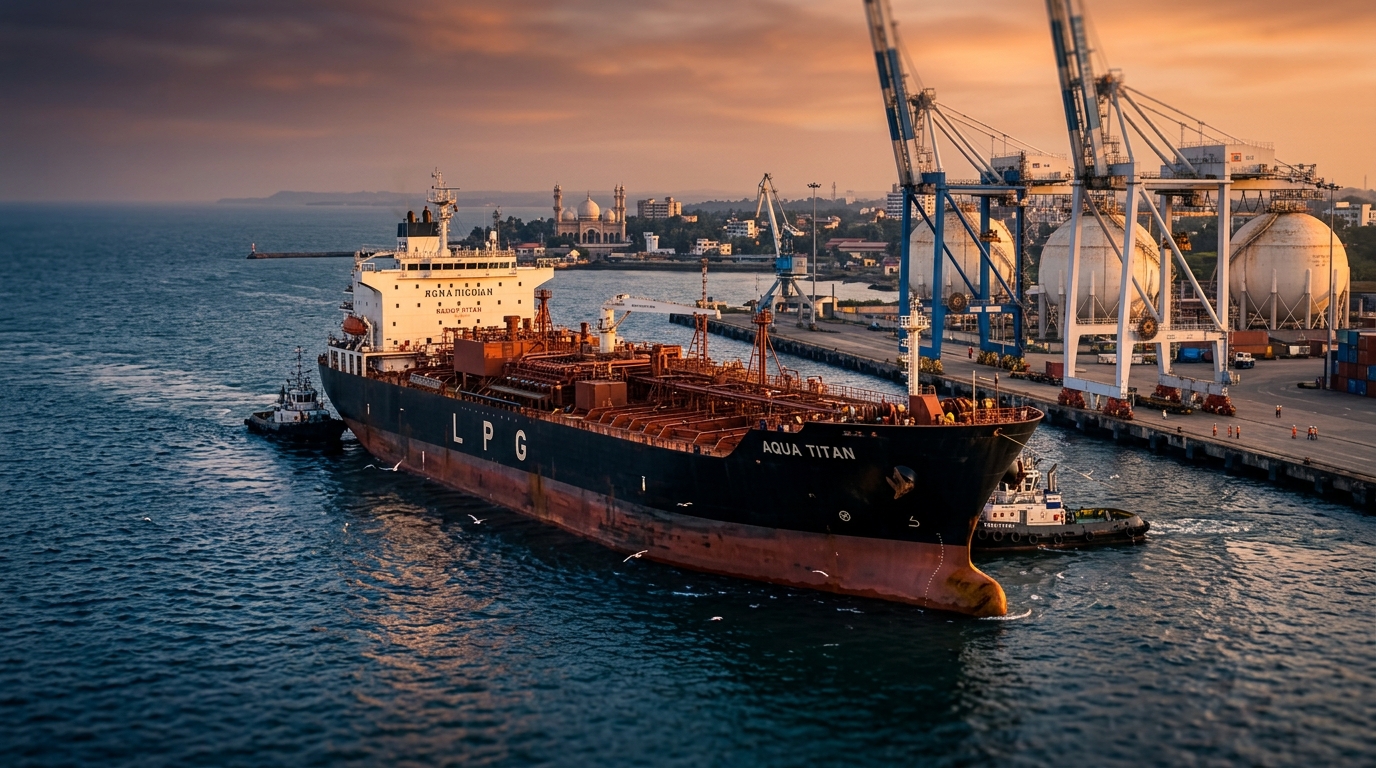
On Saturday, 21 March 2026, the Aqua Titan Vessel is slated to dock at New Mangalore Port. The arrival comes as India grapples with potential disruptions in the Strait of Hormuz, a chokepoint that has recently seen heightened naval activity.
Key Developments
- Special Secretary Rajesh Kumar Sinha of the Ministry of Ports, Shipping and Waterways confirmed the vessel’s expected arrival on 21 March 2026.
- Joint Secretary Sujata Sharma of the Ministry of Petroleum and Natural Gas warned of a possible impact on LPG supply, noting that 47% of India’s LPG imports currently come from Qatar.
- India has not yet raised retail petrol and diesel prices despite the geopolitical tension.
- Two container vessels, CMA CGM Vitoria and SSL Godavari, are operating in the eastern part of the Strait, heading to Oman and the UAE respectively.
Important Facts
• Russian Urals cargoes have become a focal point of trade diversification after sanctions on Russian oil.
• The New Mangalore Port is a strategic gateway for western and southern Indian states, handling a significant share of the country’s petroleum imports.
• The LPG import dependence on Qatar underscores the vulnerability of a single‑source supply chain.
Exam Relevance
Understanding the interplay between maritime security, energy imports and domestic pricing is essential for GS III (Economy & Energy) and GS II (Polity). Questions may probe:
- How geopolitical tensions in the Strait of Hormuz affect India’s oil import strategy.
- Policy measures undertaken by the Ministry of Petroleum and Natural Gas to diversify LPG sources.
- The role of the Ministry of Ports, Shipping and Waterways in ensuring uninterrupted cargo movement.
Way Forward
• Accelerate diversification of LPG imports by signing long‑term contracts with alternative suppliers in the Middle East and Africa.
• Strengthen maritime surveillance and diplomatic engagement to keep the Strait of Hormuz open for commercial traffic.
• Enhance port infrastructure at New Mangalore and other western ports to handle larger crude volumes, reducing dependence on a few entry points.
These steps will mitigate supply shocks, safeguard energy security, and keep consumer fuel prices stable.