Overview
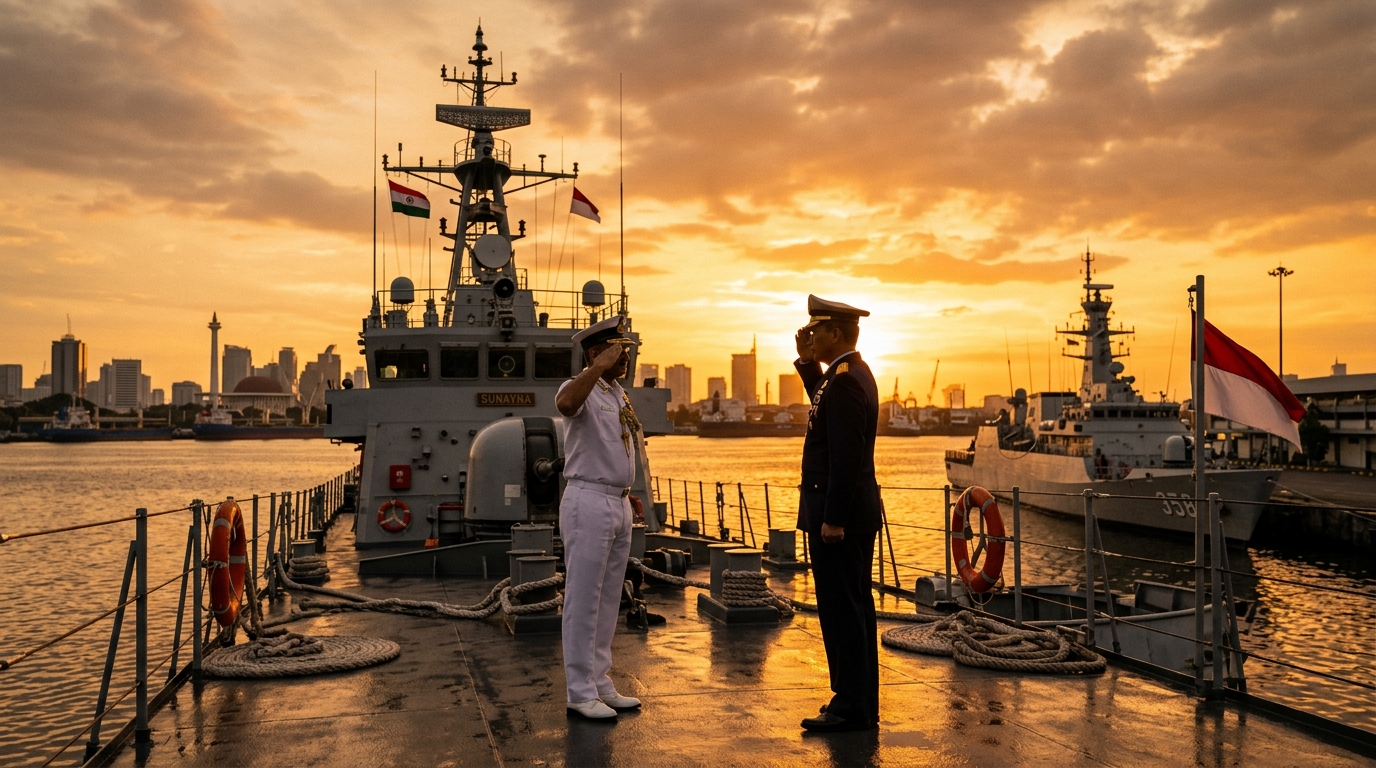
The Indian Navy’s INS Sunayna arrived in Jakarta on 21 April 2026 as part of the IOS SAGAR initiative. The visit marks the third port call of the ship’s operational deployment across the IOR and underscores India’s Neighbourhood First stance.
Key Developments
- Port call at Jakarta with engagements between the Indian Navy and the Indonesian Navy (TNI AL).
- Professional exchanges, joint yoga sessions, sporting events and a deck reception for senior naval officials.
- Scheduled PASSEX with the Indonesian Navy on departure.
- Transit through the narrow Malacca and Singapore Straits, demonstrating high navigational proficiency.
- Presence of a multinational crew from 16 friendly foreign countries, highlighting India’s ability to operate with diverse partners.
Important Facts
The mission’s Harbour Phase ran from 16 to 29 March 2026 in India, after which the Sea Phase (April–May 2026) commenced with multiple port calls. The ship’s itinerary reflects India’s strategic intent to project a “free, open and inclusive Indo‑Pacific” and to deepen maritime cooperation under the MAHASAGAR framework.
Exam Relevance
Understanding the IOS SAGAR deployment helps aspirants grasp India’s maritime diplomacy, a key component of GS 2: Polity (foreign policy, security). The initiative also ties into GS 3: Economy by safeguarding sea‑lines of communication that carry a significant share of global trade. Moreover, the emphasis on joint exercises and multilateral crew composition illustrates India’s approach to building strategic partnerships, a recurring theme in UPSC questions on India’s neighbourhood policy and Indo‑Pacific strategy.
Way Forward
Future port calls are expected in other friendly nations, reinforcing interoperability and confidence‑building measures. Continued PASSEX drills and people‑to‑people interactions will deepen defence ties, while the broader MAHASAGAR vision will guide India’s role in shaping a stable Indo‑Pacific order.