Loading page, please wait…
HomeCurrent AffairsEditorialsGovt SchemesLearning ResourcesUPSC SyllabusPricingAboutBest UPSC AIUPSC AI ToolAI for UPSCUPSC ChatGPT

© 2026 Vaidra. All rights reserved.

PrivacyTerms
Vaidra Logo
Vaidra

Top 4 items + smart groups

UPSC GPT
New
Current Affairs
Daily Solutions
Daily Puzzle
Mains Evaluator

Version 2.0.0 • Built with ❤️ for UPSC aspirants

Iran Vows Strait of Hormuz Closure Until US Lifts Port Blockade – Ceasefire Impact

Iran Vows Strait of Hormuz Closure Until US Lifts Port Blockade – Ceasefire Impact
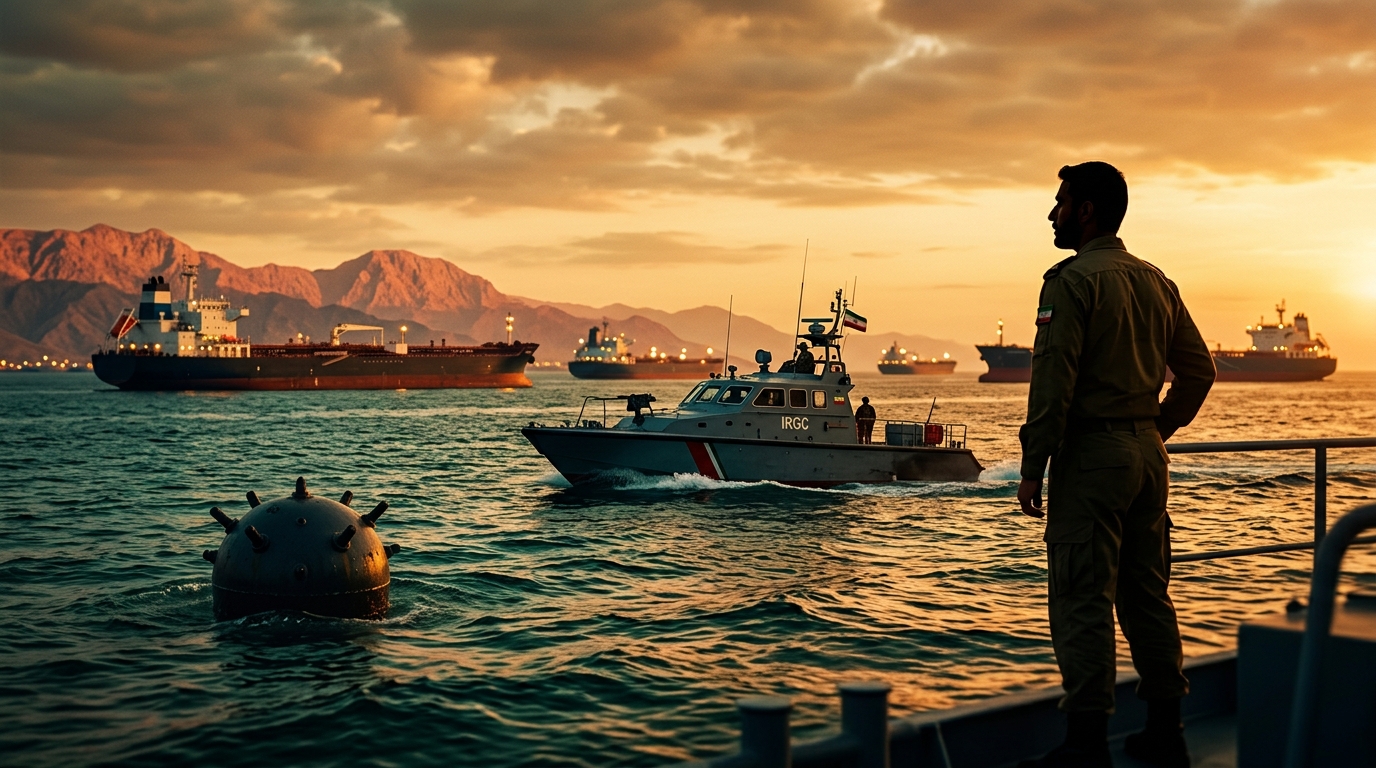
On 23 April 2026, Iran warned it will keep the Strait of Hormuz closed until the United States lifts its port blockade, intensifying pressure on the fragile ceasefire in the West Asia war. The standoff threatens global oil flows and underscores the use of economic leverage in modern geopolitical conflicts, a key topic for UPSC aspirants.
On Thursday, 23 April 2026 , Iran announced that it will keep the Strait of Hormuz shut as long as the United States continues its blockade of Iranian ports. The declaration comes amid a fragile ceasefire in the ongoing West Asia war, where both sides are wielding economic leverage to compel concessions. Key Developments Iran’s navy warned that the Strait of Hormuz will remain closed until the US lifts its port blockade . The US has reiterated its commitment to the maritime security of the Gulf, stating that the blockade is a response to Iran’s alleged support for militant proxies. Both parties have intensified diplomatic talks, but no tangible progress has been reported since the truce began. International shipping firms warn of rising freight rates and potential rerouting of oil cargoes, which could affect global energy prices. Important Facts The Strait of Hormuz handles roughly 20% of the world’s petroleum shipments . A closure would force tankers to take the longer route around the Cape of Good Hope, adding 2,000 nautical miles and increasing fuel consumption by an estimated 15% . The US naval presence in the Gulf, estimated at 15 warships , underscores the strategic importance of the waterway. Iran’s declaration aligns with its broader strategy of using maritime pressure to offset US economic sanctions. UPSC Relevance For GS2 (Polity), the standoff illustrates how sovereign states employ coercive diplomacy and the role of international law in maritime disputes. GS3 (Economy) students must assess the impact of a potential blockade on global oil markets, freight costs, and balance of payments. The episode also highlights the concept of economic leverage as a tool of statecraft, a recurring theme in contemporary geopolitics. Way Forward Diplomatic channels, possibly mediated by the United Nations or regional bodies, need to prioritize a mutually acceptable maritime security framework. Both sides could consider a phased de‑escalation: the US easing its blockade in exchange for Iranian assurances against supporting proxy groups. Simultaneously, international stakeholders should prepare contingency plans for oil logistics to mitigate market volatility while encouraging dialogue over a durable ceasefire that addresses both security and economic concerns.
  1. Home
  2. Prepare
  3. Current Affairs
  4. Iran Vows Strait of Hormuz Closure Until US Lifts Port Blockade – Ceasefire Impact
Must Review
Login to bookmark articles
Login to mark articles as complete

Overview

gs.gs282% UPSC Relevance

Iran threatens Hormuz closure, risking global oil shock and testing maritime law.

Key Facts

  1. 23 April 2026: Iran announced it will keep the Strait of Hormuz closed until the US lifts its port blockade.
  2. The Strait of Hormuz carries roughly 20% of the world’s petroleum shipments.
  3. A closure would force tankers to detour ~2,000 nautical miles around the Cape of Good Hope, raising fuel consumption by about 15%.
  4. The US has deployed about 15 warships in the Gulf to safeguard maritime security and enforce the blockade.
  5. The US blockade is justified as a response to Iran’s alleged support for militant proxy groups.
  6. International shipping firms warn of higher freight rates and potential oil price volatility if the strait is shut.
  7. Freedom of navigation in the strait is governed by customary international law and UNCLOS principles, though the US is not a party to UNCLOS.

Background & Context

The standoff epitomises coercive diplomacy where maritime leverage is used to achieve political objectives. It links GS2 concepts of sovereign actions, international law and security, and GS3 themes of oil‑price dynamics, balance of payments and global supply‑chain disruptions.

Mains Answer Angle

GS2/GS3 – Analyse the strategic, economic and diplomatic implications of Iran’s threat to close the Strait of Hormuz for India’s energy security and foreign policy, and suggest a balanced response.

Full Article

<p>On <strong>Thursday, 23 April 2026</strong>, <span class="key-term" data-definition="Iran — an Islamic Republic in West Asia, strategically important for its energy resources and regional influence (GS2: Polity)">Iran</span> announced that it will keep the <span class="key-term" data-definition="Strait of Hormuz — a narrow maritime passage connecting the Persian Gulf with the Arabian Sea, through which a significant portion of global oil trade passes (GS3: Economy, GS1: Geography)">Strait of Hormuz</span> shut as long as the <span class="key-term" data-definition="United States — a federal republic and global superpower whose foreign policy decisions influence international security and trade (GS2: Polity)">United States</span> continues its <span class="key-term" data-definition="Blockade — a naval or economic restriction imposed to cut off supplies, often used as a coercive tool in international conflicts (GS3: Economy)">blockade</span> of Iranian ports. The declaration comes amid a fragile <span class="key-term" data-definition="Ceasefire — a temporary suspension of hostilities agreed by warring parties, often used to create space for diplomatic negotiations (GS4: Ethics, GS3: Economy)">ceasefire</span> in the ongoing West Asia war, where both sides are wielding <span class="key-term" data-definition="Economic leverage — the use of trade, sanctions, or financial measures to influence another country's policy decisions (GS3: Economy)">economic leverage</span> to compel concessions.</p> <h3>Key Developments</h3> <ul> <li>Iran’s navy warned that the <span class="key-term" data-definition="Strait of Hormuz — a narrow maritime passage connecting the Persian Gulf with the Arabian Sea, through which a significant portion of global oil trade passes (GS3: Economy, GS1: Geography)">Strait of Hormuz</span> will remain closed until the US lifts its port <span class="key-term" data-definition="Blockade — a naval or economic restriction imposed to cut off supplies, often used as a coercive tool in international conflicts (GS3: Economy)">blockade</span>.</li> <li>The US has reiterated its commitment to the maritime security of the Gulf, stating that the blockade is a response to Iran’s alleged support for militant proxies.</li> <li>Both parties have intensified diplomatic talks, but no tangible progress has been reported since the truce began.</li> <li>International shipping firms warn of rising freight rates and potential rerouting of oil cargoes, which could affect global energy prices.</li> </ul> <h3>Important Facts</h3> <p>The <span class="key-term" data-definition="Strait of Hormuz — a narrow maritime passage connecting the Persian Gulf with the Arabian Sea, through which a significant portion of global oil trade passes (GS3: Economy, GS1: Geography)">Strait of Hormuz</span> handles roughly <strong>20% of the world’s petroleum shipments</strong>. A closure would force tankers to take the longer route around the Cape of Good Hope, adding <strong>2,000 nautical miles</strong> and increasing fuel consumption by an estimated <strong>15%</strong>. The US naval presence in the Gulf, estimated at <strong>15 warships</strong>, underscores the strategic importance of the waterway. Iran’s declaration aligns with its broader strategy of using maritime pressure to offset US economic sanctions.</p> <h3>UPSC Relevance</h3> <p>For GS2 (Polity), the standoff illustrates how sovereign states employ coercive diplomacy and the role of international law in maritime disputes. GS3 (Economy) students must assess the impact of a potential <span class="key-term" data-definition="Blockade — a naval or economic restriction imposed to cut off supplies, often used as a coercive tool in international conflicts (GS3: Economy)">blockade</span> on global oil markets, freight costs, and balance of payments. The episode also highlights the concept of <span class="key-term" data-definition="Economic leverage — the use of trade, sanctions, or financial measures to influence another country's policy decisions (GS3: Economy)">economic leverage</span> as a tool of statecraft, a recurring theme in contemporary geopolitics.</p> <h3>Way Forward</h3> <p>Diplomatic channels, possibly mediated by the United Nations or regional bodies, need to prioritize a mutually acceptable maritime security framework. Both sides could consider a phased de‑escalation: the US easing its <span class="key-term" data-definition="Blockade — a naval or economic restriction imposed to cut off supplies, often used as a coercive tool in international conflicts (GS3: Economy)">blockade</span> in exchange for Iranian assurances against supporting proxy groups. Simultaneously, international stakeholders should prepare contingency plans for oil logistics to mitigate market volatility while encouraging dialogue over a durable <span class="key-term" data-definition="Ceasefire — a temporary suspension of hostilities agreed by warring parties, often used to create space for diplomatic negotiations (GS4: Ethics, GS3: Economy)">ceasefire</span> that addresses both security and economic concerns.</p>
Read Original on hindu

Analysis

Practice Questions

GS3
Easy
Prelims MCQ

Strategic importance of maritime chokepoints

1 marks
3 keywords
GS3
Medium
Mains Short Answer

Economic implications of maritime disruptions

10 marks
5 keywords
GS2
Hard
Mains Essay

Maritime security, freedom of navigation and diplomatic strategy

25 marks
5 keywords
Related:Daily•Weekly

Loading related articles...

Loading related articles...

Tip: Click articles above to read more from the same date, or use the back button to see all articles.

Quick Reference

Key Insight

Iran threatens Hormuz closure, risking global oil shock and testing maritime law.

Key Facts

  1. 23 April 2026: Iran announced it will keep the Strait of Hormuz closed until the US lifts its port blockade.
  2. The Strait of Hormuz carries roughly 20% of the world’s petroleum shipments.
  3. A closure would force tankers to detour ~2,000 nautical miles around the Cape of Good Hope, raising fuel consumption by about 15%.
  4. The US has deployed about 15 warships in the Gulf to safeguard maritime security and enforce the blockade.
  5. The US blockade is justified as a response to Iran’s alleged support for militant proxy groups.
  6. International shipping firms warn of higher freight rates and potential oil price volatility if the strait is shut.
  7. Freedom of navigation in the strait is governed by customary international law and UNCLOS principles, though the US is not a party to UNCLOS.

Background

The standoff epitomises coercive diplomacy where maritime leverage is used to achieve political objectives. It links GS2 concepts of sovereign actions, international law and security, and GS3 themes of oil‑price dynamics, balance of payments and global supply‑chain disruptions.

Mains Angle

GS2/GS3 – Analyse the strategic, economic and diplomatic implications of Iran’s threat to close the Strait of Hormuz for India’s energy security and foreign policy, and suggest a balanced response.

Explore:Current Affairs·Editorial Analysis·Govt Schemes·Study Materials·Previous Year Questions·UPSC GPT
Iran Vows Strait of Hormuz Closure Until U... | UPSC Current Affairs