Overview
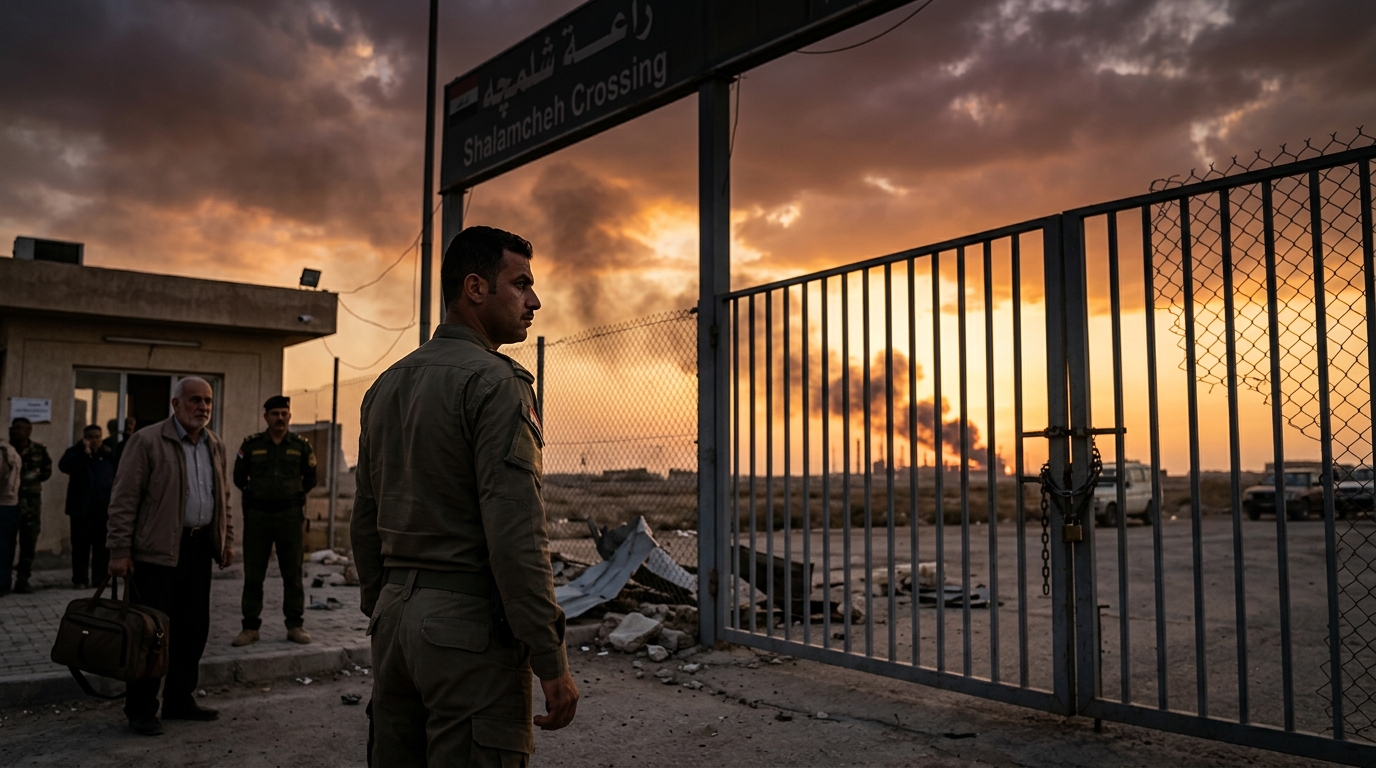
On April 4, 2026, Iraq sealed the Shalamcheh border crossing after an Iranian airstrike on the Iranian side killed an Iraqi national and left at least five Iraqis seriously wounded. The incident adds to a series of escalatory moves, including the downing of U.S. aircraft and a rejected cease‑fire proposal.
Key Developments (April 4, 2026)
- Iranian airstrike hits a passenger reception area on the Iranian side of the border, killing an Iraqi citizen and wounding five others.
- Iraq responds by closing the Shalamcheh border crossing with Iran.
- Iran’s atomic agency reports an airstrike near the Bushehr nuclear facility, killing a guard and damaging a support building.
- Iran claims to have shot down a U.S. F‑15 warplane; U.S. media say special forces rescued one of the two crew members.
- Iran also says it downed a U.S. A‑10 in the Gulf; the pilot was reportedly rescued.
- Tehran rejects a U.S. proposal for a 48‑hour ceasefire, allegedly conveyed through an unnamed third country.
Important Facts
- Casualties: 1 Iraqi citizen killed; at least 5 Iraqis seriously wounded.
- Strategic sites targeted: Passenger reception area near the border; Bushehr nuclear facility (fourth strike on the plant).
- Aircraft losses: One U.S. F‑15 and one U.S. A‑10.
- Rescue operation: One crew member of the downed fighter rescued by U.S. special forces; the second crew member remains missing.
Exam Relevance
The events illustrate several themes frequently examined in the UPSC syllabus:
- International Relations & Security (GS2): The closure of a key border crossing, cross‑border airstrikes, and the downing of combat aircraft highlight the volatility of Iran‑Iraq‑U.S. relations and the broader security dynamics of the Middle East.
- Strategic Infrastructure (GS3): Targeting of the Bushehr nuclear facility underscores the strategic importance of nuclear assets in modern warfare.
- Conflict Management (GS2): The rejected 48‑hour ceasefire proposal reflects diplomatic channels and their limitations during active hostilities.
- Defense Technology (GS2): The involvement of advanced aircraft such as the F‑15 and A‑10 provides case studies for air‑power doctrine and counter‑air strategies.
Way Forward
- Diplomatic engagement: Regional bodies (e.g., GCC, OIC) could mediate to reopen the Shalamcheh border crossing and prevent civilian casualties.
- Confidence‑building measures: A mutually agreed limited ceasefire, perhaps under UN auspices, could reduce the risk of further escalation.
- Strategic communication: Both Iran and the United States should clarify rules of engagement to avoid inadvertent escalation involving third‑party states.
- Security of critical infrastructure: Strengthening air‑defence and early‑warning systems around the Bushehr nuclear facility is essential to deter future strikes.