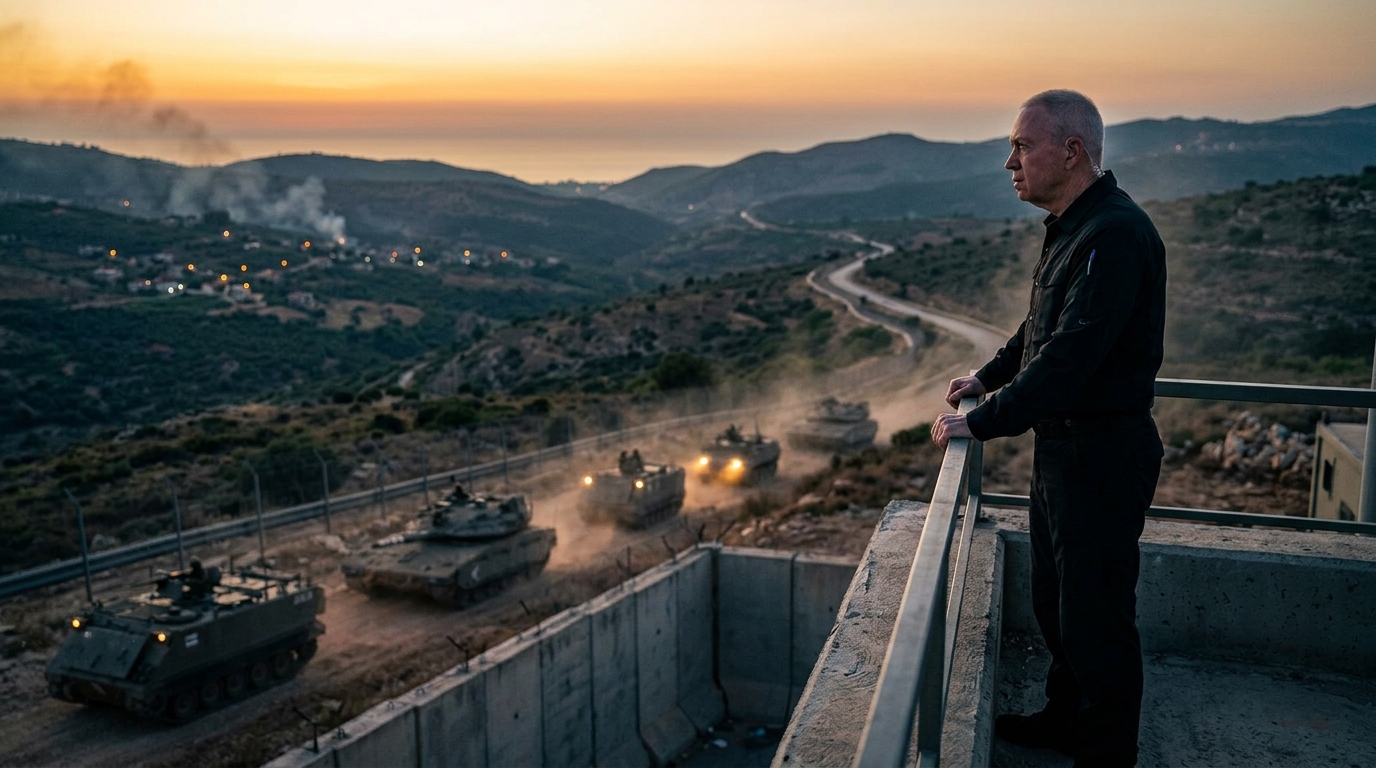
<h3>Overview</h3>
<p>On <strong>17 April 2026</strong>, the <span class="key-term" data-definition="Israel Defence Minister — The cabinet minister responsible for defence policy, armed forces, and security strategy of Israel (GS2: Polity)">Israel Defence Minister</span> announced that the military operation against the militant group <span class="key-term" data-definition="Hezbollah — A Lebanon-based Shia Islamist militant and political organization, designated as a terrorist group by several countries; significant in South Asian geopolitics and security studies (GS2: International Relations)">Hezbollah</span> is not yet concluded, even though a <span class="key-term" data-definition="Ceasefire — A temporary suspension of hostilities agreed by warring parties, often used to create humanitarian relief or negotiate political settlements (GS2: International Relations)">ceasefire</span> of ten days had just taken effect in Lebanon. The statement underscores the fragile security environment in the Israel‑Lebanon border region and hints at possible escalation if hostilities resume.</p>
<h3>Key Developments</h3>
<ul>
<li>The ten‑day <span class="key-term" data-definition="Ceasefire — A temporary suspension of hostilities agreed by warring parties, often used to create humanitarian relief or negotiate political settlements (GS2: International Relations)">ceasefire</span> began on <strong>17 April 2026</strong>, marking a pause in cross‑border exchanges after weeks of intensified fighting.</li>
<li>The Defence Minister warned that any renewal of combat operations would force <span class="key-term" data-definition="Displaced residents — Civilians forced to leave their homes due to armed conflict, often requiring humanitarian assistance and resettlement (GS4: Ethics)">displaced residents</span> who have started returning to the war‑torn south of Lebanon to evacuate again.</li>
<li>Israel maintains that its campaign against <span class="key-term" data-definition="Hezbollah — A Lebanon-based Shia Islamist militant and political organization, designated as a terrorist group by several countries; significant in South Asian geopolitics and security studies (GS2: International Relations)">Hezbollah</span> will continue until its strategic objectives are achieved, signalling a lack of a definitive political settlement.</li>
</ul>
<h3>Important Facts</h3>
<p>• The ceasefire was brokered by regional actors and is intended to last ten days, providing a window for humanitarian aid and civilian return.
• Since the escalation began in early 2026, thousands of Lebanese civilians have been displaced from villages along the southern border.
• Israel’s defence posture remains high, with troops and air assets positioned near the border to respond swiftly to any breach.</p>
<h3>UPSC Relevance</h3>
<p>The episode illustrates several themes relevant to the UPSC syllabus:</p>
<ul>
<li><strong>International Relations (GS2)</strong>: The dynamics between Israel, Lebanon, and non‑state actors like <span class="key-term" data-definition="Hezbollah — A Lebanon-based Shia Islamist militant and political organization, designated as a terrorist group by several countries; significant in South Asian geopolitics and security studies (GS2: International Relations)">Hezbollah</span> highlight the challenges of asymmetric warfare and regional security architectures.</li>
<li><strong>Polity (GS2)</strong>: The role of the <span class="key-term" data-definition="Israel Defence Minister — The cabinet minister responsible for defence policy, armed forces, and security strategy of Israel (GS2: Polity)">Israel Defence Minister</span> in shaping defence policy underscores the executive’s authority in matters of national security.</li>
<li><strong>Ethics & Governance (GS4)</strong>: The plight of <span class="key-term" data-definition="Displaced residents — Civilians forced to leave their homes due to armed conflict, often requiring humanitarian assistance and resettlement (GS4: Ethics)">displaced residents</span> raises questions about civilian protection, humanitarian response, and the responsibility of states under international law.</li>
</ul>
<h3>Way Forward</h3>
<p>For a sustainable peace, the following steps are essential:</p>
<ul>
<li>Strengthening diplomatic engagement among Israel, Lebanon, and regional mediators to convert the temporary <span class="key-term" data-definition="Ceasefire — A temporary suspension of hostilities agreed by warring parties, often used to create humanitarian relief or negotiate political settlements (GS2: International Relations)">ceasefire</span> into a lasting political arrangement.</li>
<li>Ensuring safe corridors for the return of <span class="key-term" data-definition="Displaced residents — Civilians forced to leave their homes due to armed conflict, often requiring humanitarian assistance and resettlement (GS4: Ethics)">displaced residents</span>, backed by UN agencies and NGOs.</li>
<li>Monitoring the operational scope of Israel’s campaign against <span class="key-term" data-definition="Hezbollah — A Lebanon-based Shia Islamist militant and political organization, designated as a terrorist group by several countries; significant in South Asian geopolitics and security studies (GS2: International Relations)">Hezbollah</span> to prevent escalation that could destabilise the broader Middle‑East region.</li>
</ul>
<p>Continued vigilance and a balanced approach between security imperatives and humanitarian concerns will be crucial for India’s foreign policy analysts and future civil servants.</p>