Israel’s Night‑Time Strikes Eliminate Iran’s Top Intelligence, Security Leaders and Target Offshore Gas Field — Regional Energy Implications — UPSC Current Affairs | March 19, 2026
Israel’s Night‑Time Strikes Eliminate Iran’s Top Intelligence, Security Leaders and Target Offshore Gas Field — Regional Energy Implications
Israel carried out a series of overnight strikes that killed Iran’s intelligence minister <strong>Esmail Khatib</strong>, senior security figure <strong>Ali Larijani</strong> and IRGC‑Basij chief <strong>Gen Gholam Reza Soleimani</strong>, and reportedly hit an offshore natural‑gas field, intensifying the regional energy‑security contest. The attacks underscore the escalating proxy conflict between the two states and its implications for South‑Asian geopolitics and energy markets, a key concern for UPSC aspirants.
Key Developments In a coordinated series of overnight operations, Israel eliminated three senior Iranian officials and struck a strategic energy asset, heightening the already volatile Iran‑Israel rivalry. 24 March 2026 : Esmail Khatib was killed in an overnight strike. 23 March 2026 : Ali Larijana was assassinated. Same night, Gen Gholam Reza Soleimani , commander of the Basij, was also killed. Israel reportedly bombed an offshore natural‑gas field belonging to Iran, targeting the nation’s energy lifeline. Israel Katz warned of further undisclosed operations. Important Facts The strikes represent a rare direct targeting of high‑ranking Iranian officials, a move that could trigger retaliatory measures. The offshore gas field is part of Iran’s broader strategy to boost energy exports and fund its regional proxies. Disruption of this asset may affect global gas prices and South‑Asian energy imports, given the region’s reliance on Persian Gulf supplies. UPSC Relevance These events intersect with multiple UPSC syllabus areas: International Relations (GS2) : The escalation illustrates the dynamics of proxy warfare, deterrence, and the use of covert strikes in statecraft. Energy Security (GS3) : Targeting an offshore gas field underscores the strategic importance of energy resources in geopolitical contests. Security Institutions (GS2) : Understanding the roles of the IRGC and its paramilitary wing, the Basij , is essential for analysing Iran’s power structure. Way Forward Analysts suggest several possible trajectories: Diplomatic Channels : Regional powers and the UN may push for de‑escalation to prevent a broader conflict that could disrupt energy markets. Retaliatory Threats : Iran could respond through proxy groups in Lebanon, Syria or Iraq, increasing instability in South‑Asia. Energy Policy Adjustments : Import‑dependent countries may diversify energy sources to mitigate supply shocks from the Persian Gulf. For UPSC candidates, tracking the evolving narrative will aid in answering questions on geopolitics, energy security, and the interplay of state and non‑state actors in contemporary international affairs.
Login to bookmark articles
Login to mark articles as complete
Overview
Israel’s night strikes on Iran’s elite and gas field heighten regional security and energy risks
Key Facts
24 Mar 2026: Israel killed Iran’s intelligence minister Esmail Khatib in an overnight strike.
23 Mar 2026: Senior security official Ali Larijani was assassinated in a coordinated Israeli operation.
Same night: IRGC Basij commander Gen Gholam Reza Soleimani was also eliminated.
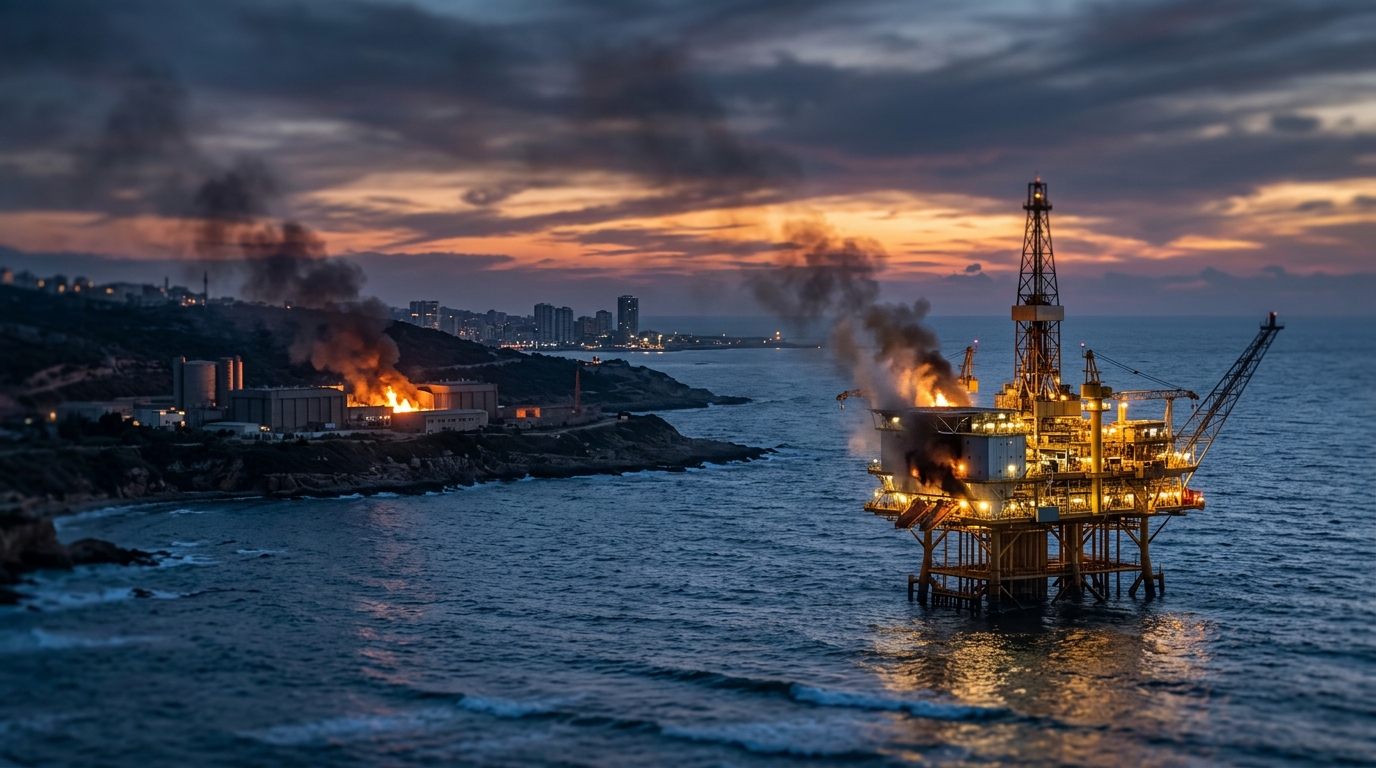
Israel bombed Iran’s offshore natural‑gas field in the Persian Gulf, a key export asset.
Israeli Defence Minister Israel Katz warned of further undisclosed ‘significant surprises’.
The gas field underpins Iran’s plan to fund regional proxies; its disruption could lift global gas prices and affect South‑Asian imports.
These strikes constitute a rare direct targeting of high‑ranking Iranian officials, raising the risk of retaliatory proxy attacks.
Background & Context
The episode underscores the use of covert kinetic action in statecraft, a core theme of International Relations in GS‑2, while the targeting of an offshore gas field links directly to Energy Security concerns in GS‑3. It also highlights the pivotal role of the IRGC and its Basij militia in Iran’s domestic and foreign policy architecture.
Mains Answer Angle
GS‑2 (International Relations & Polity) – Analyse how Israel’s targeted strikes reshape Iran‑Israel dynamics and regional security; GS‑3 (Economy) – Evaluate the implications for global energy markets and South‑Asian energy dependence.