Loading page, please wait…
HomeCurrent AffairsEditorialsGovt SchemesLearning ResourcesUPSC SyllabusPricingAboutBest UPSC AIUPSC AI ToolAI for UPSCUPSC ChatGPT

© 2026 Vaidra. All rights reserved.

PrivacyTerms
Vaidra Logo
Vaidra

Top 4 items + smart groups

UPSC GPT
New
Current Affairs
Daily Solutions
Daily Puzzle
Mains Evaluator

Version 2.0.0 • Built with ❤️ for UPSC aspirants

Israel’s Ground Offensive in Southern Lebanon (2026) – Objectives, Hezbollah’s Response and UPSC Implications — UPSC Current Affairs | March 22, 2026
Israel’s Ground Offensive in Southern Lebanon (2026) – Objectives, Hezbollah’s Response and UPSC Implications
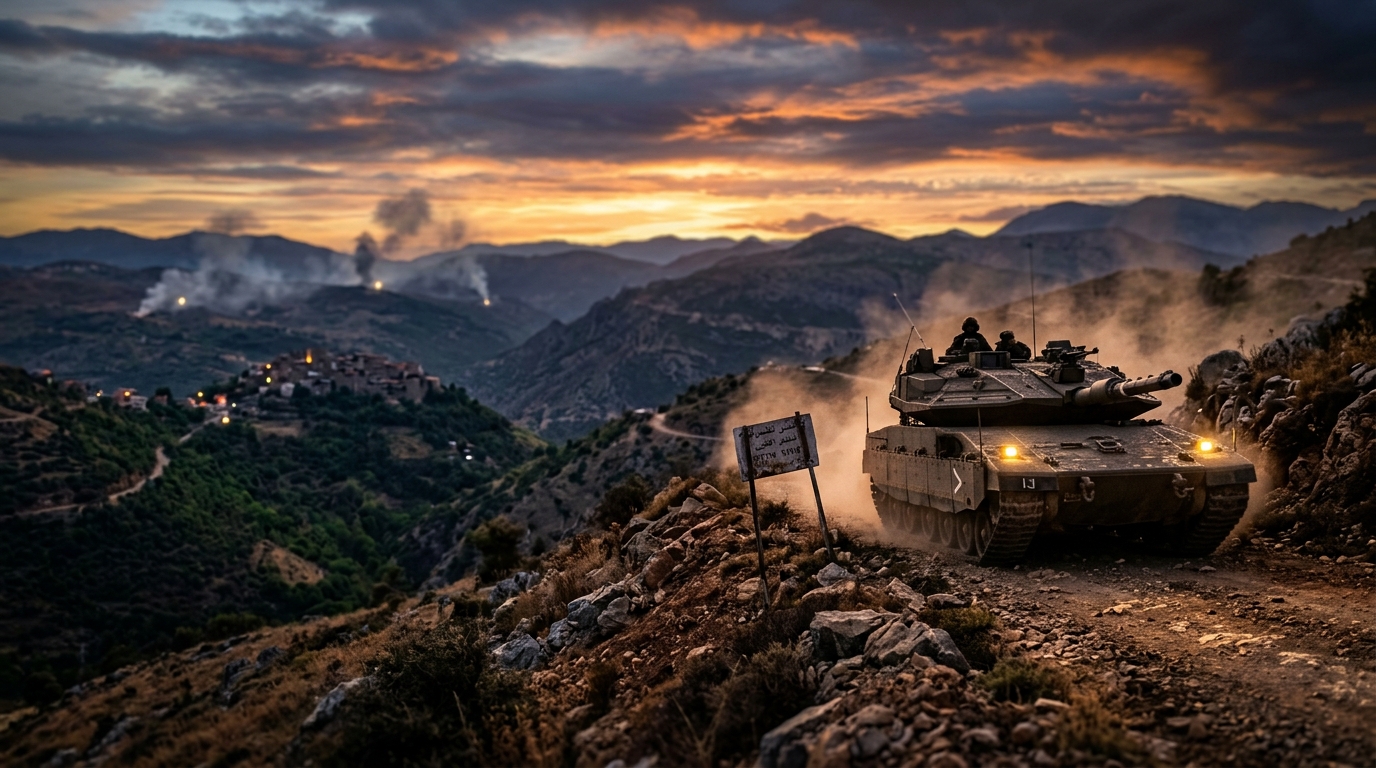
Israel has launched a ground offensive in southern Lebanon against <span class="key-term" data-definition="Hezbollah — a Lebanese Shia militant and political group backed by Iran, designated as a terrorist organization by Israel, the US and others (GS2: Polity)">Hezbollah</span> after a series of escalations, including the killing of Iran’s supreme leader and renewed rocket attacks. The offensive aims to push Hezbollah away from the border, create a buffer zone, and force disarmament, while the Lebanese civilian population bears the brunt of the conflict.
On 16 March 2026 , the Israel Defence Forces began a ground offensive in the hill‑top towns of southern Lebanon, intensifying air strikes that have already killed over 1,000 people and displaced about a million civilians. The operation follows a chain of events that began with the killing of Iran’s supreme leader and a renewed barrage of rockets from Hezbollah . Key Developments (Chronology) November 2024 : A cease‑fire between Israel and Hezbollah ends a month‑long Israeli campaign aimed at weakening Hezbollah. September 2024 : Israel assassinates Hezbollah Secretary‑General Hassan Nasrallah in an air strike. February 2026 : Joint Israeli‑American strike kills Iran’s Supreme Leader Ayatollah Ali Khamenei . Hezbollah fires hundreds of rockets into northern Israel. 16 March 2026 : Israel launches ground offensive in southern Lebanon, targeting hill towns such as Khiam and bombarding bridges over the Litani River . Important Facts Casualties: > 1,000 dead, ~ 1 million displaced in Lebanon. Hezbollah’s arsenal: Tens of thousands of rockets and missiles; has launched > 1,000 rockets/drones since 2 March 2026. Strategic aim of Israel: Dismantle Hezbollah’s military capability, push fighters away from the border, create a buffer zone, and compel the Lebanese government to disarm the group. Regional backdrop: Collapse of Syrian President Bashar al‑Assad’s regime in December 2025 severed a key land corridor between Iran and Hezbollah. UPSC Relevance The conflict illustrates several themes across the UPSC syllabus: GS‑1 (History & International Relations) : Evolution of Israel‑Lebanon hostilities, role of proxy warfare, and impact of the 1979 Iranian Revolution on regional dynamics. GS‑2 (Polity & Governance) : State‑non‑state actor interactions, challenges of disarming a powerful militia within a weak state, and implications for Lebanon’s sectarian power‑sharing. GS‑3 (Security & Strategic Studies) : Use of air power, ground offensives, and buffer‑zone strategy; significance of missile arsenals and asymmetric warfare. GS‑4 (Ethics & Integrity) : Humanitarian impact on civilians, displacement, and the ethical calculus of pre‑emptive strikes. Way Forward Diplomatic channel : International mediation (UN, US, EU) to negotiate a durable cease‑fire and a framework for Hezbollah’s disarmament. Humanitarian response : Immediate aid for displaced populations, reconstruction of critical infrastructure such as bridges over the Litani River . Strategic containment : Israel may continue limited incursions to maintain a buffer, but must balance military objectives with international law and civilian protection. Regional stability : Monitoring of Iranian involvement and potential spill‑over into Syria and Iraq; coordination with allies to prevent escalation into a broader Middle‑East war. For UPSC aspirants, the episode underscores the complexity of proxy wars, the interplay of state and non‑state actors, and the importance of understanding both tactical military moves and their broader geopolitical ramifications.
  1. Home
  2. Prepare
  3. Current Affairs
  4. Israel’s Ground Offensive in Southern Lebanon (2026) – Objectives, Hezbollah’s Response and UPSC Implications
Must Review
Login to bookmark articles
Login to mark articles as complete

Overview

Israel’s 2026 Lebanon offensive tests state‑militia limits and regional security calculus.

Key Facts

  1. 16 March 2026: IDF launched a ground offensive in hill‑top towns of southern Lebanon (e.g., Khiam).
  2. Casualties exceed 1,000 dead and about 1 million displaced in Lebanon since the offensive began.
  3. Hezbollah has fired over 1,000 rockets/drones since 2 March 2026, possessing tens of thousands of missiles.
  4. Strategic aim of Israel: dismantle Hezbollah’s military capability, push fighters away from the border, create a buffer zone and force Lebanese disarmament.
  5. Regional backdrop: Collapse of Syrian President Bashar al‑Assad’s regime in Dec 2025 cut the Iran‑Hezbollah land corridor.
  6. Key chronology: Sep 2024 – assassination of Hezbollah Secretary‑General Hassan Nasrallah; Feb 2026 – joint Israeli‑US strike kills Iran’s Supreme Leader Ayatollah Ali Khamenei.

Background & Context

The offensive marks a new phase in the Israel‑Hezbollah proxy war, intertwining state‑non‑state dynamics (GS‑2) with asymmetric warfare and humanitarian fallout (GS‑3, GS‑4). It also reflects shifting regional logistics after Syria’s regime collapse, reshaping Iran’s influence in the Levant.

UPSC Syllabus Connections

GS1•World Wars and redrawal of national boundariesGS3•Role of external state and non-state actors in security challengesEssay•International Relations and Geopolitics

Mains Answer Angle

GS‑2: Discuss the challenges of disarming a powerful militia within a weak, sectarian state. GS‑3: Analyse the use of buffer‑zone strategy and its implications for regional security.

Full Article

Read Original on hindu

Analysis

Practice Questions

GS2
Easy
Prelims MCQ

Israel‑Hezbollah conflict – strategic aims

1 marks
6 keywords
GS2
Medium
Mains Short Answer

Polity & Governance – militia disarmament

10 marks
5 keywords
GS3
Hard
Mains Essay

International Relations – proxy warfare and regional geopolitics

25 marks
8 keywords
Related:Daily•Weekly

Loading related articles...

Loading related articles...

Tip: Click articles above to read more from the same date, or use the back button to see all articles.

Explore:Current Affairs·Editorial Analysis·Govt Schemes·Study Materials·Previous Year Questions·UPSC GPT