Loading page, please wait…
HomeCurrent AffairsEditorialsGovt SchemesLearning ResourcesUPSC SyllabusPricingAboutBest UPSC AIUPSC AI ToolAI for UPSCUPSC ChatGPT

© 2026 Vaidra. All rights reserved.

PrivacyTerms
Vaidra Logo
Vaidra

Top 4 items + smart groups

UPSC GPT
New
Current Affairs
Daily Solutions
Daily Puzzle
Mains Evaluator

Version 2.0.0 • Built with ❤️ for UPSC aspirants

Justice NK Singh ने कहा कि संविधान भारत को हिंदू राज्य घोषित नहीं करता — राजनीति के लिए निहितार्थ | GS2 UPSC Current Affairs April 2026
Justice NK Singh ने कहा कि संविधान भारत को हिंदू राज्य घोषित नहीं करता — राजनीति के लिए निहितार्थ
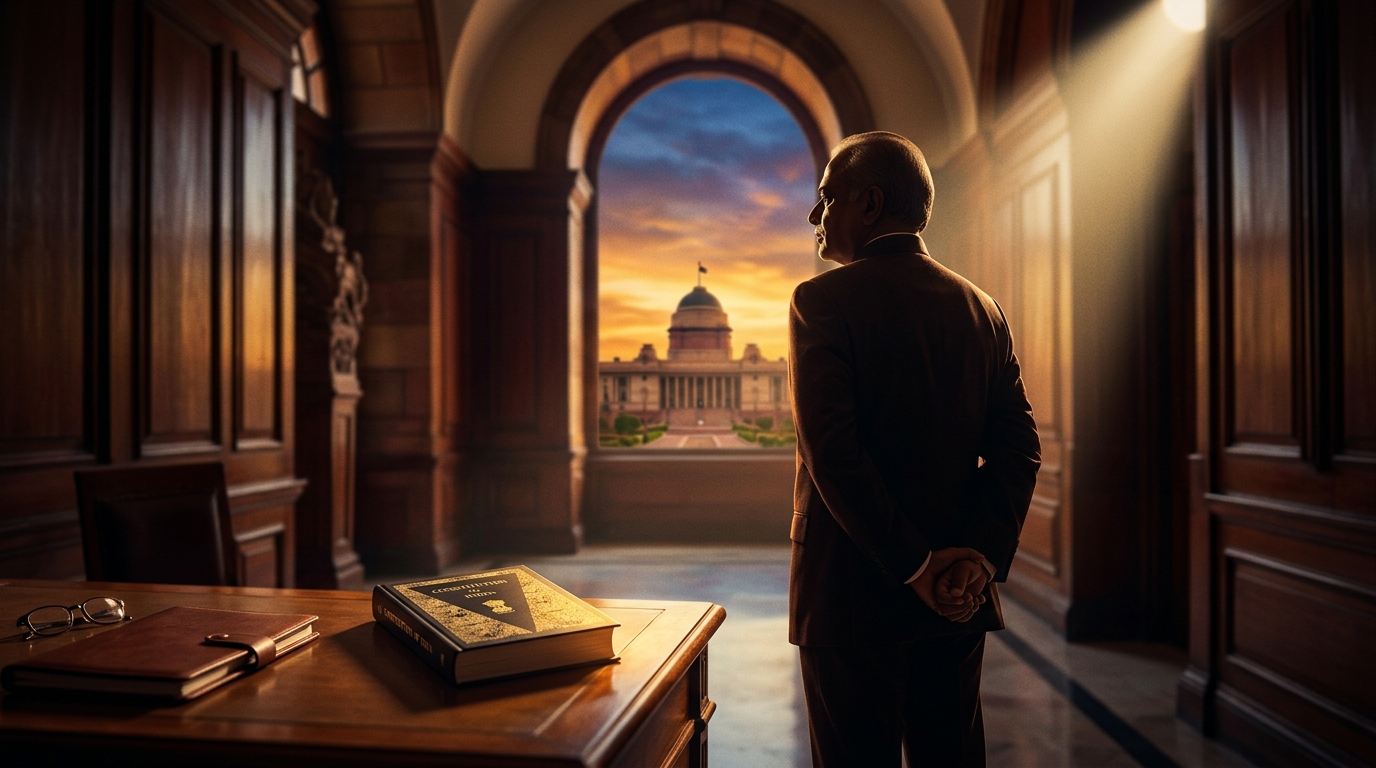
Supreme Court Justice NK Singh ने NLUI‑SBA Law Conclave 2026 में कहा कि Constitution of India कभी भी राष्ट्र को हिंदू राज्य के रूप में नहीं दर्शाता, और ‘Hindu’ शब्द की उत्पत्ति को एक भौगोलिक लेबल के रूप में बताया। उन्होंने कानूनी शिक्षा में Mimamsa और Mahabharata जैसे भारतीय दार्शनिक परम्पराओं को शामिल करने की अपील की, भारत की ऐतिहासिक धार्मिक सहिष्णुता को उजागर किया और उपनिवेशी कानूनी विरासतों से आगे बढ़ने की आवश्यकता पर बल दिया।
In a keynote address at the NLUI‑SBA Law Conclave 2026, Justice NK Singh emphasized that the Constitution of India never labels the nation as a Hindu State. He traced the etymology of Hindu to a geographical label rather than a religious one, and called for a broader inclusion of Indian philosophical traditions in legal education. Key Developments Justice Singh clarified that most world constitutions explicitly endorse a faith (e.g., Christian or Islamic states), whereas India remains secular and pluralistic. He highlighted that the word Hindu was a foreign designation for peoples beyond the Indus, predating the organized religion we know today. The judge praised the ancient Mimamsa school as evidence of India’s sophisticated philosophical heritage, contrasting it with colonial stereotypes such as “land of snake‑charmers”. He cited the British‑era Criminal Tribes Act to illustrate how colonial legislation undermined India’s indigenous legal traditions. Referencing the Mahabharata , Singh urged law schools to study dialogues such as Sulabha‑Janaka on the qualities of a debater. Important Facts Singh noted that during the Roman attacks on Jerusalem, Jewish communities migrated to India and were allowed to practice their faith, as evidenced by the historic Cochin synagogue. Similarly, Zoroastrian refugees from Persia found sanctuary in India, preserving their religious customs. These examples underscore India’s long‑standing tradition of religious tolerance, predating the modern concept of secularism. UPSC Relevance The remarks intersect with multiple GS papers. For GS‑2 (Polity), understanding the secular character of the <span class="key-term" data-definition="S
  1. Home
  2. Prepare
  3. Current Affairs
  4. Justice NK Singh ने कहा कि संविधान भारत को हिंदू राज्य घोषित नहीं करता — राजनीति के लिए निहितार्थ
Login to bookmark articles
Login to mark articles as complete

Overview

gs.gs275% UPSC Relevance

Justice NK Singh reaffirms India’s Constitution is secular, not a Hindu state – a UPSC‑crucial insight.

Key Facts

  1. Justice N.K. Singh delivered a keynote at the NLUI‑SBA Law Conclave 2026 emphasizing that the Constitution does not label India a Hindu state.
  2. The Preamble and Articles 25‑28 of the Indian Constitution guarantee freedom of religion and a secular state framework.
  3. Over 30 world constitutions explicitly endorse a state religion, whereas India’s Constitution contains no such clause.
  4. The word “Hindu” originally denoted peoples beyond the Indus River; its religious meaning developed later, as highlighted by the Justice.
  5. Justice Singh referenced the colonial Criminal Tribes Act (1871) to illustrate historic erosion of indigenous legal traditions.
  6. He urged law curricula to incorporate Indian philosophical traditions like Mimamsa and Mahabharata debates to strengthen secular and ethical perspectives.

Background & Context

Secularism is a core component of GS‑2 (Polity) and features prominently in the Constitution’s basic structure doctrine. Understanding how India’s secular framework differs from faith‑based constitutions worldwide helps answer comparative polity questions and informs debates on judicial interpretation of religious neutrality.

UPSC Syllabus Connections

Essay•Philosophy, Ethics and Human ValuesGS2•Comparison with other countries constitutional schemesPrelims_GS•Constitution and Political SystemGS4•Role of family, society and educational institutions in inculcating valuesPrelims_GS•Ancient IndiaGS4•Contributions of moral thinkers and philosophers from India and World

Mains Answer Angle

In a Mains answer, link Justice Singh’s remarks to the Supreme Court’s role in upholding the secular ethos (e.g., S.R. Bommai, Kesavananda Bharati) and discuss how comparative constitutional analysis can strengthen arguments on preserving religious neutrality.

Full Article

<p>In a keynote address at the NLUI‑SBA Law Conclave 2026, <span class="key-term" data-definition="Senior judge of the Supreme Court of India known for his scholarly opinions on constitutional law (GS2: Polity).">Justice NK Singh</span> emphasized that the <span class="key-term" data-definition="Supreme law of the land, establishing the framework of government, fundamental rights and duties (GS2: Polity).">Constitution of India</span> never labels the nation as a Hindu State. He traced the etymology of <span class="key-term" data-definition="Term originally used by ancient Greeks to denote people living beyond the Indus River; later evolved into a religious identity (GS1: History).">Hindu</span> to a geographical label rather than a religious one, and called for a broader inclusion of Indian philosophical traditions in legal education.</p> <h3>Key Developments</h3> <ul> <li>Justice Singh clarified that most world constitutions explicitly endorse a faith (e.g., Christian or Islamic states), whereas India remains secular and pluralistic.</li> <li>He highlighted that the word <span class="key-term" data-definition="Term originally used by ancient Greeks to denote people living beyond the Indus River; later evolved into a religious identity (GS1: History).">Hindu</span> was a foreign designation for peoples beyond the Indus, predating the organized religion we know today.</li> <li>The judge praised the ancient <span class="key-term" data-definition="One of the six orthodox schools of Indian philosophy, focusing on exegesis of Vedic rituals and dharma (GS4: Ethics).">Mimamsa</span> school as evidence of India’s sophisticated philosophical heritage, contrasting it with colonial stereotypes such as “land of snake‑charmers”.</li> <li>He cited the British‑era <span class="key-term" data-definition="Colonial law (1871) that labelled entire communities as ‘criminal’, reflecting colonial legal oppression (GS2: Polity).">Criminal Tribes Act</span> to illustrate how colonial legislation undermined India’s indigenous legal traditions.</li> <li>Referencing the <span class="key-term" data-definition="Ancient Indian epic containing philosophical discourses, including dialogues on debate and ethics (GS1: History, GS4: Ethics).">Mahabharata</span>, Singh urged law schools to study dialogues such as Sulabha‑Janaka on the qualities of a debater.</li> </ul> <h3>Important Facts</h3> <p>Singh noted that during the Roman attacks on Jerusalem, Jewish communities migrated to India and were allowed to practice their faith, as evidenced by the historic Cochin synagogue. Similarly, Zoroastrian refugees from Persia found sanctuary in India, preserving their religious customs. These examples underscore India’s long‑standing tradition of religious tolerance, predating the modern concept of secularism.</p> <h3>UPSC Relevance</h3> <p>The remarks intersect with multiple GS papers. For GS‑2 (Polity), understanding the secular character of the <span class="key-term" data-definition="S
Read Original on livelaw

Analysis

Practice Questions

GS2
Easy
Prelims MCQ

भारतीय संविधान में धर्मनिरपेक्षता

1 marks
5 keywords
GS2
Medium
Mains Short Answer

राज्य धर्म पर तुलनात्मक संवैधानिक प्रावधान

10 marks
5 keywords
GS2
Hard
Mains Essay

धार्मिक निरपेक्षता और धर्मनिरपेक्षता की न्यायिक व्याख्या

250 marks
7 keywords
Related:Daily•Weekly

Loading related articles...

Loading related articles...

Tip: Click articles above to read more from the same date, or use the back button to see all articles.

Quick Reference

Key Insight

Justice NK Singh reaffirms India’s Constitution is secular, not a Hindu state – a UPSC‑crucial insight.

Key Facts

  1. Justice N.K. Singh delivered a keynote at the NLUI‑SBA Law Conclave 2026 emphasizing that the Constitution does not label India a Hindu state.
  2. The Preamble and Articles 25‑28 of the Indian Constitution guarantee freedom of religion and a secular state framework.
  3. Over 30 world constitutions explicitly endorse a state religion, whereas India’s Constitution contains no such clause.
  4. The word “Hindu” originally denoted peoples beyond the Indus River; its religious meaning developed later, as highlighted by the Justice.
  5. Justice Singh referenced the colonial Criminal Tribes Act (1871) to illustrate historic erosion of indigenous legal traditions.
  6. He urged law curricula to incorporate Indian philosophical traditions like Mimamsa and Mahabharata debates to strengthen secular and ethical perspectives.

Background

Secularism is a core component of GS‑2 (Polity) and features prominently in the Constitution’s basic structure doctrine. Understanding how India’s secular framework differs from faith‑based constitutions worldwide helps answer comparative polity questions and informs debates on judicial interpretation of religious neutrality.

UPSC Syllabus

  • Essay — Philosophy, Ethics and Human Values
  • GS2 — Comparison with other countries constitutional schemes
  • Prelims_GS — Constitution and Political System
  • GS4 — Role of family, society and educational institutions in inculcating values
  • Prelims_GS — Ancient India
  • GS4 — Contributions of moral thinkers and philosophers from India and World

Mains Angle

In a Mains answer, link Justice Singh’s remarks to the Supreme Court’s role in upholding the secular ethos (e.g., S.R. Bommai, Kesavananda Bharati) and discuss how comparative constitutional analysis can strengthen arguments on preserving religious neutrality.

Explore:Current Affairs·Editorial Analysis·Govt Schemes·Study Materials·Previous Year Questions·UPSC GPT