Overview
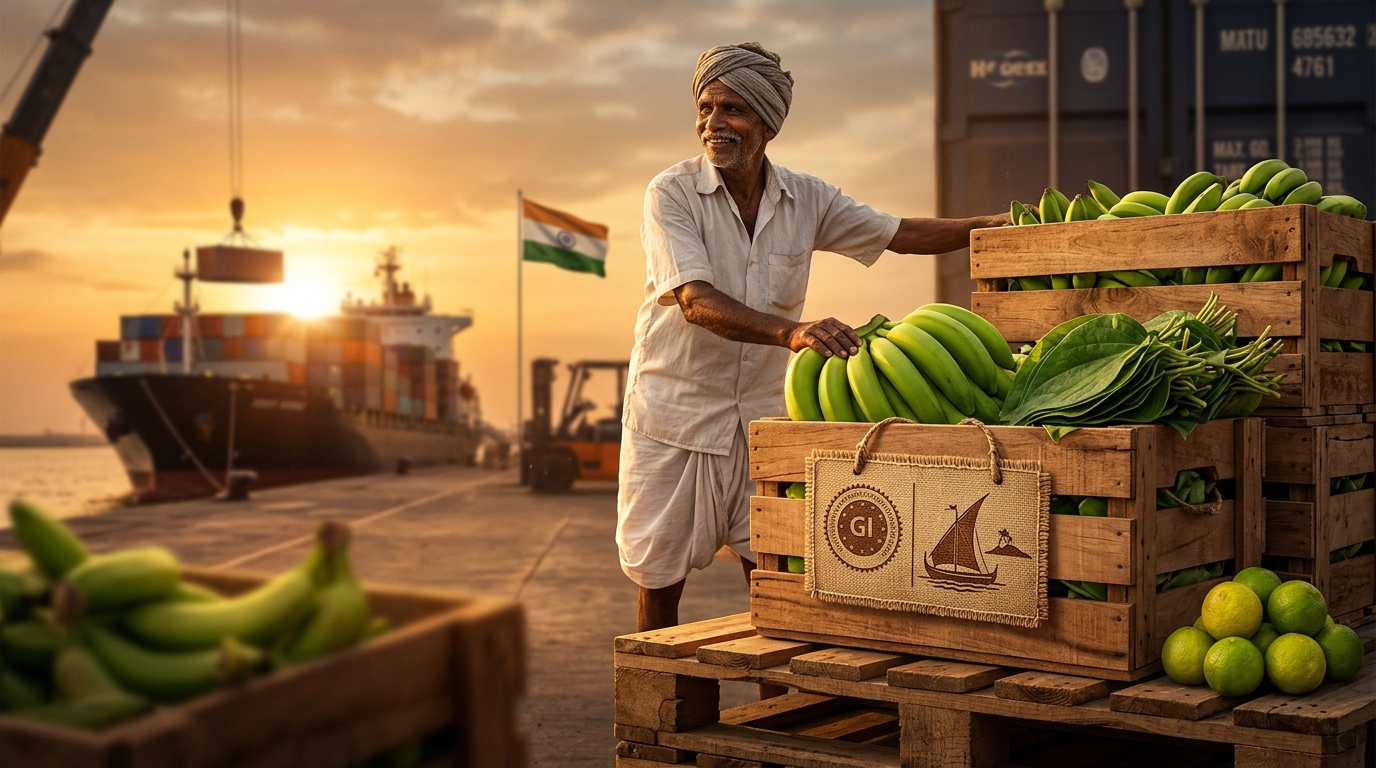
In a historic move, Karnataka shipped its Geographical Indication (GI)‑tagged produce – Nanjangud Rasabale bananas, Mysuru betel leaves and Indi lime – to the Maldives on 22 Feb 2026. The consignment, flagged off after a mention in Prime Minister Narendra Modi’s ‘Mann Ki Baat’, marks the first air‑shipment of these specialty crops and underscores the role of export‑oriented agricultural policies in enhancing farmer incomes.
Key Developments
- First air‑shipment of GI‑tagged produce: 500 kg of Nanjangud Rasabale, 250 kg of Mysuru betel leaves and 500 kg of Indi lime were dispatched to the Maldives on a trial basis.
- Government facilitation: The export was coordinated by APEDA in partnership with the Karnataka Department of Horticulture and the Indian Council for Agricultural Research (ICAR), with logistics handled by Silken Global Imports and Exports.
- Positive market response: Buyers in the Maldives received the consignment well, opening a new export channel and prompting officials to anticipate sustained shipments.
Important Facts
- Farmer base: Approximately 200 farmers cultivate Nanjangud Rasabale across 250 acres in Mysuru district.
- Economic gains: Nanjangud Rasabale growers can earn up to 50% higher returns than domestic market prices; Indi lime growers may see gains exceeding 40%.
Exam Relevance
This case study touches upon multiple UPSC syllabus areas: GS Paper II (Agriculture & Food Processing) – GI tagging, horticultural interventions, and farmer income enhancement; GS Paper III (International Relations & Trade) – export dynamics, bilateral trade with the Maldives, and the role of export promotion bodies like APEDA; GS Paper I (Governance & Policy) – coordination among central and state agencies, and the impact of political advocacy (Mann Ki Baat). Potential questions could explore the effectiveness of GI tags in boosting rural economies or assess the challenges of perishable‑goods export logistics.
Way Forward
To consolidate the gains, policy makers should streamline cold‑chain infrastructure, expand GI‑tagged crop coverage, and negotiate preferential trade terms with neighboring countries. Continuous technical support and market intelligence will be crucial for scaling up production, ensuring price stability, and turning export successes into a sustainable rural development model.