Loading page, please wait…
HomeCurrent AffairsEditorialsGovt SchemesLearning ResourcesUPSC SyllabusPricingAboutBest UPSC AIUPSC AI ToolAI for UPSCUPSC ChatGPT

© 2026 Vaidra. All rights reserved.

PrivacyTerms
Vaidra Logo
Vaidra

Top 4 items + smart groups

UPSC GPT
New
Current Affairs
Daily Solutions
Daily Puzzle
Mains Evaluator

Version 2.0.0 • Built with ❤️ for UPSC aspirants

Lok Sabha Passes Transgender Persons (Protection of Rights) Amendment Bill, 2026 – Opposition Decries ‘Black Day’ — UPSC Current Affairs | March 25, 2026
Lok Sabha Passes Transgender Persons (Protection of Rights) Amendment Bill, 2026 – Opposition Decries ‘Black Day’
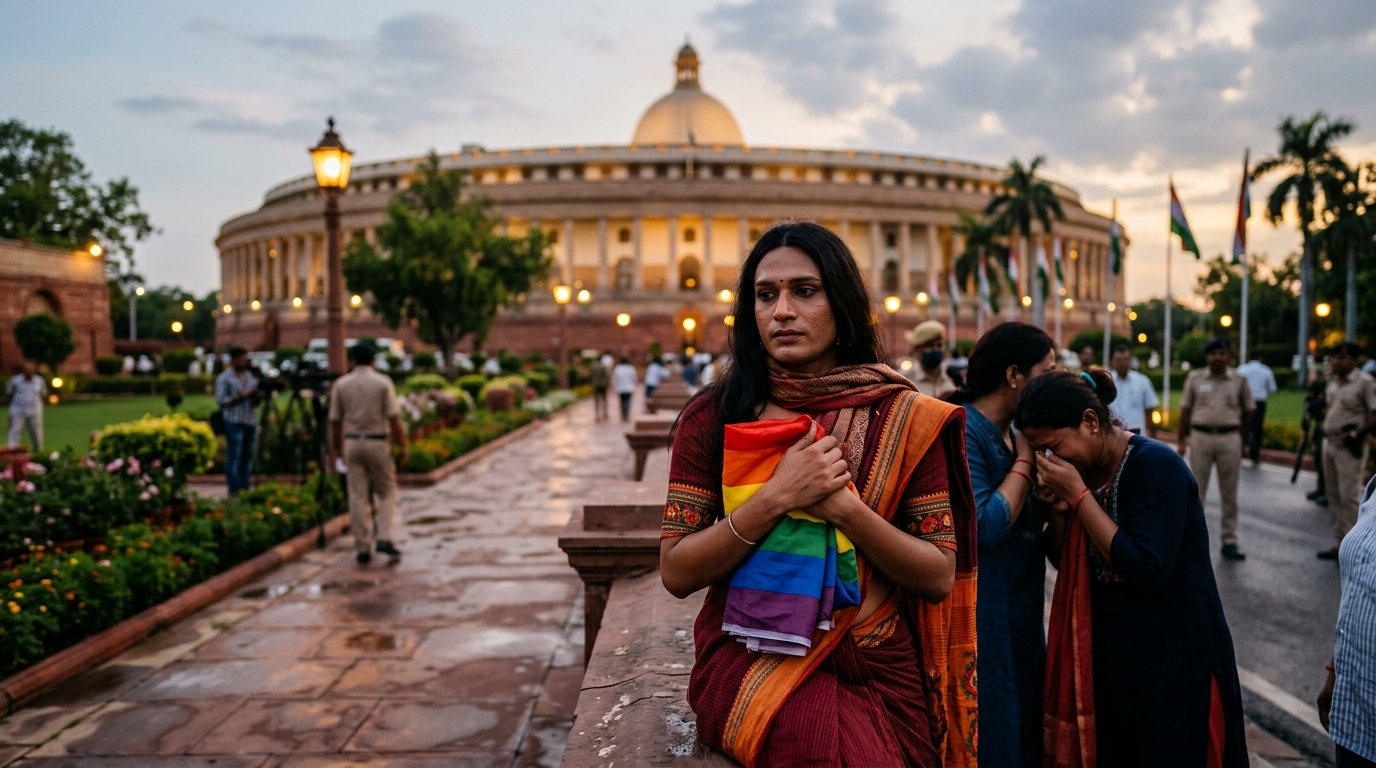
On March 25, 2026, the <strong>Lok Sabha</strong> passed the <strong>Transgender Persons (Protection of Rights) Amendment Bill, 2026</strong> despite widespread protests from transgender activists and opposition parties. Leaders like <strong>Anish Gawande</strong> and Dalit transgender activist <strong>Grace Banu</strong> have vowed to oppose the bill in the <strong>Rajya Sabha</strong>, seek referral to a standing committee, and challenge its constitutionality in the Supreme Court, citing conflict with the <span class="key-term" data-definition="National Legal Services Authority (NALSA) verdict – 2014 Supreme Court judgment that recognized the right to self‑identified gender and laid down guidelines for transgender rights (GS2: Polity)">NALSA verdict</span>.
The Lok Sabha approved the Transgender Persons (Protection of Rights) Amendment Bill, 2026 on 25 March 2026 . The passage was met with fierce opposition from transgender activists, opposition parties, and civil‑society groups, who labelled the day a “black day” for human rights. Key Developments Bill passed in the Lok Sabha despite protests outside Parliament. Opposition leaders, including Anish Gawande (NCP‑SP), demanded referral to a standing committee and warned of a rushed, short‑sighted decision. Transgender activists such as Grace Banu and Akkai Padmashali vowed to fight the law in the Rajya Sabha . Potential legal challenges include filing petitions before the Supreme Court on grounds of violating the NALSA verdict . If the bill becomes law, opponents may write to the President of India seeking a return of the bill for further scrutiny. Important Facts The bill seeks to amend existing transgender legislation, but critics argue it could criminalise thousands of vulnerable individuals. Opposition parties, including the Congress and several regional parties, have uniformly opposed the bill, urging a detailed committee review. Activists highlight that the law was passed without meaningful consultation with the transgender community, contravening democratic legislative norms. UPSC Relevance Understanding this episode is crucial for GS Paper II (Polity) and GS Paper IV (Ethics). It illustrates: The legislative process in a bicameral Parliament, including the role of Lok Sabha and Rajya Sabha . The function of standing committees in ensuring detailed scrutiny. The constitutional checks available, such as presidential review and judicial review by the Supreme Court . The significance of landmark judgments like the NALSA verdict in shaping rights‑based legislation. Way Forward Opposition parties plan to: Oppose the bill vigorously in the Rajya Sabha and demand its referral to a standing committee . Seek presidential intervention under Article 111 of the Constitution to send the bill back for reconsideration. File petitions in the Supreme Court alleging violation of the NALSA verdict and constitutional rights. For aspirants, monitoring the bill’s progress in the Rajya Sabha and subsequent legal challenges will provide insights into the interplay of legislative intent, minority rights, and constitutional safeguards in India’s democratic framework.
  1. Home
  2. Prepare
  3. Current Affairs
  4. Lok Sabha Passes Transgender Persons (Protection of Rights) Amendment Bill, 2026 – Opposition Decries ‘Black Day’
Login to bookmark articles
Login to mark articles as complete

Overview

Lok Sabha passes contentious Transgender Rights Bill, raising constitutional and minority‑rights concerns

Key Facts

  1. The Transgender Persons (Protection of Rights) Amendment Bill was passed in the Lok Sabha on 25 March 2026.
  2. The amendment seeks to modify the Transgender Persons (Protection of Rights) Act, 2019, and is criticised for potentially criminalising thousands of transgender individuals.
  3. Opposition leaders, notably Anish Gawande (NCP‑SP), demanded the bill be referred to a parliamentary standing committee for detailed scrutiny.
  4. Transgender activists such as Grace Banu and Akkai Padmashali have vowed to contest the bill in the Rajya Sabha and file petitions before the Supreme Court, invoking the 2014 NALSA verdict.
  5. Under Article 111 of the Constitution, the President can return a bill to Parliament for reconsideration; opposition parties plan to seek such presidential intervention.
  6. The Congress, NCP, SP and several regional parties have uniformly opposed the amendment, citing lack of consultation with the transgender community.
  7. If enacted, the bill could trigger legal challenges on grounds of violating constitutional guarantees of equality (Article 14) and the right to self‑identified gender.

Background & Context

The episode underscores the functioning of India’s bicameral Parliament – the Lok Sabha’s role in passing legislation and the Rajya Sabha’s power to review and amend. It also highlights constitutional checks such as standing‑committee scrutiny, presidential review under Article 111, and judicial review, especially in light of the landmark NALSA (2014) judgment that affirmed transgender rights.

UPSC Syllabus Connections

Prelims_GS•Constitution and Political SystemGS2•Parliament and State Legislatures - structure, functioning, powers and privilegesPrelims_GS•National Current AffairsGS4•Dimensions of ethics - private and public relationshipsPrelims_CSAT•Reading ComprehensionGS2•Comparison with other countries constitutional schemes

Mains Answer Angle

GS Paper II (Polity) – discuss the adequacy of legislative scrutiny mechanisms and constitutional safeguards when a bill affecting minority rights is rushed through Parliament; GS Paper IV (Ethics) – evaluate the ethical implications of sidelining community consultation in law‑making.

Full Article

Read Original on hindu

Analysis

Practice Questions

GS1
Easy
Prelims MCQ

Constitution – Article 111

1 marks
5 keywords
GS2
Medium
Mains Short Answer

Landmark judgments – NALSA verdict

5 marks
5 keywords
GS2
Hard
Mains Essay

Legislative process, minority rights, constitutional safeguards

20 marks
7 keywords
Related:Daily•Weekly

Loading related articles...

Loading related articles...

Tip: Click articles above to read more from the same date, or use the back button to see all articles.

Explore:Current Affairs·Editorial Analysis·Govt Schemes·Study Materials·Previous Year Questions·UPSC GPT