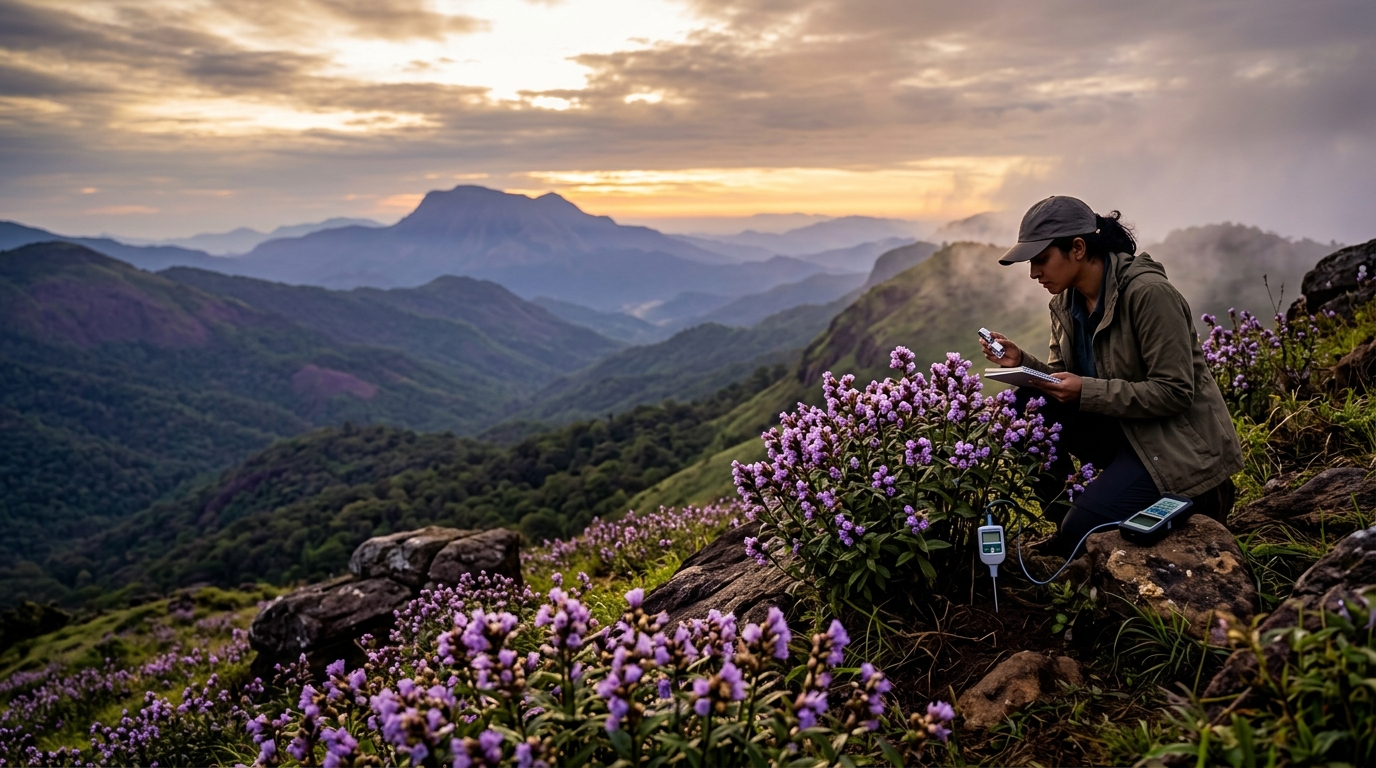
Threat to Neelakurinji in the Western Ghats
The JNTBGRI has submitted a detailed report to the NGT highlighting that Strobilanthes kunthiana, popularly known as Neelakurinji, is facing serious threats. The shrub, native to the Western Ghats, blooms only once in twelve years, making its conservation critical.
Key Developments
- The Principal Bench of the NGT in New Delhi took suo motu cognisance of a media report titled “Neelkurinji becomes a ‘threatened species’, officially” published in The Hindu.
- The tribunal directed JNTBGRI to submit a comprehensive status and conservation report on the shrub.
- The report identifies endemic species pressure from unregulated tourism and infrastructure expansion as primary threats.
Important Facts
Neelakurinji’s striking purplish flowers create a seasonal spectacle every twelve years, attracting tourists from across the country. However, the surge in visitor numbers, coupled with road‑building and construction activities, has led to habitat fragmentation, soil erosion, and disturbance of the plant’s natural regeneration cycle.
JNTBGRI’s report emphasizes the need for a scientifically‑driven management plan that balances ecological sensitivity with local livelihood concerns.
Exam Relevance
The episode underscores several themes that recur in the UPSC syllabus:
- Environmental Governance: The role of the NGT illustrates India’s institutional framework for environmental protection (GS3).
- Conservation of Biodiversity: Protecting Neelakurinji aligns with commitments under the Convention on Biological Diversity and the National Biodiversity Action Plan (GS3).
- Federal‑State Coordination: The case involves a state research institute (Kerala) interacting with a central tribunal, highlighting inter‑governmental cooperation (GS2).
- Tourism Management: Balancing eco‑tourism with conservation needs reflects sustainable development principles (GS3).
Way Forward
To safeguard the shrub, the following steps are recommended:
- Formulate a site‑specific management plan that restricts tourist access during the blooming period and designates protected zones.
- Implement environmental impact assessments for any infrastructure project within the shrub’s habitat.
- Engage local communities through participatory conservation programmes that provide alternative livelihoods.
- Strengthen monitoring mechanisms by empowering the NGT to enforce compliance.
Timely action will not only preserve an iconic species but also reinforce India’s commitment to protecting its unique ecological heritage.