Loading page, please wait…
HomeCurrent AffairsEditorialsGovt SchemesLearning ResourcesUPSC SyllabusPricingAboutBest UPSC AIUPSC AI ToolAI for UPSCUPSC ChatGPT

© 2026 Vaidra. All rights reserved.

PrivacyTerms
Vaidra Logo
Vaidra

Top 4 items + smart groups

UPSC GPT
New
Current Affairs
Daily Solutions
Daily Puzzle
Mains Evaluator

Version 2.0.0 • Built with ❤️ for UPSC aspirants

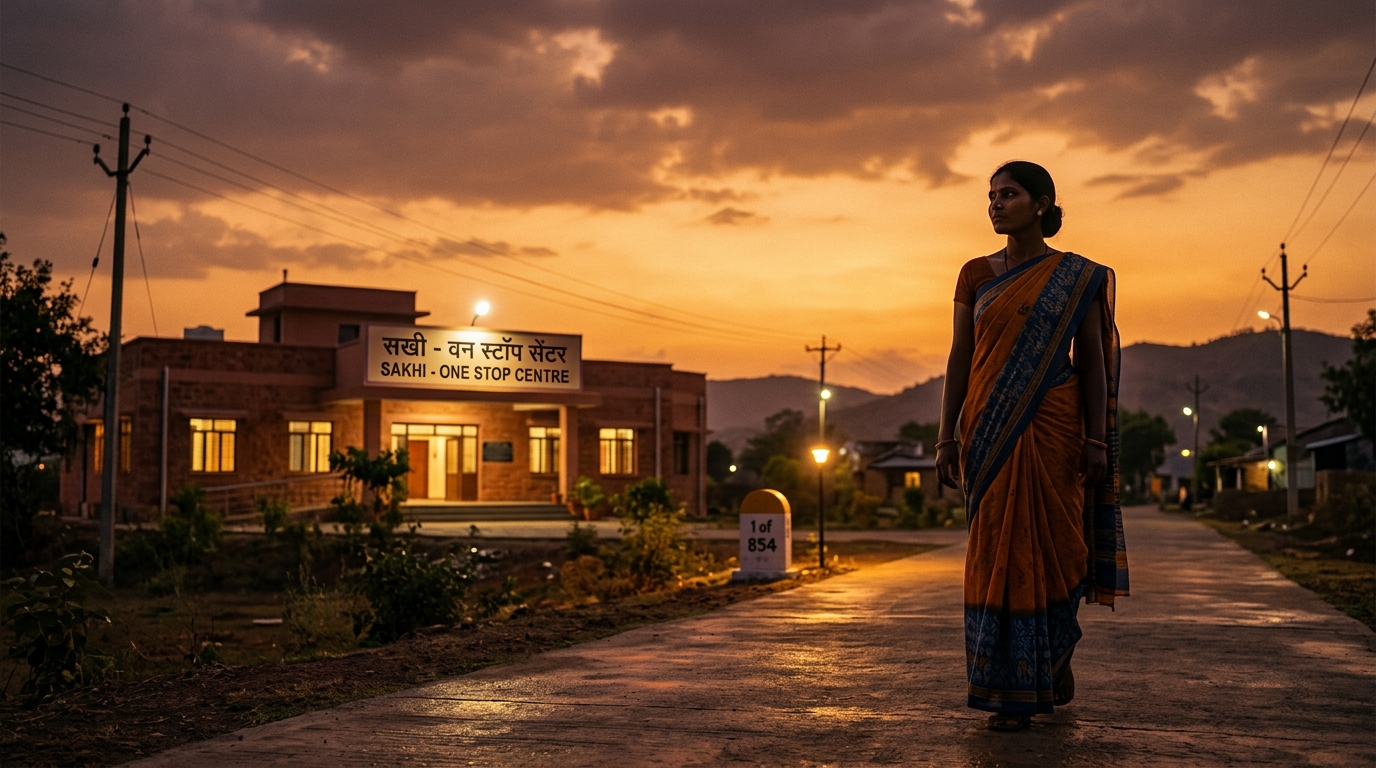
Nirbhaya Fund helped set up 854 one-stop centres for women across India: WCD Minister — UPSC Current Affairs | October 11, 2025
Nirbhaya Fund helped set up 854 one-stop centres for women across India: WCD Minister
The article discusses the Indian government's initiatives for women and child development, highlighting the establishment of one-stop centers, legal frameworks, and missions aimed at empowerment and protection; it also emphasizes the evolving challenges of cyber-bullying and the need for a comprehensive approach.
Women and Child Development Minister Annapurna Devi on Saturday (October 11, 2025) said 854 one-stop centres for women have been established across India with the help of the Nirbhaya Fund to provide shelter, counselling, medical aid, and legal assistance to survivors of violence. Ms. Devi was addressing the two-day National Annual Stakeholders' Consultation on 'Safeguarding the Girl Child: Towards a Safer and Enabling Environment for Her in India' organised by the Supreme Court's Juvenile Justice Committee in collaboration with UNICEF India. The event coincided with the International Day of the Girl Child, which, the Minister said, made the discussion "particularly meaningful". Ms. Devi noted that 56% of legally adopted children in India last year were girls, reflecting a shift in social attitudes. "Now, girls are not seen as a burden but as a beacon of hope," she said. The Minister also spoke about the women helpline 181, women help desks at police stations, initiatives such as working women's hostels and Shakti Sadhan, and their role in strengthening women's safety and self-dependence. "This is not just a policy discussion, but a living example of the future of our nation, our social consciousness, and our ethical responsibility," she said, addressing a gathering that included Chief Justice of India B R Gavai, among others. Ms. Devi said "women's power" lies at the core of Prime Minister Narendra Modi's vision of a developed India by 2047, and that the government's integrated approach through Mission Shakti, Mission Vatsalya, and Mission Poshan 2.0 aims to advance women's safety, empowerment, and self-reliance. “Under the leadership of Prime Minister Narendra Modi, India has adopted a life-cycle approach for the safety and empowerment of girls. In every scheme of our government, empowerment of women is a top priority,” she said. “The government aims to create a strong future for women by providing them with digital and financial literacy, self-defence training, and life skill education,” she added. Emphasising a zero-tolerance policy against child abuse, Ms. Devi said laws such as the Juvenile Justice Act, Protection of Children from Sexual Offences (POCSO) Act, Child Marriage Prohibition Act, and the Right to Education Act form a strong legal safety net for children. However, she cautioned that the nature of threats facing children is evolving, with cyber-bullying, online grooming, and digital trafficking posing new challenges. "The government is implementing school-based awareness programmes that include mental health and psychosocial support so that every child is not only safe but also mentally strong," she said. "We must work together to make respect for girls not just a policy but a culture," the Minister asserted. UNICEF's India representative Cynthia McCaffrey praised the country's strides in child protection, noting the establishment of juvenile justice boards, child welfare committees, and special POCSO courts as tangible progress. "The flagship programmes such as Mission Vatsalya, Mission Shakti, and Beti Bachao Beti Padhao have laid foundations that can go to scale," she said. From adolescent clubs in Madhya Pradesh to Bharosa centres in Telangana and advocacy groups in Odisha and Rajasthan, Ms. McCaffrey highlighted successful community-level interventions that are "helping delay child marriages and empower young girls". However, she also underscored the need for continued investment in prevention, education, and survivor-centred care, noting that one in four girls in India is still married before the age of 18. "Every child must have access to immediate, sensitive, medical, psychosocial, and legal support. Justice must be swift and dignified," she said, calling for collective action across institutions and States.
  1. Home
  2. Prepare
  3. Current Affairs
  4. Nirbhaya Fund helped set up 854 one-stop centres for women across India: WCD Minister
Login to bookmark articles
Login to mark articles as complete

Overview

Full Article

Women and Child Development Minister Annapurna Devi on Saturday (October 11, 2025) said 854 one-stop centres for women have been established across India with the help of the Nirbhaya Fund to provide shelter, counselling, medical aid, and legal assistance to survivors of violence. Ms. Devi was addressing the two-day National Annual Stakeholders' Consultation on 'Safeguarding the Girl Child: Towards a Safer and Enabling Environment for Her in India' organised by the Supreme Court's Juvenile Justice Committee in collaboration with UNICEF India. The event coincided with the International Day of the Girl Child, which, the Minister said, made the discussion "particularly meaningful". Ms. Devi noted that 56% of legally adopted children in India last year were girls, reflecting a shift in social attitudes. "Now, girls are not seen as a burden but as a beacon of hope," she said. The Minister also spoke about the women helpline 181, women help desks at police stations, initiatives such as working women's hostels and Shakti Sadhan, and their role in strengthening women's safety and self-dependence. "This is not just a policy discussion, but a living example of the future of our nation, our social consciousness, and our ethical responsibility," she said, addressing a gathering that included Chief Justice of India B R Gavai, among others. Ms. Devi said "women's power" lies at the core of Prime Minister Narendra Modi's vision of a developed India by 2047, and that the government's integrated approach through Mission Shakti, Mission Vatsalya, and Mission Poshan 2.0 aims to advance women's safety, empowerment, and self-reliance. “Under the leadership of Prime Minister Narendra Modi, India has adopted a life-cycle approach for the safety and empowerment of girls. In every scheme of our government, empowerment of women is a top priority,” she said. “The government aims to create a strong future for women by providing them with digital and financial literacy, self-defence training, and life skill education,” she added. Emphasising a zero-tolerance policy against child abuse, Ms. Devi said laws such as the Juvenile Justice Act, Protection of Children from Sexual Offences (POCSO) Act, Child Marriage Prohibition Act, and the Right to Education Act form a strong legal safety net for children. However, she cautioned that the nature of threats facing children is evolving, with cyber-bullying, online grooming, and digital trafficking posing new challenges. "The government is implementing school-based awareness programmes that include mental health and psychosocial support so that every child is not only safe but also mentally strong," she said. "We must work together to make respect for girls not just a policy but a culture," the Minister asserted. UNICEF's India representative Cynthia McCaffrey praised the country's strides in child protection, noting the establishment of juvenile justice boards, child welfare committees, and special POCSO courts as tangible progress. "The flagship programmes such as Mission Vatsalya, Mission Shakti, and Beti Bachao Beti Padhao have laid foundations that can go to scale," she said. From adolescent clubs in Madhya Pradesh to Bharosa centres in Telangana and advocacy groups in Odisha and Rajasthan, Ms. McCaffrey highlighted successful community-level interventions that are "helping delay child marriages and empower young girls". However, she also underscored the need for continued investment in prevention, education, and survivor-centred care, noting that one in four girls in India is still married before the age of 18. "Every child must have access to immediate, sensitive, medical, psychosocial, and legal support. Justice must be swift and dignified," she said, calling for collective action across institutions and States.
Read Original

Analysis

Prelims Facts (Factual Knowledge)

  1. Nirbhaya Fund is used for one-stop centers for women.
  2. Mission Shakti, Vatsalya, and Poshan 2.0 aim to empower women.
  3. The POCSO Act protects children from sexual offenses.
  4. International Day of the Girl Child
  5. Women helpline number: 181
  6. Implementing body of Mission Vatsalya
  7. Constitutional provisions related to child protection
  8. Schemes for women empowerment

Mains Angles (Analytical Discussion)

  1. Analyze the effectiveness of the Nirbhaya Fund in addressing violence against women.
  2. Evaluate the impact of government schemes like Mission Shakti and Mission Vatsalya on women's empowerment.
  3. Discuss the challenges of cyber-bullying and online grooming and suggest measures to address them.
  4. Critically examine the role of community-level interventions in delaying child marriages and empowering young girls.
  5. Assess the life-cycle approach adopted by the Indian government for the safety and empowerment of girls.

Essay Themes (Critical Thinking)

Women Empowerment and National Development

The Role of Government in Protecting Vulnerable Sections of Society

Ethical Dimensions of Child Protection in the Digital Age

Related:Daily•Weekly

Loading related articles...

Loading related articles...

Tip: Click articles above to read more from the same date, or use the back button to see all articles.

Explore:Current Affairs·Editorial Analysis·Govt Schemes·Study Materials·Previous Year Questions·UPSC GPT