Loading page, please wait…
HomeCurrent AffairsEditorialsGovt SchemesLearning ResourcesUPSC SyllabusPricingAboutBest UPSC AIUPSC AI ToolAI for UPSCUPSC ChatGPT

© 2026 Vaidra. All rights reserved.

PrivacyTerms
Vaidra Logo
Vaidra

Top 4 items + smart groups

UPSC GPT
New
Current Affairs
Daily Solutions
Daily Puzzle
Mains Evaluator

Version 2.0.0 • Built with ❤️ for UPSC aspirants

North Korea ने कार्बन‑फ़ाइबर ICBM के लिए उन्नत सॉलिड‑फ़्यूल रॉकेट इंजन का परीक्षण किया – क्षेत्रीय सुरक्षा के लिए निहितार्थ — UPSC Current Affairs | April 6, 2026
North Korea ने कार्बन‑फ़ाइबर ICBM के लिए उन्नत सॉलिड‑फ़्यूल रॉकेट इंजन का परीक्षण किया – क्षेत्रीय सुरक्षा के लिए निहितार्थ
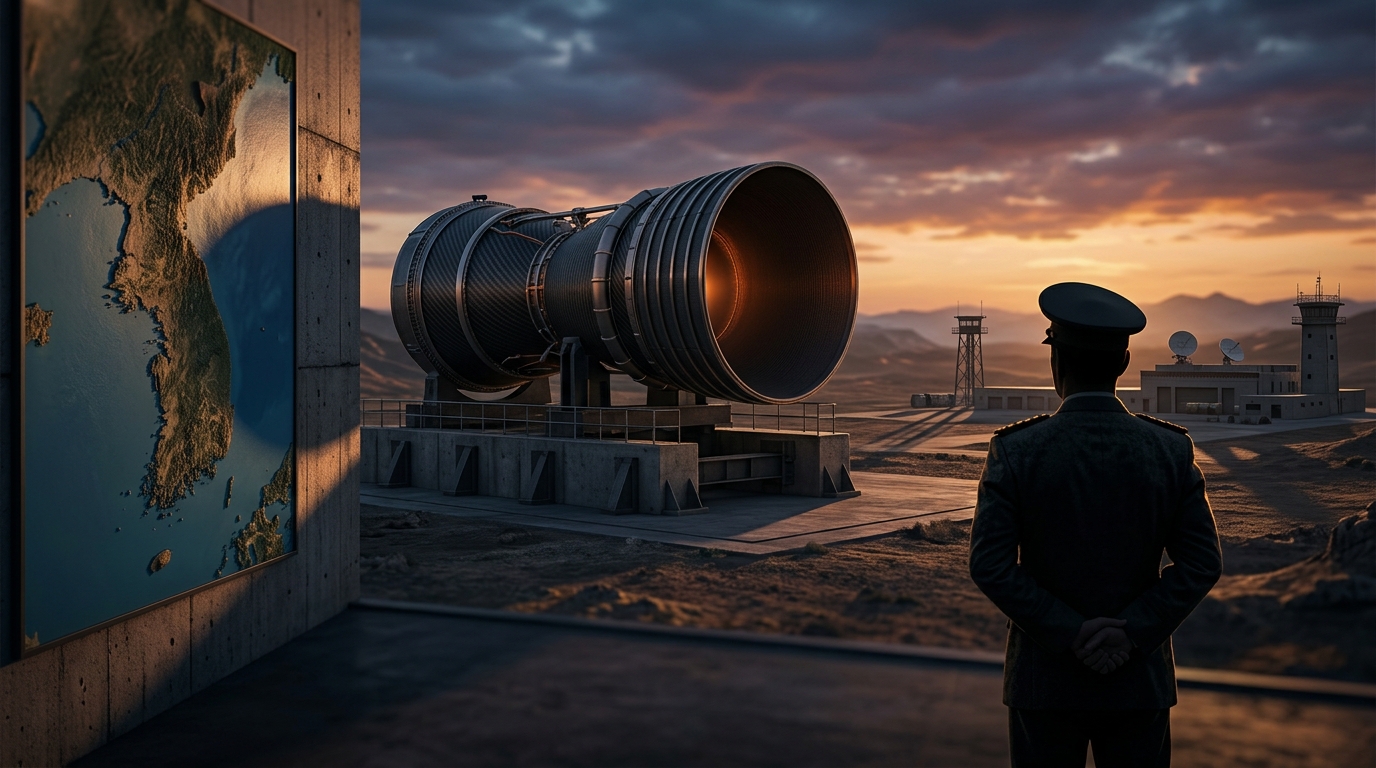
South Korean lawmakers ने कहा कि 6 April 2026 को North Korea ने एक अधिक शक्तिशाली सॉलिड‑फ़्यूल रॉकेट इंजन का परीक्षण किया, जो कार्बन‑फ़ाइबर‑आधारित इंटरकॉन्टिनेंटल बैलिस्टिक मिसाइल (ICBM) के लिए है, एक विकास जो रेंज बढ़ा सकता है और कई वारहेड्स को सक्षम बना सकता है। यह परीक्षण Pyongyang की UN Security Council प्रतिबंध के प्रति निरंतर अवज्ञा को रेखांकित करता है और क्षेत्र के लिए रणनीतिक चिंताएँ उत्पन्न करता है।
On 6 April 2026 , South Korean lawmakers reported that North Korea conducted a test of a new solid-fuel rocket engine . The engine is intended for a next‑generation ICBM built with carbon fibre airframes, allowing greater thrust and the possibility of multiple warheads. Key Developments March 2026: Ground test of the new solid‑fuel engine, believed to be for the latest ICBM. Engine reportedly delivers higher thrust than the 2024 model, which could already strike any point in the mainland United States. North Korean media displayed the carbon‑fibre missile airframe alongside the engine test. Leader Kim Jong Un attended the March 28 test, calling it a "significant upgrade" to strategic forces. All longer‑range launches have been on a lofted trajectory , landing in the East Sea or east of Japan. Important Facts North Korea continues to violate the UNSC ban on missile and nuclear tests. The test was briefed to South Korean reporters by the National Intelligence Service . Use of carbon‑fibre reduces missile weight, potentially increasing range and enabling carriage of multiple warheads. UPSC Relevance The development touches upon several GS topics: GS3 – Defence & Security (missile technology, strategic deterrence, proliferation norms), GS1 – International Relations (UN sanctions regime, regional security dynamics), and GS2 – Po
  1. Home
  2. Prepare
  3. Current Affairs
  4. North Korea ने कार्बन‑फ़ाइबर ICBM के लिए उन्नत सॉलिड‑फ़्यूल रॉकेट इंजन का परीक्षण किया – क्षेत्रीय सुरक्षा के लिए निहितार्थ
Must Review
Login to bookmark articles
Login to mark articles as complete

Overview

gs.gs280% UPSC Relevance

Full Article

<p>On <strong>6 April 2026</strong>, South Korean lawmakers reported that North Korea conducted a test of a new <span class="key-term" data-definition="Solid‑fuel rocket engine — a missile propulsion system that uses solid propellant, enabling quicker launch and simpler logistics; crucial for strategic missile development (GS3: Defence & Security).">solid-fuel rocket engine</span>. The engine is intended for a next‑generation <span class="key-term" data-definition="Intercontinental ballistic missile (ICBM) — a long‑range ballistic missile capable of delivering nuclear or conventional warheads over distances exceeding 5,500 km, a core element of strategic deterrence (GS3: Defence & Security).">ICBM</span> built with <span class="key-term" data-definition="Carbon fibre — a lightweight, high‑strength composite material used to reduce missile weight and increase payload capacity, facilitating multiple warheads (GS3: Defence & Security).">carbon fibre</span> airframes, allowing greater thrust and the possibility of multiple warheads.</p> <h3>Key Developments</h3> <ul> <li>March 2026: Ground test of the new solid‑fuel engine, believed to be for the latest ICBM.</li> <li>Engine reportedly delivers higher thrust than the 2024 model, which could already strike any point in the mainland United States.</li> <li>North Korean media displayed the carbon‑fibre missile airframe alongside the engine test.</li> <li>Leader <strong>Kim Jong Un</strong> attended the March 28 test, calling it a "significant upgrade" to strategic forces.</li> <li>All longer‑range launches have been on a <span class="key-term" data-definition="Lofted trajectory — a missile flight path with a high apogee and short down‑range distance, used to test performance while limiting over‑flight of other territories (GS3: Defence & Security).">lofted trajectory</span>, landing in the East Sea or east of Japan.</li> </ul> <h3>Important Facts</h3> <ul> <li>North Korea continues to violate the <span class="key-term" data-definition="United Nations Security Council (UNSC) ban — a resolution prohibiting member states from conducting missile and nuclear tests, aimed at curbing proliferation (GS1: International Relations).">UNSC ban</span> on missile and nuclear tests.</li> <li>The test was briefed to South Korean reporters by the <span class="key-term" data-definition="National Intelligence Service (NIS) — South Korea's primary intelligence agency responsible for national security and foreign intelligence (GS2: Polity).">National Intelligence Service</span>.</li> <li>Use of carbon‑fibre reduces missile weight, potentially increasing range and enabling carriage of multiple warheads.</li> </ul> <h3>UPSC Relevance</h3> <p>The development touches upon several GS topics: <strong>GS3 – Defence & Security</strong> (missile technology, strategic deterrence, proliferation norms), <strong>GS1 – International Relations</strong> (UN sanctions regime, regional security dynamics), and <strong>GS2 – Po
Read Original on hindu

Analysis

Related:Daily•Weekly

Loading related articles...

Loading related articles...

Tip: Click articles above to read more from the same date, or use the back button to see all articles.

Explore:Current Affairs·Editorial Analysis·Govt Schemes·Study Materials·Previous Year Questions·UPSC GPT