Overview
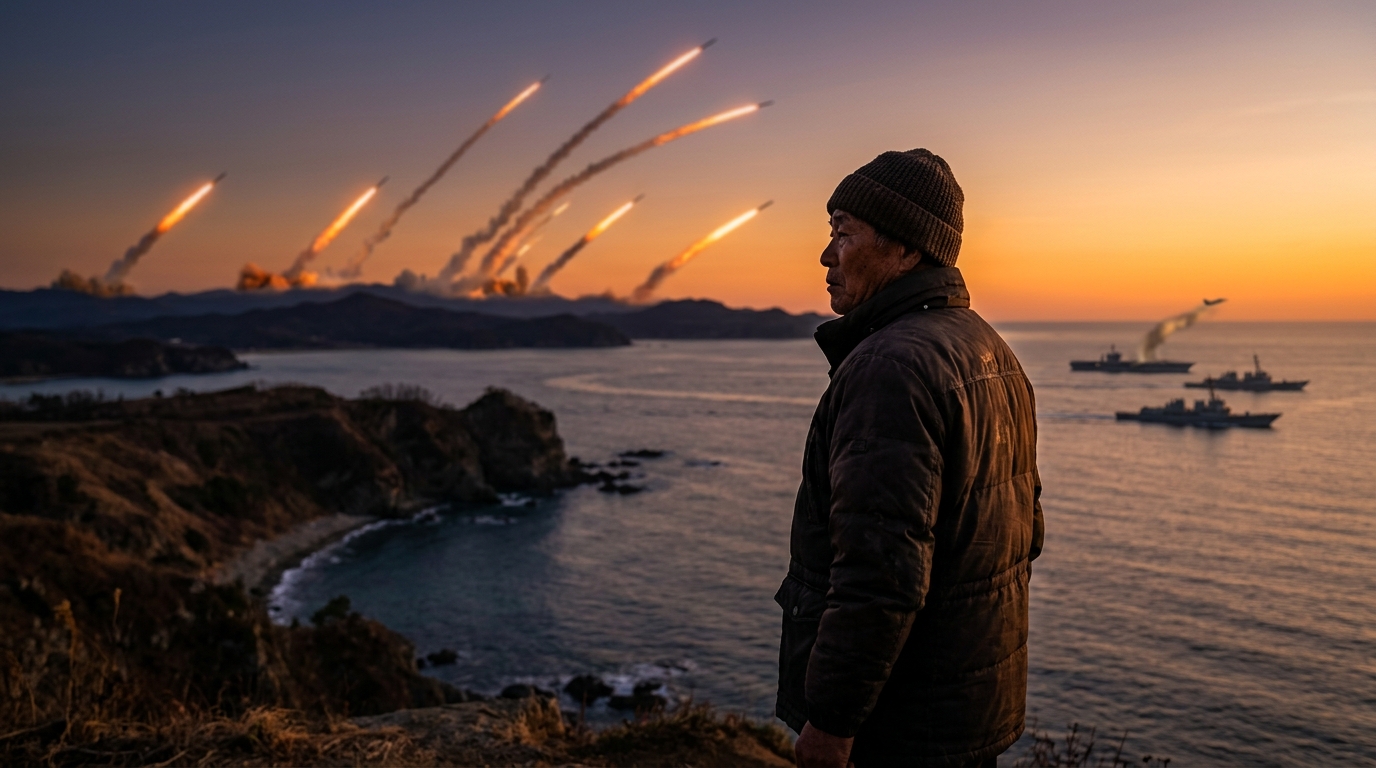
On 14 March 2026, North Korea fired more than ten ballistic missiles into the sea. The launch coincided with large‑scale river‑crossing drills conducted by the United States and South Korea, while President Donald Trump signalled willingness to reopen dialogue with Pyongyang.
Key Developments
- More than ten missiles were launched from an area near Pyongyang at 1:20 p.m. (0430 GMT) and fell into the sea off the east coast.
- Japan’s coast guard reported a missile impact outside its exclusive economic zone, confirming the trajectory.
- The Joint Chiefs of Staff of South Korea confirmed the launch and warned of heightened tensions.
- U.S. and South Korean forces carried out annual joint drills involving hundreds of troops, tanks, armoured vehicles and fighter jets; the U.S. maintains about 28,500 personnel in the peninsula.
- South Korean Prime Minister Kim Min‑seok met President Donald Trump in Washington to discuss reopening talks with the North.
Important Facts
North Korea has been conducting missile tests for over two decades to develop a delivery system for its presumed nuclear arsenal. Since 2006, it has been subject to multiple U.N. Security Council sanctions, which target its trade, economy and defence capabilities, yet Pyongyang remains defiant.
The annual drills, described by the allies as “defensive”, are portrayed by Pyongyang as “dress rehearsals” for aggression, reflecting the deep mistrust that underpins the security architecture of the Korean Peninsula.
Exam Relevance
- Geopolitics & Security: The incident illustrates the volatile security dynamics in East Asia, a recurring theme in GS 2 (International Relations) and GS 3 (Defence).
- Sanctions Regime: Understanding the role and effectiveness of U.N. sanctions on North Korea is vital for questions on global governance.
- US‑ROK Alliance: The scale of U.S. troop presence and joint exercises highlights the strategic partnership, relevant for GS 2 (India’s foreign policy) and GS 3 (Defence).
- Diplomacy vs. Deterrence: Trump’s overtures juxtaposed with military drills provide a case study on the balance between diplomatic engagement and deterrence, a frequent essay topic in GS 4 (Ethics & Integrity).
Way Forward
For a sustainable de‑escalation, the following steps are advisable:
- Re‑initiate multilateral talks: Use existing frameworks such as the Six‑Party Talks or a new UN‑mediated platform to address nuclear disarmament.
- Confidence‑building measures: Agree on a moratorium on missile tests and conduct joint humanitarian exercises to reduce mistrust.
- Targeted sanctions review: Periodically assess the impact of sanctions on Pyongyang’s behaviour while ensuring humanitarian aid is not impeded.
- Strengthen regional security dialogue: Involve Japan, China and Russia to create a comprehensive security architecture for the Indo‑Pacific.
Monitoring these developments will help aspirants analyse the interplay of military posturing, diplomatic outreach, and international regulatory mechanisms that shape South‑East Asian security.