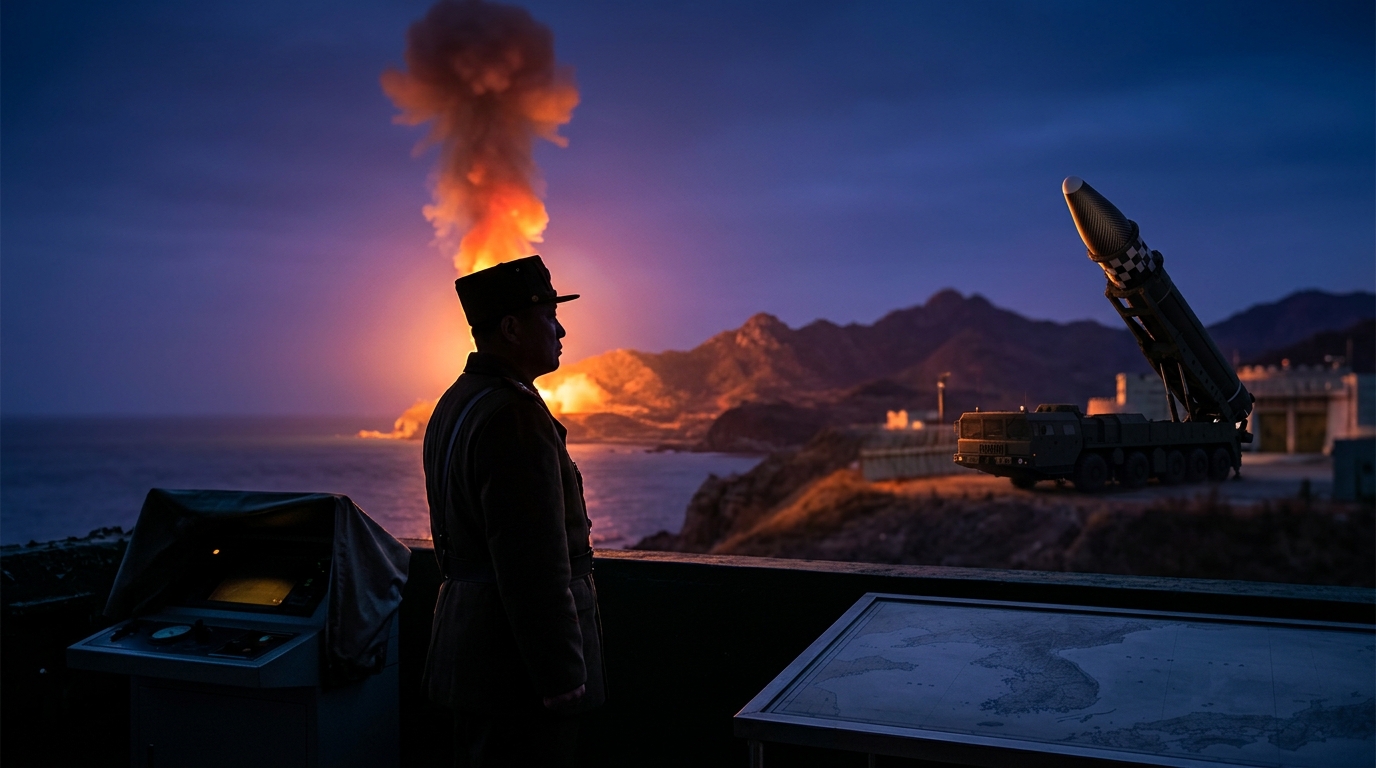
On 6 April 2026, South Korean lawmakers reported that North Korea conducted a test of a new solid-fuel rocket engine. The engine is intended for a next‑generation ICBM built with carbon fibre airframes, allowing greater thrust and the possibility of multiple warheads.
Key Developments
- March 2026: Ground test of the new solid‑fuel engine, believed to be for the latest ICBM.
- Engine reportedly delivers higher thrust than the 2024 model, which could already strike any point in the mainland United States.
- North Korean media displayed the carbon‑fibre missile airframe alongside the engine test.
- Leader Kim Jong Un attended the March 28 test, calling it a "significant upgrade" to strategic forces.
- All longer‑range launches have been on a lofted trajectory, landing in the East Sea or east of Japan.
Important Facts
- North Korea continues to violate the UNSC ban on missile and nuclear tests.
- The test was briefed to South Korean reporters by the National Intelligence Service.
- Use of carbon‑fibre reduces missile weight, potentially increasing range and enabling carriage of multiple warheads.
Exam Relevance
The development touches upon several GS topics: GS3 – Defence & Security (missile technology, strategic deterrence, proliferation norms), GS1 – International Relations (UN sanctions regime, regional security dynamics), and GS2 – Polity (role of intelligence agencies in shaping foreign policy). Understanding the technical aspects of missile propulsion and materials helps answer questions on modern warfare, while the diplomatic angle relates to compliance with international regimes.
Way Forward
- Strengthen diplomatic engagement within the UN framework to enforce the sanctions regime.
- Enhance regional missile‑defence cooperation among South Korea, Japan, and the United States.
- Monitor North Korea’s technological trajectory to anticipate further upgrades in payload capacity and range.
- Incorporate technical literacy on missile systems in the UPSC syllabus to better assess security challenges.