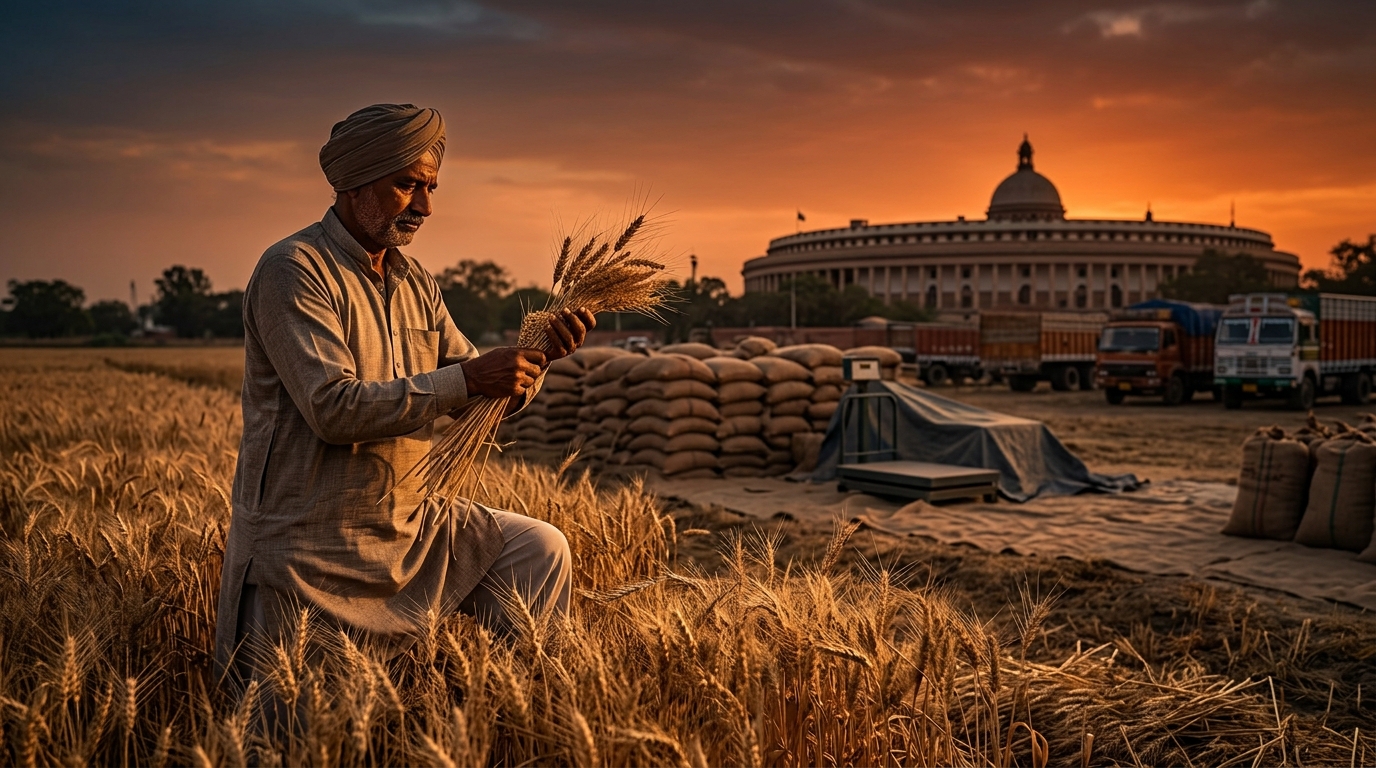
Parliamentary Committee Urges Union Food Ministry to Tighten Procurement Planning as Wheat & Rice Purchases Lag Targets
The Parliament Standing Committee on Consumer Affairs, Food and Public Distribution, chaired by Karunanidhi Kanimozhi, has urged the Union Food Ministry to improve procurement planning as wheat and rice purchases have consistently fallen short of estimates and state targets since 2022‑23. The committee recommends revis…
Parliamentary Committee Flags Shortfall in Food Grain Procurement The Parliament Standing Committee on Consumer Affairs, Food and Public Distribution , chaired by senior DMK MP Karunanidhi Kanimozhi , has expressed concern that actual procurement of rice and wheat consistently falls below estimates and state‑wise targets. The committee has asked the Union Food Ministry to strengthen planning and coordination with states. Key Developments Since 2022‑23 , procurement of wheat and rice has been less than 30% of total production . Actual wheat procurement stood at 76.71% (2023‑24), 71.35% (2024‑25) and 87.29% (2025‑26) of the estimates. Rice procurement has been below target every year since 2022‑23. During the KMS 2024‑25, rice procurement from Andhra Pradesh, Karnataka and Punjab was 25.60 LMT , 0.003 LMT and 116.13 LMT respectively, against targets of 35 LMT , 5.29 LMT and 124 LMT . In the RMS 2025‑26, wheat procurement lagged in Bihar, Gujarat, Punjab and Uttar Pradesh. Important Facts & Figures The committee highlighted that procurement gaps arise from multiple variables: production fluctuations, market surplus, MSP , prevailing market rates, demand‑supply dynamics and private trader participation. The government replied that these factors naturally cause variations between estimated and actual procurement. UPSC Relevance GS III – Economy: Understanding the mechanics of food grain procurement , its impact on buffer stocks, and price stability. GS II – Polity: Role of parliamentary committees in policy oversight and the interaction between the centre and states in implementing food security programmes. GS IV – Ethics & Integrity: Accountability of ministries in meeting targets that affect farmer incomes and consumer welfare. Way Forward Suggested by the Committee Review and refine the methodology for estimating procurement requirements. Enhance real‑time monitoring of crop production and market arrivals. Strengthen coordination with state governments, especially those where procurement shortfalls are acute. Report corrective actions taken to the committee for further scrutiny. Addressing these gaps is crucial for maintaining adequate buffer stock , stabilising food prices, and safeguarding farmer incomes.
Quick Reference
Key Insight
Parliamentary committee warns of wheat‑rice procurement gaps, urging tighter planning and centre‑state coordination.
Key Facts
- Parliament Standing Committee on Consumer Affairs, Food and Public Distribution flagged that wheat and rice procurement since 2022‑23 has been <30% of total production.
- Actual wheat procurement was 76.71% (2023‑24), 71.35% (2024‑25) and 87.29% (2025‑26) of the Ministry's estimates.
- Rice procurement in KMS 2024‑25 fell short in Andhra Pradesh (25.60 LMT vs 35 LMT target), Karnataka (0.003 LMT vs 5.29 LMT) and Punjab (116.13 LMT vs 124 LMT).
- In RMS 2025‑26, wheat procurement lagged in Bihar, Gujarat, Punjab and Uttar Pradesh.
- Committee chairperson: DMK MP Karunanidhi Kanimozhi; it recommended revising estimation methodology, real‑time monitoring and stronger centre‑state coordination.
Background
Food‑grain procurement is a core component of India's food‑security architecture, feeding the Public Distribution System and maintaining buffer stocks. Shortfalls affect price stability, farmer incomes and the fiscal burden on the Union, while parliamentary committees serve as oversight mechanisms linking policy to implementation across federal units.
UPSC Syllabus
- GS3 — Major crops, cropping patterns, irrigation and agricultural produce
- GS2 — Parliament and State Legislatures - structure, functioning, powers and privileges
- GS3 — Farm subsidies, MSP, PDS, food security and technology missions
- GS2 — Functions and responsibilities of Union and States
- Essay — Environment and Sustainability
- GS4 — Work culture, quality of service delivery, utilization of public funds, corruption
Mains Angle
GS III (Economy) – Analyse the impact of procurement gaps on buffer stocks, price volatility and fiscal health; GS II (Polity) – Discuss the role of parliamentary committees in strengthening centre‑state coordination for food security.