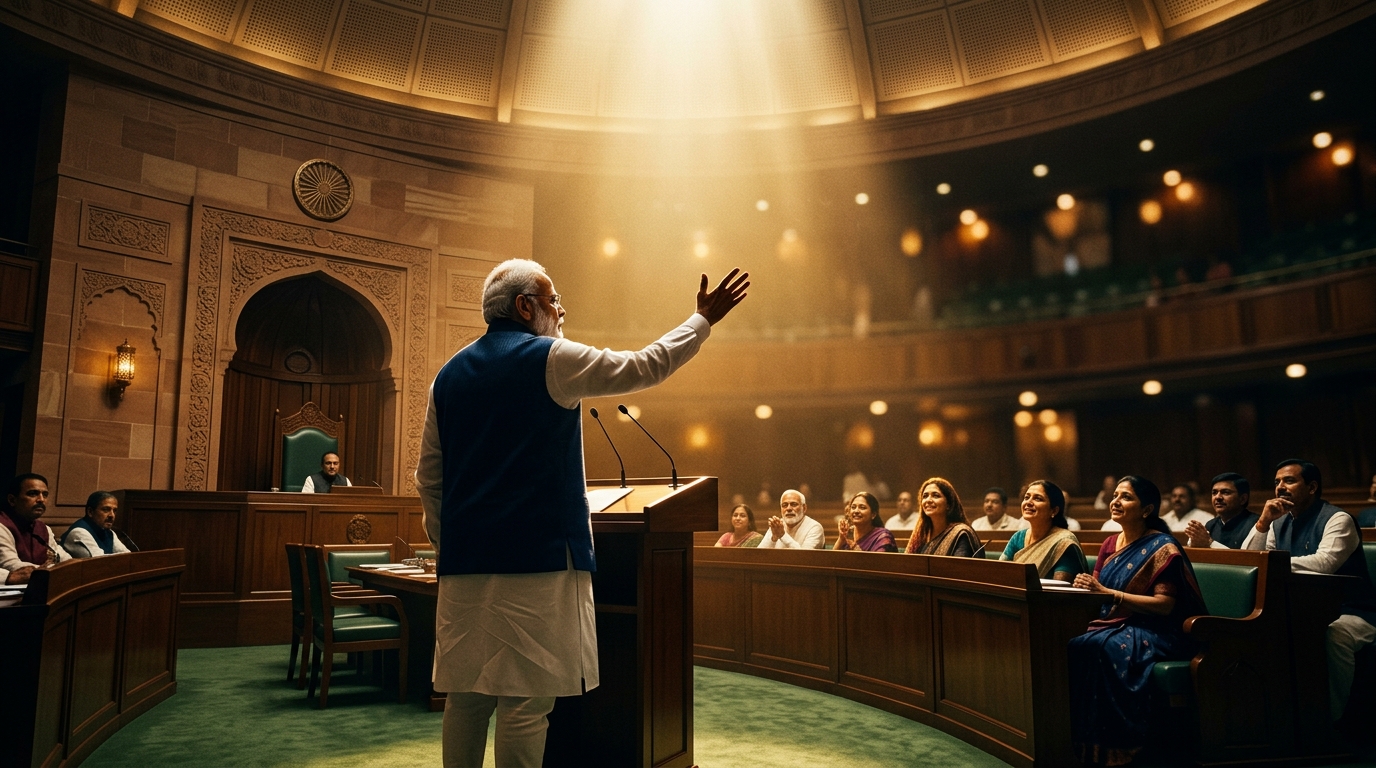
On April 17, 2026, Prime Minister Narendra Modi used his official X account to appeal to every Lok Sabha MPs to vote in favour of the pending Women’s Reservation Act amendments. The Prime Minister framed the vote as a moral duty, urging legislators to think of the women in their own families.
Key Developments
- Prime Minister Modi posted on X: “Please reflect upon your conscience, remembering the women in your own families. The legislation to ensure women’s reservation in legislative bodies is a significant opportunity to do justice to women of our nation.”
- The appeal comes ahead of the crucial voting on amendments to the Bill that would operationalise the reservation quota.
- All parties have been urged to set aside political calculations and support the measure to enhance women’s representation.
Important Facts
The original Women’s Reservation Act was passed in 2023, but its implementation has been stalled due to procedural delays and opposition concerns. The current amendment seeks to clarify the reservation percentage, define the timeline for implementation, and address procedural ambiguities.
Under the proposed framework, 33% of seats in both the Lok Sabha and state legislative assemblies would be reserved for women, aligning India with global best practices on gender parity.
Exam Relevance
The issue touches upon several UPSC syllabus points: constitutional amendments (GS2), gender equity and social justice (GS1 & GS4), and the functioning of parliamentary procedures (GS2). Understanding the political dynamics behind the reservation debate helps aspirants analyse the interplay between policy intent and legislative bottlenecks.
Way Forward
For the amendment to pass, the ruling party must secure a simple majority in the Lok Sabha. Opposition parties are expected to negotiate on the exact reservation percentage and the timeline for implementation. Civil society groups are likely to intensify advocacy, highlighting the need for timely enactment to meet India’s commitments under international conventions on women’s rights.
Successful passage would set a precedent for gender‑focused legislative reforms and could trigger similar measures in local bodies, reinforcing the broader agenda of inclusive governance.