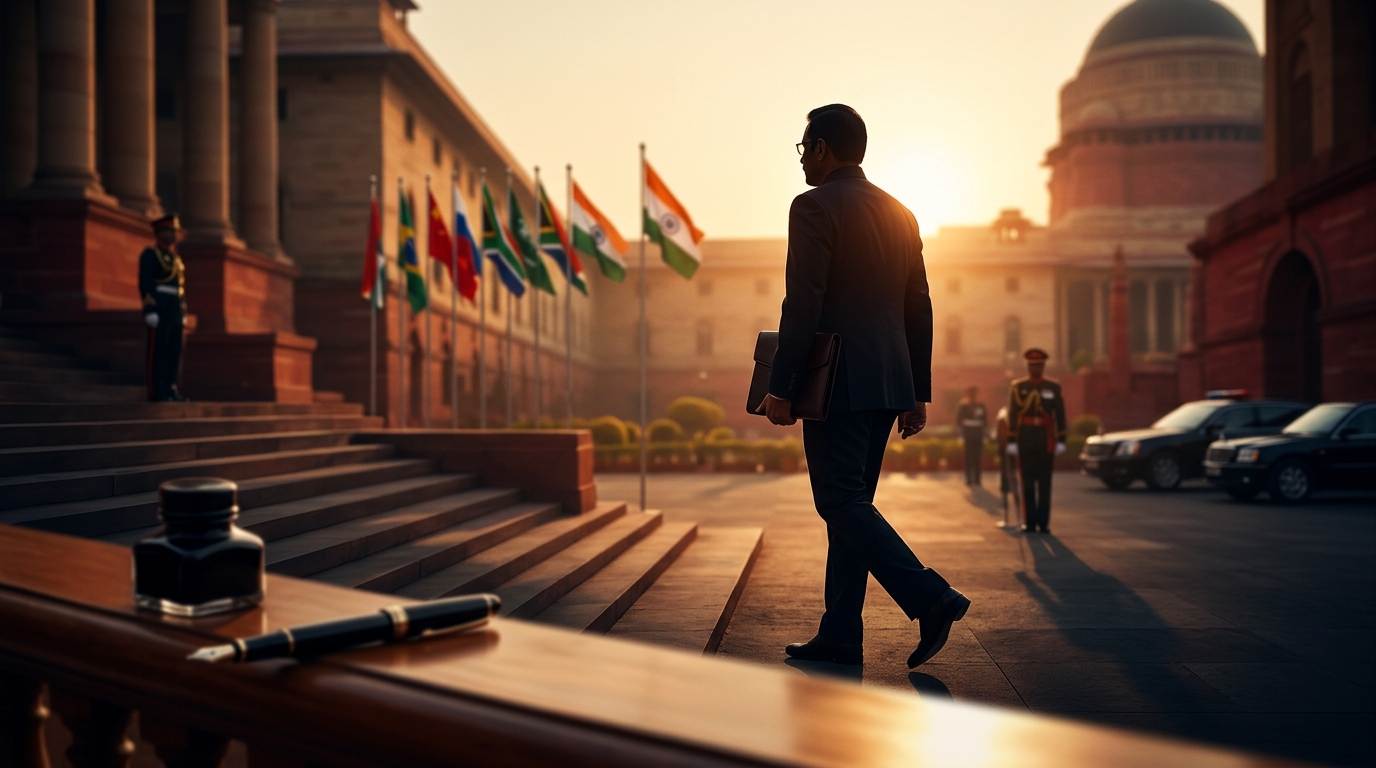
Putin Expected at BRICS Summit in India; Russia Reaffirms Oil Contracts Amid Gasoline Export Ban — UPSC Current Affairs | April 1, 2026
Putin Expected at BRICS Summit in India; Russia Reaffirms Oil Contracts Amid Gasoline Export Ban
Deputy Foreign Minister Andrey Rudenko said President Vladimir Putin is likely to attend the September 2026 BRICS summit in New Delhi, and Russia will honour all existing oil contracts despite a new gasoline export ban aimed at stabilising domestic prices. The development underscores India’s role as BRICS chair, the energy‑security stakes for member states, and the diplomatic challenges of building consensus among diverse national priorities.
Overview Deputy Foreign Minister Andrey Rudenko told reporters in Colombo on 1 April 2026 that President Vladimir Putin is likely to attend the BRICS summit scheduled for September 2026 in New Delhi. Russia also pledged to honour all existing oil contracts despite a newly announced ban on gasoline exports that took effect on 1 April 2026. Key Developments Putin’s participation is viewed as a signal of Russia’s commitment to the BRICS chair role of India. Russia will continue to fulfil all pre‑existing oil supply agreements, underscoring the importance of energy trade with India. The gasoline export ban was imposed to curb domestic price volatility caused by the conflict in West Asia . India has invited all ten members for a Foreign Ministers’ meeting in May and the summit in September, aiming to build consensus despite divergent national priorities. Recent diplomatic visits, including Russian Energy Deputy Minister Roman Marshavin’s trip to Sri Lanka, highlight Moscow’s outreach to energy‑importing nations. Important Facts • The summit will be the 18th BRICS meeting, hosted by India, a position that allows New Delhi to steer the agenda. • Russia’s gasoline export ban is a response to price fluctuations; the government warned that natural resources are not unlimited. • India’s imports of Russian oil hit a nine‑month high in March 2026 after the United States granted a 30‑day waiver permitting purchases from Moscow. • The grouping includes countries with divergent policies, such as Iran and the United Arab Emirates, creating challenges for consensus. UPSC Relevance Understanding the dynamics of BRICS is essential for GS 2 (International Relations) as it reflects shifting global power structures. The energy‑security dimension—Russia’s oil contracts and the gasoline export ban—links to GS 3 (Economy) topics like energy trade, sanctions, and price stability. The role of the Deputy Foreign Minister in diplomatic outreach illustrates India’s foreign‑policy priorities and the importance of multilateral forums. Way Forward India, as the BRICS chair , will need to balance the divergent interests of members, especially the growing rift between Iran and Arab states. Continued dialogue on energy security, possibly through coordinated oil‑supply mechanisms, could mitigate the impact of Russia’s gasoline ban. For aspirants, tracking how such high‑level visits translate into policy outcomes will be crucial for answering essay and case‑study questions on global governance and energy geopolitics.
Login to bookmark articles
Login to mark articles as complete
Overview
Putin’s Delhi BRICS visit underscores India‑Russia energy ties amid Russia’s gasoline export ban
Key Facts
Deputy Foreign Minister Andrey Rudenko announced on 1 April 2026 that President Vladimir Putin is likely to attend the BRICS summit in New Delhi in September 2026.
The summit will be the 18th BRICS meeting, with India holding the chair and setting the agenda for the year.
Russia reaffirmed it will honour all existing oil supply contracts, a key component of India’s energy security strategy.
A ban on gasoline exports came into force on 1 April 2026 to stabilise domestic fuel prices amid the West Asia conflict.
India’s imports of Russian crude oil hit a nine‑month high in March 2026 after the United States granted a 30‑day waiver for purchases from Moscow.
All ten BRICS members are invited to a Foreign Ministers’ meeting in May 2026, reflecting attempts to build consensus despite divergent national priorities (e.g., Iran vs UAE).
Russian Energy Deputy Minister Roman Marshavin visited Sri Lanka in early April 2026, underscoring Moscow’s outreach to energy‑importing nations.
Background & Context
The announcement comes as India, the 2026 BRICS chair, seeks to leverage the forum to deepen strategic energy ties with Russia while managing the bloc’s internal divergences. Russia’s oil‑contract commitment and gasoline export ban highlight the intertwining of geopolitics, sanctions, and domestic price stability—core themes of GS‑2 and GS‑3.
UPSC Syllabus Connections
Prelims_GS•International Current AffairsGS1•Distribution of Key Natural ResourcesPrelims_GS•Constitution and Political SystemGS2•Bilateral, regional and global groupings involving IndiaEssay•International Relations and GeopoliticsGS2•Executive and Judiciary - structure, organization and functioning
Mains Answer Angle
GS‑2: Discuss how India’s chairmanship of the 2026 BRICS summit can be used to balance divergent member interests, especially in the energy domain, and its implications for India‑Russia strategic partnership.