Overview
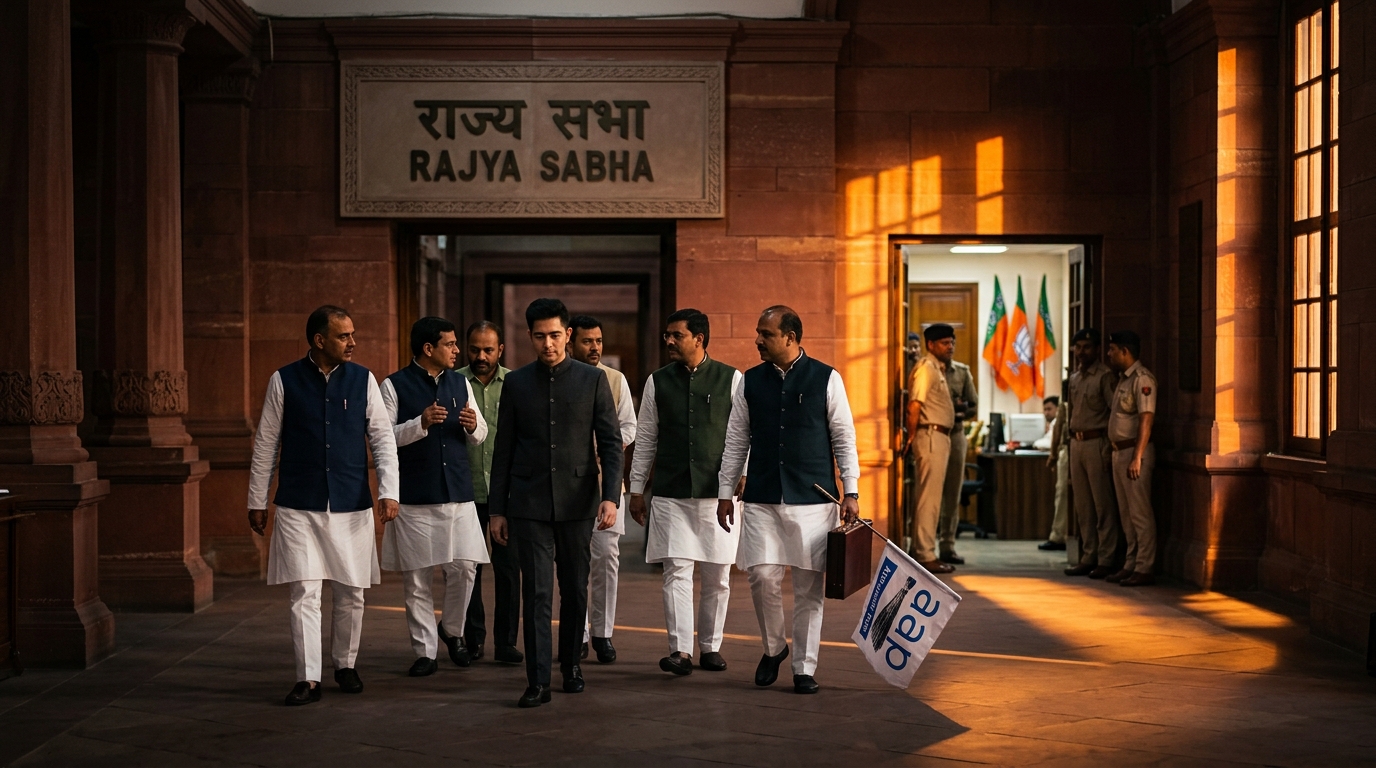
On 24 April 2026, Raghav Chadha, a member of the Rajya Sabha, announced that he and six fellow legislators from the AAP would leave the party and join the BJP. The move follows Chadha’s recent demotion within AAP and reflects a strategic shift by a sizable faction of the party’s representation in the upper house.
Key Developments
- Raghav Chadha, along with six other AAP parliamentarians, formally resigned from AAP.
- The resigning members declared their intention to "exercise the provisions of the Constitution of India" to merge with the BJP.
- Chadha described the group as "2/3rd members belonging to the AAP in Rajya Sabha," indicating a majority of the party’s upper‑house strength.
- The announcement was made at a press conference alongside Sandeep Pathak and Ashok Mittal.
Important Facts
The AAP currently holds seven seats in the Rajya Sabha. With the resignation of seven members, the party’s presence in the upper house will be effectively nullified unless new members are elected or nominated. The BJP, which already commands a comfortable majority in both houses, stands to gain additional strength, potentially simplifying the passage of its legislative agenda.
Exam Relevance
This episode underscores several themes relevant to the UPSC syllabus:
- Party dynamics and the impact of intra‑party dissent on parliamentary composition (GS2: Polity).
- Procedural aspects of party mergers and defections under the Anti‑Defection Law, which permits a merger if at least two‑thirds of members agree.
- Strategic considerations for the ruling party in consolidating opposition strength, influencing legislative stability and policy implementation (GS2: Polity).
Way Forward
In the short term, the Rajya Sabha will witness a re‑allocation of seats, prompting the Election Commission to oversee any by‑elections or nominations required to fill vacancies. Politically, the BJP may leverage the enlarged support base to push forward its flagship programmes, while the AAP will need to rebuild its upper‑house presence, possibly by focusing on state‑level victories to secure future nominations. Aspirants should monitor subsequent statements from the Speaker of the Rajya Sabha and the Election Commission for procedural updates, and analyse how such realignments affect coalition politics and legislative outcomes.