Overview
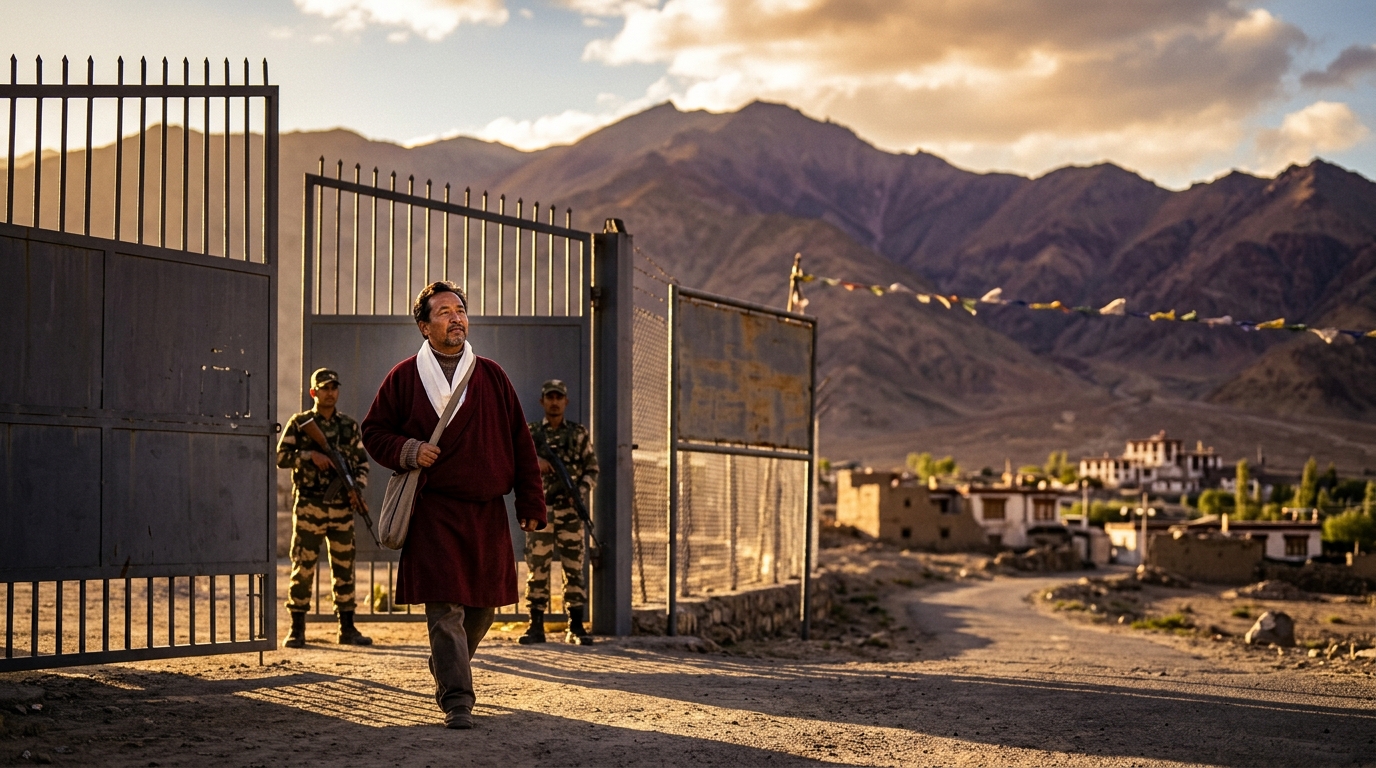
The release of activist Sonam Wangchuk on 14 March 2026 ended a protracted legal and political standoff that pitted his supporters and Ladakh’s regional bodies against the Ministry of Home Affairs (MHA). Wangchuk had been detained under the National Security Act 1980 (NSA), with the Centre branding him the chief provocateur of the September 2025 Leh clashes that left four dead.
Key Developments
- Centre alleged Wangchuk’s speech incited an “Arab‑Spring‑like” mobilisation, citing a translated speech padded with questionable material – a pattern seen in earlier high‑profile cases.
- The Supreme Court expressed concern over Wangchuk’s deteriorating health in Jodhpur jail, prompting his release three days before a final hearing.
- Following his release, massive rallies erupted in Leh while Kargil observed a shutdown, signalling continued demand for constitutional safeguards.
- The Leh Apex Body (LAB) and the Kargil Democratic Alliance (KDA) reiterated demands for full statehood and inclusion under the Sixth Schedule of the Constitution.
- The National Commission for Scheduled Tribes (NCST) had already recommended such status, and the demand aligns with the BJP’s 2020 election manifesto.
Important Facts
1. The Centre’s original justification for detention hinged on alleged incitement, but the prosecution’s evidence comprised a translated speech with added “aspersions,” a legally dubious method previously criticised in the Elgar Parishad and G.N. Saibaba cases.
2. Wangchuk’s social‑media posts on the day of the September violence condemned the unrest, weakening the government’s case.
3. Other activists, notably Deldan Namgyal and Smanla Dorjey, remain incarcerated, indicating a broader crackdown.
Exam Relevance
The episode touches upon several core UPSC themes:
- Centre‑State Relations: The use of NSA against a regional leader raises questions about federalism, preventive detention, and the balance of power (GS2).
- Constitutional Safeguards: Demands for statehood and Sixth Schedule status highlight the mechanisms for tribal autonomy and the political process of creating new states (GS2).
- Judicial Oversight: The Supreme Court’s intervention on health grounds underscores judicial review of executive actions (GS1).
- Security vs. Civil Liberties: The case exemplifies the tension between national security imperatives and individual rights, a recurring theme in polity and ethics papers (GS2, GS4).
Way Forward
For a durable resolution, the following steps are essential:
- Initiate transparent, time‑bound negotiations between the LAB, KDA and the Centre, with clear milestones for statehood or Sixth Schedule inclusion.
- Ensure any preventive detention complies strictly with constitutional safeguards and is subject to judicial review to avoid allegations of arbitrariness.
- Address the health and legal status of remaining detainees to prevent further escalation.
- Incorporate recommendations of the NCST into a legislative framework that balances security concerns with tribal autonomy.
Only a genuine, good‑faith dialogue that respects constitutional provisions can quell the unrest and pave the way for Ladakh’s long‑standing demand for political recognition.