Loading page, please wait…
HomeCurrent AffairsEditorialsGovt SchemesLearning ResourcesUPSC SyllabusPricingAboutBest UPSC AIUPSC AI ToolAI for UPSCUPSC ChatGPT

© 2026 Vaidra. All rights reserved.

PrivacyTerms
Vaidra Logo
Vaidra

Top 4 items + smart groups

UPSC GPT
New
Current Affairs
Daily Solutions
Daily Puzzle
Mains Evaluator

Version 2.0.0 • Built with ❤️ for UPSC aspirants

Supreme Court Bench Hear Sabarimala Reference: Issues of Constitutional Morality and Religious Freedom

Supreme Court Bench Hear Sabarimala Reference: Issues of Constitutional Morality and Religious Freedom
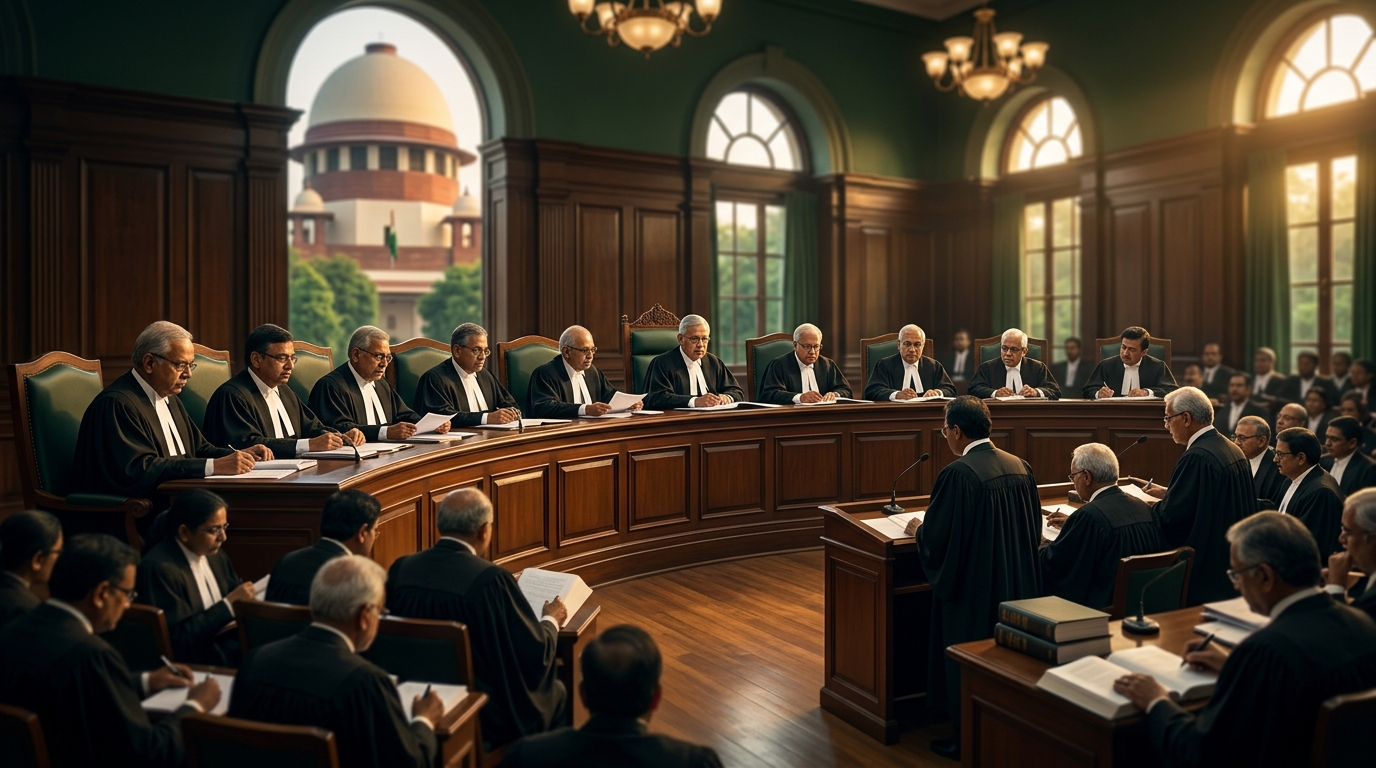
The Supreme Court, led by CJI Surya Kant, heard arguments on the Sabarimala reference, focusing on constitutional morality, religious freedom and the validity of age‑based entry restrictions. The bench underscored the need to balance Hindu temple customs with constitutional guarantees, a pivotal issue for UPSC Polity.
Overview The Supreme Court convened a multi‑day hearing on the Sabarimala reference, examining whether age‑based entry restrictions and other temple customs violate the Constitution. The bench, headed by CJI Surya Kant and comprising Justices BV Nagarathna, MM Sundresh, Ahsanuddin Amanullah, Aravind Kumar, Augustine George Masih, Prasanna B Varale, R Mahadevan and Joymalya Bagchi, heard arguments from the Centre, petitioners and intervenors. Key Developments (Day 3 & Day 4) The Court observed that excluding non‑devotees from temple premises could impact the broader fabric of Hinduism and that any restriction must be justified on constitutional grounds. It was reiterated that a temple’s sampradaya must be respected when visitors are required to follow its customs, but the Court warned against imposing such norms on outsiders. Discussions highlighted that certain temples historically allow only women, indicating that gender‑based entry rules are not uniformly prohibited. The bench stressed that declaring the belief of millions "wrong" is a delicate task, emphasizing the need for a balanced approach that respects faith while upholding constitutional values. Justices warned against “hollowing out” religion in the name of social reform, underscoring the principle of constitutional morality . Important Facts The hearing touched upon several legal doctrines: Judicial Review remains available for "superstitious" or discriminatory practices, contrary to the argument that it is barred. The Centre questioned the Supreme Court’s earlier verdicts de‑criminalising adultery and homosexuality, arguing that they were decided on a broader notion of constitutional morality rather than a narrow reading of the text. Both parties invoked the right to religious freedom under Article 25, while also acknowledging the State’s duty to ensure equality. UPSC Relevance Understanding this case is crucial for GS 2 (Polity) as it illustrates the tension between individual rights, collective religious practices, and the doctrine of constitutional morality. Aspirants should note how the Court balances Fundamental Rights against the State’s regulatory powers. The composition of the bench also reflects the importance of judicial diversity in interpreting complex socio‑legal issues. Way Forward While the Court has not yet delivered a final judgment, the following steps are likely: Further hearings to examine empirical data on temple attendance and the impact of gender‑based restrictions. Possible referral to a larger bench for a definitive ruling on the interplay of constitutional morality and religious customs. Guidelines may be issued to ensure that any restriction on temple entry is narrowly tailored, non‑discriminatory and consistent with the Constitution. For UPSC preparation, candidates should track the final verdict, analyse the Court’s reasoning, and relate it to broader themes of secularism, social reform and the protection of minority rights in India.
  1. Home
  2. Prepare
  3. Current Affairs
  4. Supreme Court Bench Hear Sabarimala Reference: Issues of Constitutional Morality and Religious Freedom
Must Review
Login to bookmark articles
Login to mark articles as complete

Overview

gs.gs286% UPSC Relevance

Supreme Court weighs constitutional morality against gender‑based temple bans in Sabarimala case

Key Facts

  1. The 9‑judge Supreme Court bench, headed by CJI Surya Kant, heard the Sabarimala reference on Days 3, 4 and 8 in 2026.
  2. Key constitutional provisions under debate are Articles 25 and 26 (freedom of religion) and Article 14 (equality).
  3. The bench emphasized the doctrine of constitutional morality as the guiding principle for adjudicating religious customs.
  4. The Centre argued that earlier SC verdicts on adultery and homosexuality were based on a broad reading of constitutional morality.
  5. The Court warned against imposing sampradaya‑specific customs on non‑devotees, highlighting the need for narrowly tailored, non‑discriminatory restrictions.

Background & Context

The Sabarimala case pits gender‑based temple entry restrictions against fundamental rights, testing the balance between religious freedom and equality. It illustrates how constitutional morality shapes judicial review of personal laws and religious practices, a core theme in GS‑2 Polity.

UPSC Syllabus Connections

Essay•Philosophy, Ethics and Human ValuesEssay•Society, Gender and Social JusticeGS4•Essence, determinants and consequences of Ethics in human actionsGS2•Executive and Judiciary - structure, organization and functioning

Mains Answer Angle

In Mains, this issue can be framed under ‘Balancing fundamental rights with religious freedom and constitutional morality’ (GS‑2). Candidates may be asked to evaluate the judiciary's role in reconciling individual rights with collective religious customs.

Full Article

<h3>Overview</h3> <p>The <strong><span class="key-term" data-definition="Supreme Court of India — the apex judicial body in India, empowered to interpret the Constitution and exercise judicial review (GS2: Polity)">Supreme Court</span></strong> convened a multi‑day hearing on the Sabarimala reference, examining whether age‑based entry restrictions and other temple customs violate the Constitution. The bench, headed by <strong>CJI Surya Kant</strong> and comprising Justices BV Nagarathna, MM Sundresh, Ahsanuddin Amanullah, Aravind Kumar, Augustine George Masih, Prasanna B Varale, R Mahadevan and Joymalya Bagchi, heard arguments from the Centre, petitioners and intervenors.</p> <h3>Key Developments (Day 3 & Day 4)</h3> <ul> <li>The Court observed that excluding non‑devotees from temple premises could impact the broader fabric of <span class="key-term" data-definition="Hinduism — the major religious tradition of India, encompassing diverse beliefs, rituals and temple practices (GS1: Culture)">Hinduism</span> and that any restriction must be justified on constitutional grounds.</li> <li>It was reiterated that a temple’s <span class="key-term" data-definition="Sampradaya — a religious tradition or sect within Hinduism, often linked to specific deities or rituals (GS1: Culture)">sampradaya</span> must be respected when visitors are required to follow its customs, but the Court warned against imposing such norms on outsiders.</li> <li>Discussions highlighted that certain temples historically allow only women, indicating that gender‑based entry rules are not uniformly prohibited.</li> <li>The bench stressed that declaring the belief of millions "wrong" is a delicate task, emphasizing the need for a balanced approach that respects faith while upholding constitutional values.</li> <li>Justices warned against “hollowing out” religion in the name of social reform, underscoring the principle of <span class="key-term" data-definition="Constitutional Morality — the doctrine that constitutional values must guide the interpretation of laws and policies, even when they conflict with popular sentiment (GS2: Polity)">constitutional morality</span>.</li> </ul> <h3>Important Facts</h3> <p>The hearing touched upon several legal doctrines:</p> <ul> <li><span class="key-term" data-definition="Judicial Review — the power of courts to examine the legality of legislative and executive actions and strike down those inconsistent with the Constitution (GS2: Polity)">Judicial Review</span> remains available for "superstitious" or discriminatory practices, contrary to the argument that it is barred.</li> <li>The Centre questioned the Supreme Court’s earlier verdicts de‑criminalising adultery and homosexuality, arguing that they were decided on a broader notion of <span class="key-term" data-definition="Constitutional Morality — see above (GS2: Polity)">constitutional morality</span> rather than a narrow reading of the text.</li> <li>Both parties invoked the right to <span class="key-term" data-definition="Religious Freedom — the constitutional guarantee that individuals may practice and profess their religion without undue interference (GS2: Polity)">religious freedom</span> under Article 25, while also acknowledging the State’s duty to ensure equality.</li> </ul> <h3>UPSC Relevance</h3> <p>Understanding this case is crucial for GS 2 (Polity) as it illustrates the tension between individual rights, collective religious practices, and the doctrine of constitutional morality. Aspirants should note how the Court balances <span class="key-term" data-definition="Fundamental Rights — basic human rights guaranteed by the Constitution, including equality and freedom of religion (GS2: Polity)">Fundamental Rights</span> against the State’s regulatory powers. The composition of the bench also reflects the importance of judicial diversity in interpreting complex socio‑legal issues.</p> <h3>Way Forward</h3> <p>While the Court has not yet delivered a final judgment, the following steps are likely:</p> <ul> <li>Further hearings to examine empirical data on temple attendance and the impact of gender‑based restrictions.</li> <li>Possible referral to a larger bench for a definitive ruling on the interplay of <span class="key-term" data-definition="Constitutional Morality — see above (GS2: Polity)">constitutional morality</span> and religious customs.</li> <li>Guidelines may be issued to ensure that any restriction on temple entry is narrowly tailored, non‑discriminatory and consistent with the Constitution.</li> </ul> <p>For UPSC preparation, candidates should track the final verdict, analyse the Court’s reasoning, and relate it to broader themes of secularism, social reform and the protection of minority rights in India.</p>
Read Original on livelaw

Analysis

Practice Questions

GS2
Easy
Prelims MCQ

Constitutional Morality

1 marks
4 keywords
GS2
Medium
Mains Short Answer

Freedom of Religion vs Equality

10 marks
5 keywords
GS2
Hard
Mains Essay

Religion, Gender Equality and Judicial Review

250 marks
7 keywords
Related:Daily•Weekly

Loading related articles...

Loading related articles...

Tip: Click articles above to read more from the same date, or use the back button to see all articles.

Quick Reference

Key Insight

Supreme Court weighs constitutional morality against gender‑based temple bans in Sabarimala case

Key Facts

  1. The 9‑judge Supreme Court bench, headed by CJI Surya Kant, heard the Sabarimala reference on Days 3, 4 and 8 in 2026.
  2. Key constitutional provisions under debate are Articles 25 and 26 (freedom of religion) and Article 14 (equality).
  3. The bench emphasized the doctrine of constitutional morality as the guiding principle for adjudicating religious customs.
  4. The Centre argued that earlier SC verdicts on adultery and homosexuality were based on a broad reading of constitutional morality.
  5. The Court warned against imposing sampradaya‑specific customs on non‑devotees, highlighting the need for narrowly tailored, non‑discriminatory restrictions.

Background

The Sabarimala case pits gender‑based temple entry restrictions against fundamental rights, testing the balance between religious freedom and equality. It illustrates how constitutional morality shapes judicial review of personal laws and religious practices, a core theme in GS‑2 Polity.

UPSC Syllabus

  • Essay — Philosophy, Ethics and Human Values
  • Essay — Society, Gender and Social Justice
  • GS4 — Essence, determinants and consequences of Ethics in human actions
  • GS2 — Executive and Judiciary - structure, organization and functioning

Mains Angle

In Mains, this issue can be framed under ‘Balancing fundamental rights with religious freedom and constitutional morality’ (GS‑2). Candidates may be asked to evaluate the judiciary's role in reconciling individual rights with collective religious customs.

Explore:Current Affairs·Editorial Analysis·Govt Schemes·Study Materials·Previous Year Questions·UPSC GPT
Supreme Court Bench Hear Sabarimala Refere... | UPSC Current Affairs