Loading page, please wait…
HomeCurrent AffairsEditorialsGovt SchemesLearning ResourcesUPSC SyllabusPricingAboutBest UPSC AIUPSC AI ToolAI for UPSCUPSC ChatGPT

© 2026 Vaidra. All rights reserved.

PrivacyTerms
Vaidra Logo
Vaidra

Top 4 items + smart groups

UPSC GPT
New
Current Affairs
Daily Solutions
Daily Puzzle
Mains Evaluator

Version 2.0.0 • Built with ❤️ for UPSC aspirants

Supreme Court ने CBI को Look‑Out Circulars के लिए SOP तैयार करने का आदेश दिया, जब आरोपी को हवाई अड्डे पर रोका गया

Supreme Court ने CBI को Look‑Out Circulars के लिए SOP तैयार करने का आदेश दिया, जब आरोपी को हवाई अड्डे पर रोका गया
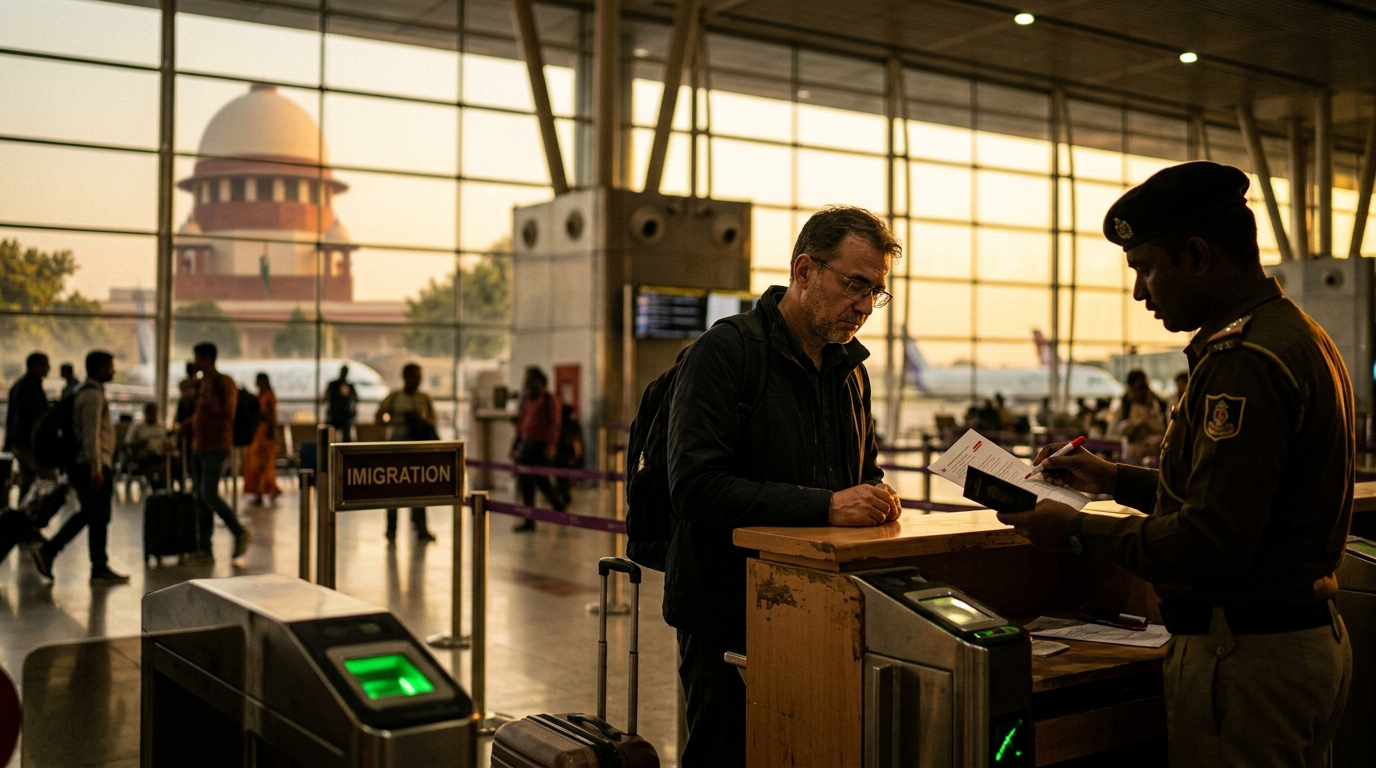
Supreme Court ने 21 April 2026 को CBI को Look‑Out Circulars के लिए Standard Operating Procedure तैयार करने का निर्देश दिया, जब याचिकाकर्ता Nimesh Shah को यात्रा के लिए बंधक‑प्राप्त अनुमति होने के बावजूद हवाई अड्डे पर रोका गया। यह निर्णय LOC जारी करने में प्रक्रियात्मक खामियों को उजागर करता है, तथा संवैधानिक मुक्त यात्रा अधिकार की सुरक्षा की आवश्यकता पर बल देता है।
Overview The Supreme Court on 21 April 2026 asked the CBI to formulate a SOP for issuing LOC . The directive arose after the petitioner, Nimesh Navinchandra Shah , was barred from travelling despite a court‑granted bail permission. Key Developments Justice Vikram Nath and Justice Sandeep Mehta questioned why the LOC was not served to the accused. The petitioner had obtained bail in the CBI case, yet two LOCs (one by CBI, one by a bank) were still operative. Senior Advocate Siddharth Aggarwal argued that the LOC was treated as a confidential document, depriving the accused of any pre‑ or post‑decision hearing. Justice Mehta suggested that the passport could be deposited with the court as a condition, instead of a blanket travel ban. The Court directed the CBI to place the LOC on record and to submit a detailed SOP. Important Facts The petitioner’s chargesheet was filed without arrest, and the ED also pursued the case after the company’s accounts were declared a Non‑Performing Asset. The High Court had dismissed his plea to quash the LOC, prompting the Supreme Court intervention. Justice Nath emphasized that an LOC, being a non‑confidential document, must disclose reasons for issuance, as per the CBI’s own memorandum. Justice Mehta highlighted that impounding a passport without a specific bail condition violates the accused’s right to free movement. UPSC Relevance Understanding the procedural safeguards around <span class="key-term" data-definition="bail — a legal provision allowing an accused to remain free pending trial,
  1. Home
  2. Prepare
  3. Current Affairs
  4. Supreme Court ने CBI को Look‑Out Circulars के लिए SOP तैयार करने का आदेश दिया, जब आरोपी को हवाई अड्डे पर रोका गया
Login to bookmark articles
Login to mark articles as complete

Overview

gs.gs278% UPSC Relevance

Supreme Court mandates CBI SOP for LOCs, reinforcing constitutional right to travel

Key Facts

  1. 21 April 2026: Supreme Court directed CBI to formulate an SOP for Look‑Out Circulars (LOCs).
  2. Petitioner Nimesh Navinchandra Shah, despite bail, was barred from travel due to two operative LOCs (CBI and a bank).
  3. Justices Vikram Nath and Sandeep Mehta highlighted non‑service of LOCs and lack of hearing for the accused.
  4. Court ordered CBI to place the LOC on record and submit a detailed SOP covering issuance, communication, and review.
  5. LOCs are non‑public notices; CBI’s own memorandum requires disclosure of reasons, linking to Articles 21 and 19(1)(d).
  6. The judgment calls for mandatory service of LOCs, pre‑decision hearing, and passport deposit as a condition rather than a blanket ban.

Background & Context

Look‑Out Circulars are tools used by investigative agencies to prevent suspects from leaving India, often without the accused’s knowledge. The Supreme Court’s intervention highlights the tension between the investigative mandate of bodies like the CBI and constitutional guarantees of personal liberty and free movement, a recurring theme in governance and judicial oversight.

UPSC Syllabus Connections

GS2•Statutory, regulatory and quasi-judicial bodiesPrelims_GS•Constitution and Political SystemGS2•Executive and Judiciary - structure, organization and functioningGS4•Work culture, quality of service delivery, utilization of public funds, corruptionEssay•Philosophy, Ethics and Human Values

Mains Answer Angle

GS2 (Polity) – Discuss the need for procedural safeguards in the issuance of LOCs and propose reforms to balance investigative powers with Articles 21 and 19(1)(d). GS4 (Ethics) – Evaluate the ethical implications of opaque travel bans on accused persons.

Full Article

<h2>Overview</h2> <p>The <span class="key-term" data-definition="Supreme Court of India — apex judicial body that interprets the Constitution and can direct executive agencies; relevant to GS1: Polity">Supreme Court</span> on 21 April 2026 asked the <span class="key-term" data-definition="Central Bureau of Investigation — India's premier investigative agency handling major crimes, corruption and economic offences (GS2: Polity)">CBI</span> to formulate a <span class="key-term" data-definition="Standard Operating Procedure — a documented set of step‑by‑step instructions to ensure uniform handling of a process; crucial for administrative accountability (GS2: Polity)">SOP</span> for issuing <span class="key-term" data-definition="Look‑Out Circular (LOC) — a non‑public notice issued by an investigating agency to prevent a person from leaving the country; its legal status is contested (GS2: Polity)">LOC</span>. The directive arose after the petitioner, <strong>Nimesh Navinchandra Shah</strong>, was barred from travelling despite a court‑granted bail permission.</p> <h3>Key Developments</h3> <ul> <li>Justice <span class="key-term" data-definition="Justice Vikram Nath — sitting judge of the Supreme Court, known for probing procedural lapses in law enforcement (GS2: Polity)">Vikram Nath</span> and Justice <span class="key-term" data-definition="Justice Sandeep Mehta — Supreme Court judge who highlighted the right to free movement (GS2: Polity)">Sandeep Mehta</span> questioned why the LOC was not served to the accused.</li> <li>The petitioner had obtained bail in the CBI case, yet two LOCs (one by CBI, one by a bank) were still operative.</li> <li>Senior Advocate Siddharth Aggarwal argued that the LOC was treated as a confidential document, depriving the accused of any pre‑ or post‑decision hearing.</li> <li>Justice Mehta suggested that the passport could be deposited with the court as a condition, instead of a blanket travel ban.</li> <li>The Court directed the CBI to place the LOC on record and to submit a detailed SOP.</li> </ul> <h3>Important Facts</h3> <p>The petitioner’s chargesheet was filed without arrest, and the <span class="key-term" data-definition="Enforcement Directorate (ED) — agency that investigates money‑laundering and foreign exchange violations under the PMLA (GS2: Polity)">ED</span> also pursued the case after the company’s accounts were declared a Non‑Performing Asset. The High Court had dismissed his plea to quash the LOC, prompting the Supreme Court intervention.</p> <p>Justice Nath emphasized that an LOC, being a non‑confidential document, must disclose reasons for issuance, as per the CBI’s own memorandum. Justice Mehta highlighted that impounding a passport without a specific bail condition violates the accused’s right to free movement.</p> <h3>UPSC Relevance</h3> <p>Understanding the procedural safeguards around <span class="key-term" data-definition="bail — a legal provision allowing an accused to remain free pending trial,
Read Original on livelaw

Analysis

Practice Questions

Prelims
Easy
Prelims MCQ

मूलभूत अधिकार – Article 19(1)(d)

1 marks
3 keywords
GS2
Medium
Mains Short Answer

जांच एजेंसियां और प्रक्रियात्मक सुरक्षा उपाय

10 marks
6 keywords
GS2
Hard
Mains Essay

राजनीति – शक्ति विभाजन, जांच एजेंसियां, मूलभूत अधिकार

250 marks
8 keywords
Related:Daily•Weekly

Loading related articles...

Loading related articles...

Tip: Click articles above to read more from the same date, or use the back button to see all articles.

Quick Reference

Key Insight

Supreme Court mandates CBI SOP for LOCs, reinforcing constitutional right to travel

Key Facts

  1. 21 April 2026: Supreme Court directed CBI to formulate an SOP for Look‑Out Circulars (LOCs).
  2. Petitioner Nimesh Navinchandra Shah, despite bail, was barred from travel due to two operative LOCs (CBI and a bank).
  3. Justices Vikram Nath and Sandeep Mehta highlighted non‑service of LOCs and lack of hearing for the accused.
  4. Court ordered CBI to place the LOC on record and submit a detailed SOP covering issuance, communication, and review.
  5. LOCs are non‑public notices; CBI’s own memorandum requires disclosure of reasons, linking to Articles 21 and 19(1)(d).
  6. The judgment calls for mandatory service of LOCs, pre‑decision hearing, and passport deposit as a condition rather than a blanket ban.

Background

Look‑Out Circulars are tools used by investigative agencies to prevent suspects from leaving India, often without the accused’s knowledge. The Supreme Court’s intervention highlights the tension between the investigative mandate of bodies like the CBI and constitutional guarantees of personal liberty and free movement, a recurring theme in governance and judicial oversight.

UPSC Syllabus

  • GS2 — Statutory, regulatory and quasi-judicial bodies
  • Prelims_GS — Constitution and Political System
  • GS2 — Executive and Judiciary - structure, organization and functioning
  • GS4 — Work culture, quality of service delivery, utilization of public funds, corruption
  • Essay — Philosophy, Ethics and Human Values

Mains Angle

GS2 (Polity) – Discuss the need for procedural safeguards in the issuance of LOCs and propose reforms to balance investigative powers with Articles 21 and 19(1)(d). GS4 (Ethics) – Evaluate the ethical implications of opaque travel bans on accused persons.

Explore:Current Affairs·Editorial Analysis·Govt Schemes·Study Materials·Previous Year Questions·UPSC GPT
Supreme Court ने CBI को Look‑Out Circulars... | UPSC Current Affairs