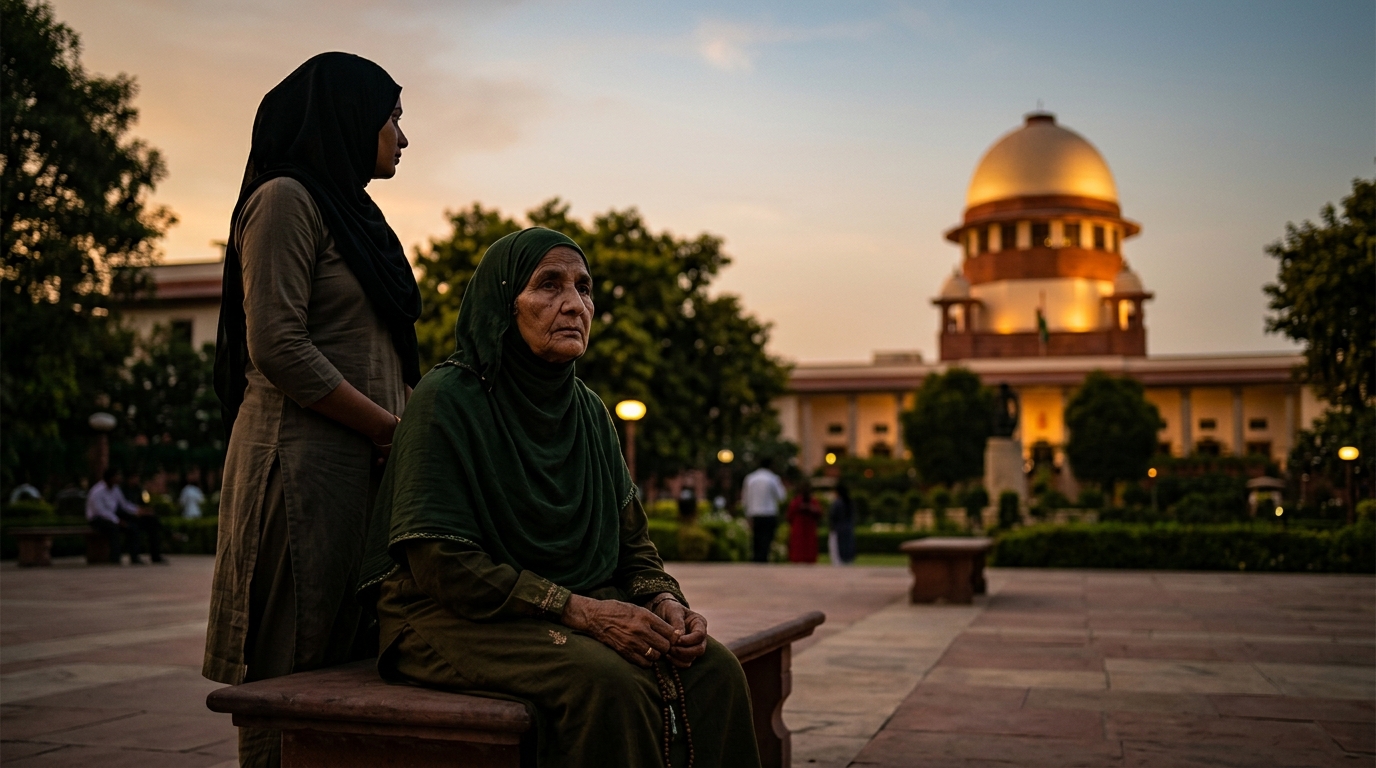
The Supreme Court is hearing a challenge to the Muslim Personal Law (Shariat) Application Act, 1937. The petition argues that certain provisions of the Act discriminate against women, prompting calls for a Uniform Civil Code. The Court warned that striking down the 1937 Act without a ready alternative could create a legal vacuum for Muslim women.
Key Developments
- Petitioners seek to declare discriminatory clauses of the 1937 Act invalid.
- The Court cautioned that a blanket removal may leave Muslim women without statutory protection.
- Law‑makers suggested applying the Indian Succession Act (ISA) as a stop‑gap, but experts note its own shortcomings.
- Calls for a UCC intensified, but scholars argue that reforming existing personal laws is a more durable solution.
Important Facts
1. The 1937 Act was enacted during the freedom movement to provide a uniform legal framework for Muslims, replacing a patchwork of customs, some of which were derived from Hindu law.
2. The Law Commission has highlighted deficits in the Hindu Succession Act, 1956, such as unresolved issues on coparcenary rights of daughters and unequal treatment of mothers and fathers.
3. The Directive Principles envisage a UCC, yet acknowledge the need for gradual, consensual reform.
Exam Relevance
Understanding the tension between personal law reform and the push for a UCC is essential for GS2 (Polity) and GS1 (History). The debate reflects the constitutional balance between unity in diversity and gender justice, a recurring theme in past UPSC questions on secularism, women’s rights, and legal pluralism. Candidates should note how historic figures like Mahatma Gandhi, Jawaharlal Nehru and B. R. Ambedkar approached personal law reforms, emphasizing accommodation over assimilation.
Way Forward
- Initiate bottom‑up reforms within each personal law system, incorporating recommendations of the Law Commission (e.g., amending inheritance rules for illegitimate children, clarifying coparcenary provisions).
- Promote inter‑community dialogue to achieve consensus before any nationwide uniform legislation.
- Strengthen the ISA to address its current gender biases, ensuring it can serve as a temporary safety net.
- Encourage scholarly and judicial scrutiny of existing statutes to identify and rectify discriminatory clauses, thereby reducing the urgency for a rushed UCC.
In sum, the Supreme Court’s deliberations underscore the need for systematic, community‑driven reforms rather than an immediate, blanket Uniform Civil Code.