Loading page, please wait…
HomeCurrent AffairsEditorialsGovt SchemesLearning ResourcesUPSC SyllabusPricingAboutBest UPSC AIUPSC AI ToolAI for UPSCUPSC ChatGPT

© 2026 Vaidra. All rights reserved.

PrivacyTerms
Vaidra Logo
Vaidra

Top 4 items + smart groups

UPSC GPT
New
Current Affairs
Daily Solutions
Daily Puzzle
Mains Evaluator

Version 2.0.0 • Built with ❤️ for UPSC aspirants

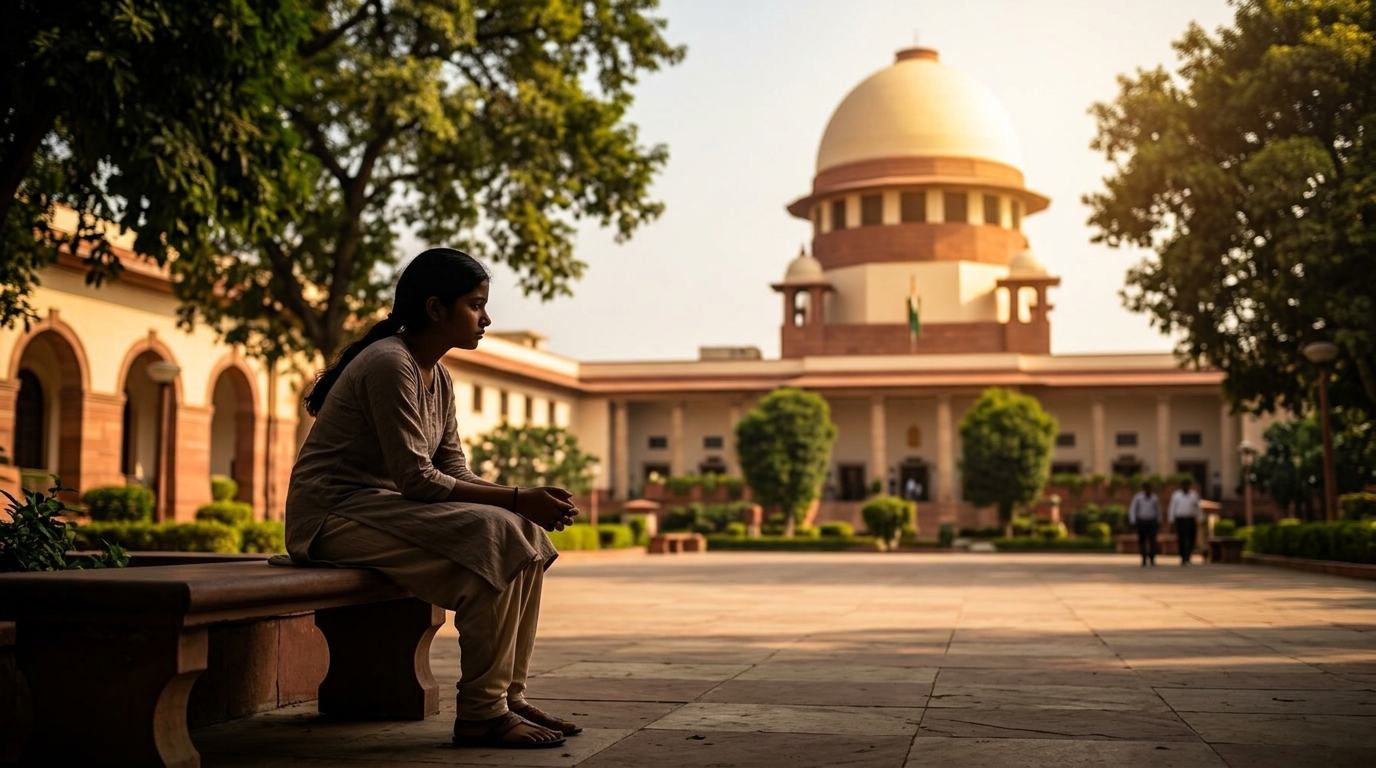
Supreme Court Allows Termination of 30‑Week Pregnancy of Minor — Upholds Reproductive Autonomy

Supreme Court Allows Termination of 30‑Week Pregnancy of Minor — Upholds Reproductive Autonomy
On 24 April 2026, the Supreme Court allowed a 15‑year‑old girl to terminate a 30‑week pregnancy, ruling that forcing an unwanted pregnancy violates her Article 21 right to reproductive autonomy. The judgment underscores the primacy of constitutional rights over statutory limits of the Medical Termination of Pregnancy Act, especially for minors.
Supreme Court Verdict on Termination of Minor's Pregnancy The Supreme Court on 24 April 2026 ruled that a 15‑year‑old girl cannot be forced to carry an unwanted pregnancy to term, even when the statutory limit under the Medical Termination of Pregnancy Act has elapsed. Key Developments Bench comprising Justice B.V. Nagarathna and Justice Ujjal Bhuyan permitted medical termination beyond the MTP Act’s prescribed period. The Court emphasized that the Article 21 right to reproductive autonomy outweighs any argument that the child could be adopted. It rejected the State’s suggestion of financial aid or adoption via the CARA as a substitute for termination. Permission was granted for termination at AIIMS , New Delhi, with safeguards. Important Facts The minor was seven months pregnant, and the pregnancy stemmed from a consensual relationship between two minors. She had already shown severe psychological distress, including suicidal attempts, and her education was disrupted. The Solicitor General warned that continuation could endanger both mother and child, but the Court held that compulsion would violate the girl's dignity and mental health. UPSC Relevance 1. Constitutional jurisprudence : The judgment illustrates the application of Article 226 and Article 32 when statutory remedies are unavailable. 2. Women’s rights and health policy : Highlights the intersection of reproductive rights, privacy, and the legal framework governing abortions, a frequent GS2/GS4 topic. 3. Minor’s protection : Demonstrates how the law balances the rights of a minor with constitutional guarantees. Way Forward Legislative review of the MTP Act to incorporate provisions for late‑stage terminations in cases of clear unwillingness. Strengthening counseling and mental‑health support for pregnant minors to prevent unsafe abortions. Ensuring that courts continue to prioritize fundamental rights over procedural technicalities, reinforcing the role of constitutional courts in safeguarding liberty. The decision sets a precedent that reproductive autonomy is a fundamental facet of personal liberty, and that statutory bars cannot override constitutional protection, especially for vulnerable groups.
  1. Home
  2. Prepare
  3. Current Affairs
  4. Supreme Court Allows Termination of 30‑Week Pregnancy of Minor — Upholds Reproductive Autonomy
Login to bookmark articles
Login to mark articles as complete

Overview

gs.gs276% UPSC Relevance

Supreme Court upholds minor's reproductive autonomy, permitting 30‑week termination beyond MTP limits.

Key Facts

  1. Supreme Court verdict delivered on 24 April 2026 by a bench of Justices B.V. Nagarathna and Ujjal Bhuyan.
  2. The Court permitted termination of a 15‑year‑old girl's 30‑week (seven‑month) pregnancy, beyond the statutory limit of the MTP Act.
  3. The judgment invoked Article 21 (right to life & personal liberty) and Article 32 of the Constitution, overruling the State’s adoption‑aid argument via CARA.
  4. Medical termination was authorized at AIIMS, New Delhi, with safeguards and counselling provisions.
  5. The case highlighted the inadequacy of the Medical Termination of Pregnancy Act, 1971 (as amended 2021) for late‑stage terminations involving minors.

Background & Context

The ruling underscores the primacy of constitutional rights over procedural statutes, linking reproductive autonomy with the right to privacy under Article 21. It also spotlights gaps in the MTP Act and the need for policy reforms to protect vulnerable minors, a recurring theme in Polity, Health, and Ethics sections of the UPSC syllabus.

UPSC Syllabus Connections

Prelims_GS•Public Policy and Rights IssuesEssay•Youth, Health and WelfareEssay•Philosophy, Ethics and Human ValuesGS2•Issues relating to Health, Education, Human ResourcesGS4•Case Studies on ethical issuesEssay•Society, Gender and Social JusticePrelims_GS•Constitution and Political SystemGS4•Dimensions of ethics - private and public relationshipsEssay•Economy, Development and InequalityGS2•Government policies and interventions for development

Mains Answer Angle

GS 2 (Polity & Social Justice) – discuss how the judgment expands the interpretation of Article 21 and its implications for reproductive rights legislation; possible question: "Evaluate the role of the Supreme Court in safeguarding reproductive autonomy of minors in India."

Full Article

<h2>Supreme Court Verdict on Termination of Minor's Pregnancy</h2> <p>The <span class="key-term" data-definition="Supreme Court of India — Highest judicial authority in the country; its judgments shape constitutional law and are vital for GS2: Polity.">Supreme Court</span> on 24 April 2026 ruled that a 15‑year‑old girl cannot be forced to carry an unwanted pregnancy to term, even when the statutory limit under the <span class="key-term" data-definition="Medical Termination of Pregnancy Act (MTP Act) — Indian law governing the conditions under which a pregnancy may be legally terminated; central to GS2: Polity and health‑policy questions.">Medical Termination of Pregnancy Act</span> has elapsed.</p> <h3>Key Developments</h3> <ul> <li>Bench comprising <strong>Justice B.V. Nagarathna</strong> and <strong>Justice Ujjal Bhuyan</strong> permitted medical termination beyond the MTP Act’s prescribed period.</li> <li>The Court emphasized that the <span class="key-term" data-definition="Article 21 of the Indian Constitution — Guarantees the right to life and personal liberty, including privacy and bodily autonomy; a cornerstone for GS2: Polity.">Article 21</span> right to reproductive autonomy outweighs any argument that the child could be adopted.</li> <li>It rejected the State’s suggestion of financial aid or adoption via the <span class="key-term" data-definition="Central Adoption Resource Authority (CARA) — Statutory body under the Ministry of Women & Child Development that regulates adoption; relevant for GS2: Polity and GS4: Ethics.">CARA</span> as a substitute for termination.</li> <li>Permission was granted for termination at <span class="key-term" data-definition="AIIMS (All India Institute of Medical Sciences) — Premier medical institution in India, often cited in health‑policy discussions; GS3: Economy and GS4: Ethics.">AIIMS</span>, New Delhi, with safeguards.</li> </ul> <h3>Important Facts</h3> <p>The minor was seven months pregnant, and the pregnancy stemmed from a consensual relationship between two minors. She had already shown severe psychological distress, including suicidal attempts, and her education was disrupted. The Solicitor General warned that continuation could endanger both mother and child, but the Court held that compulsion would violate the girl's dignity and mental health.</p> <h3>UPSC Relevance</h3> <p>1. <strong>Constitutional jurisprudence</strong>: The judgment illustrates the application of <span class="key-term" data-definition="Article 226 of the Indian Constitution — Empowers High Courts to issue writs for enforcement of fundamental rights; crucial for GS2: Polity.">Article 226</span> and <span class="key-term" data-definition="Article 32 of the Indian Constitution — Allows individuals to approach the Supreme Court directly for protection of fundamental rights; key for GS2: Polity.">Article 32</span> when statutory remedies are unavailable.</p> <p>2. <strong>Women’s rights and health policy</strong>: Highlights the intersection of reproductive rights, privacy, and the legal framework governing abortions, a frequent GS2/GS4 topic.</p> <p>3. <strong>Minor’s protection</strong>: Demonstrates how the law balances the rights of a <span class="key-term" data-definition="Minor — Person below the age of majority (18 years) who is afforded special protection under law; important for GS2: Polity and GS4: Ethics.">minor</span> with constitutional guarantees.</p> <h3>Way Forward</h3> <ul> <li>Legislative review of the MTP Act to incorporate provisions for late‑stage terminations in cases of clear unwillingness.</li> <li>Strengthening counseling and mental‑health support for pregnant minors to prevent unsafe abortions.</li> <li>Ensuring that courts continue to prioritize fundamental rights over procedural technicalities, reinforcing the role of constitutional courts in safeguarding liberty.</li> </ul> <p>The decision sets a precedent that reproductive autonomy is a fundamental facet of personal liberty, and that statutory bars cannot override constitutional protection, especially for vulnerable groups.</p>
Read Original on livelaw

Analysis

Practice Questions

GS2
Easy
Prelims MCQ

Constitutional provisions – Article 21 (Right to Life & Personal Liberty)

1 marks
4 keywords
GS2
Medium
Mains Short Answer

Health policy and constitutional law – MTP Act, rights of minors

10 marks
5 keywords
GS4
Hard
Mains Essay

Ethics, health policy, and constitutional jurisprudence – reproductive rights, adoption vs termination

25 marks
6 keywords
Related:Daily•Weekly

Loading related articles...

Loading related articles...

Tip: Click articles above to read more from the same date, or use the back button to see all articles.

Quick Reference

Key Insight

Supreme Court upholds minor's reproductive autonomy, permitting 30‑week termination beyond MTP limits.

Key Facts

  1. Supreme Court verdict delivered on 24 April 2026 by a bench of Justices B.V. Nagarathna and Ujjal Bhuyan.
  2. The Court permitted termination of a 15‑year‑old girl's 30‑week (seven‑month) pregnancy, beyond the statutory limit of the MTP Act.
  3. The judgment invoked Article 21 (right to life & personal liberty) and Article 32 of the Constitution, overruling the State’s adoption‑aid argument via CARA.
  4. Medical termination was authorized at AIIMS, New Delhi, with safeguards and counselling provisions.
  5. The case highlighted the inadequacy of the Medical Termination of Pregnancy Act, 1971 (as amended 2021) for late‑stage terminations involving minors.

Background

The ruling underscores the primacy of constitutional rights over procedural statutes, linking reproductive autonomy with the right to privacy under Article 21. It also spotlights gaps in the MTP Act and the need for policy reforms to protect vulnerable minors, a recurring theme in Polity, Health, and Ethics sections of the UPSC syllabus.

UPSC Syllabus

  • Prelims_GS — Public Policy and Rights Issues
  • Essay — Youth, Health and Welfare
  • Essay — Philosophy, Ethics and Human Values
  • GS2 — Issues relating to Health, Education, Human Resources
  • GS4 — Case Studies on ethical issues
  • Essay — Society, Gender and Social Justice
  • Prelims_GS — Constitution and Political System
  • GS4 — Dimensions of ethics - private and public relationships
  • Essay — Economy, Development and Inequality
  • GS2 — Government policies and interventions for development

Mains Angle

GS 2 (Polity & Social Justice) – discuss how the judgment expands the interpretation of Article 21 and its implications for reproductive rights legislation; possible question: "Evaluate the role of the Supreme Court in safeguarding reproductive autonomy of minors in India."

Explore:Current Affairs·Editorial Analysis·Govt Schemes·Study Materials·Previous Year Questions·UPSC GPT

Related Topics

  • 📖Glossary TermFundamental Rights
Supreme Court Allows Termination of 30‑Wee... | UPSC Current Affairs