Overview
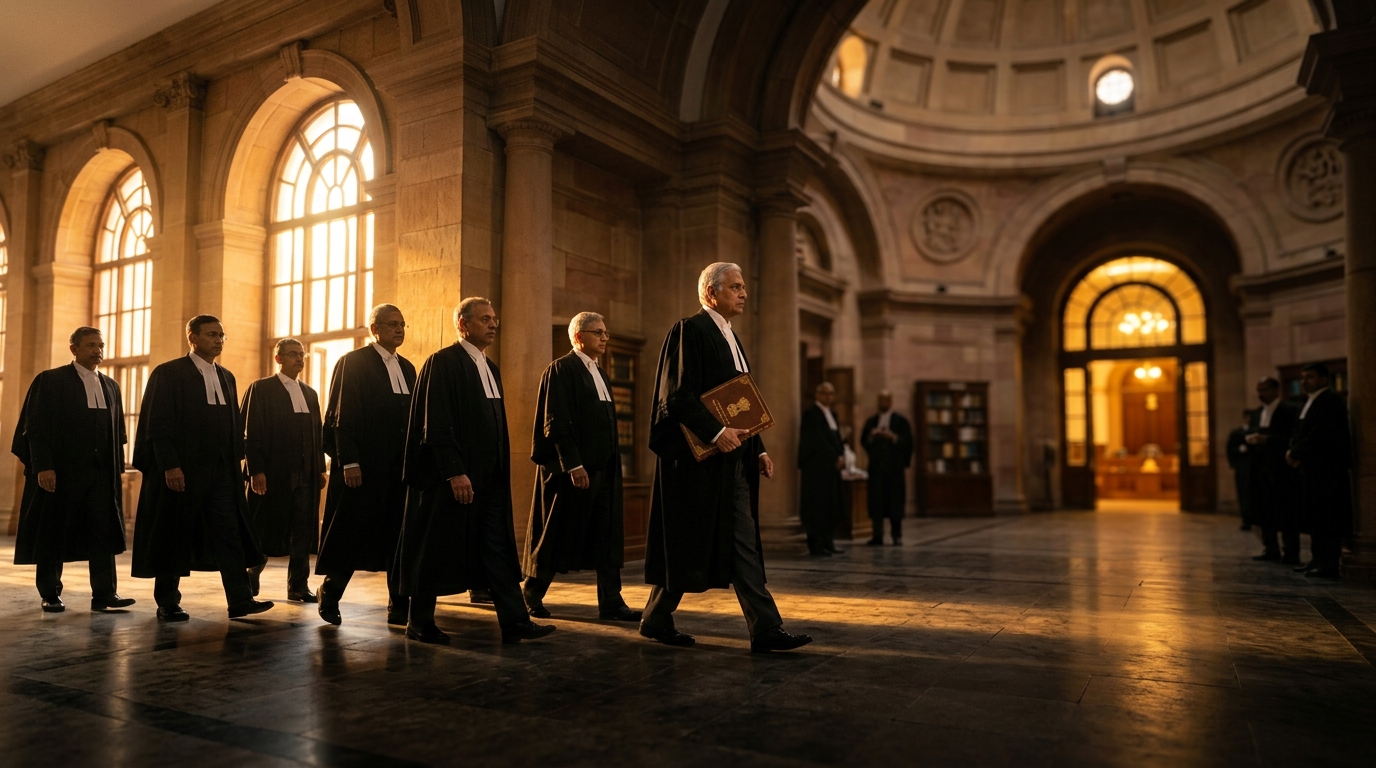
The Supreme Court has scheduled a two‑day hearing (17‑18 March) before a nine‑judge Constitution Bench on the long‑standing controversy surrounding the definition of “industry” in the Industrial Disputes Act, 1947. The issue has far‑reaching implications for labour law, social welfare schemes, and the applicability of recent labour reforms.
Key Developments
- Hearing to commence on 17 March 2024 and conclude on 18 March 2024 before a bench headed by CJI Surya Kant and eight other judges.
- The bench will examine whether the test laid down in Justice V.R. Krishna Iyer’s 1978 opinion remains the correct law.
- It will also consider the impact, if any, of the Industrial Disputes (Amendment) Act, 1982 and the Industrial Relations Code, 2020 (effective from 21 Nov 2025) on the interpretation of “industry”.
- The bench will decide whether government‑run social welfare activities and schemes can be treated as “industrial activities” under Section 2(j) of the Act.
- Parties have been allowed to file fresh or consolidated written submissions by 28 February 2024.
Important Facts
The controversy dates back to a 1996 three‑judge decision that, relying on the 1978 verdict, held that even a social forestry department qualified as an “industry”. A contradictory two‑judge ruling in 2001 created a legal inconsistency, prompting a five‑judge referral in 2005 and a seven‑judge reference in 2017, which recommended a nine‑judge bench because of the “serious and wide‑ranging implications”.
Thus, the present bench must resolve:
- Whether the 1978 test (paragraphs 140‑144) is still valid.
- The legal effect of the dormant 1982 amendment and the forthcoming 2020 Code on the definition.
- The applicability of the definition to government‑run welfare enterprises.
Exam Relevance
Understanding this issue is crucial for:
- GS 2 (Polity): It illustrates the Supreme Court’s role in interpreting statutes, the functioning of Constitution Benches, and the interaction between judiciary and legislature.
- GS 3 (Economy): The definition of “industry” determines the reach of labour legislation, affecting employer‑employee relations, social security, and the implementation of labour reforms like the Industrial Relations Code.
- GS 4 (Ethics & Governance): The case highlights the challenges of policy formulation when legislative intent remains dormant (1982 amendment) and the need for coherent legal frameworks.
Way Forward
Post‑judgment, the government may need to:
- Amend the Industrial Disputes Act to align with the Court’s interpretation.
- Clarify the status of the 1982 amendment and ensure timely implementation of the Industrial Relations Code to avoid future ambiguities.
- Provide guidelines for categorising government‑run welfare activities, thereby offering certainty to both employers and workers.
For UPSC aspirants, tracking the outcome will aid in answering questions on labour law reforms, judicial review, and the balance of powers between the legislature and judiciary.