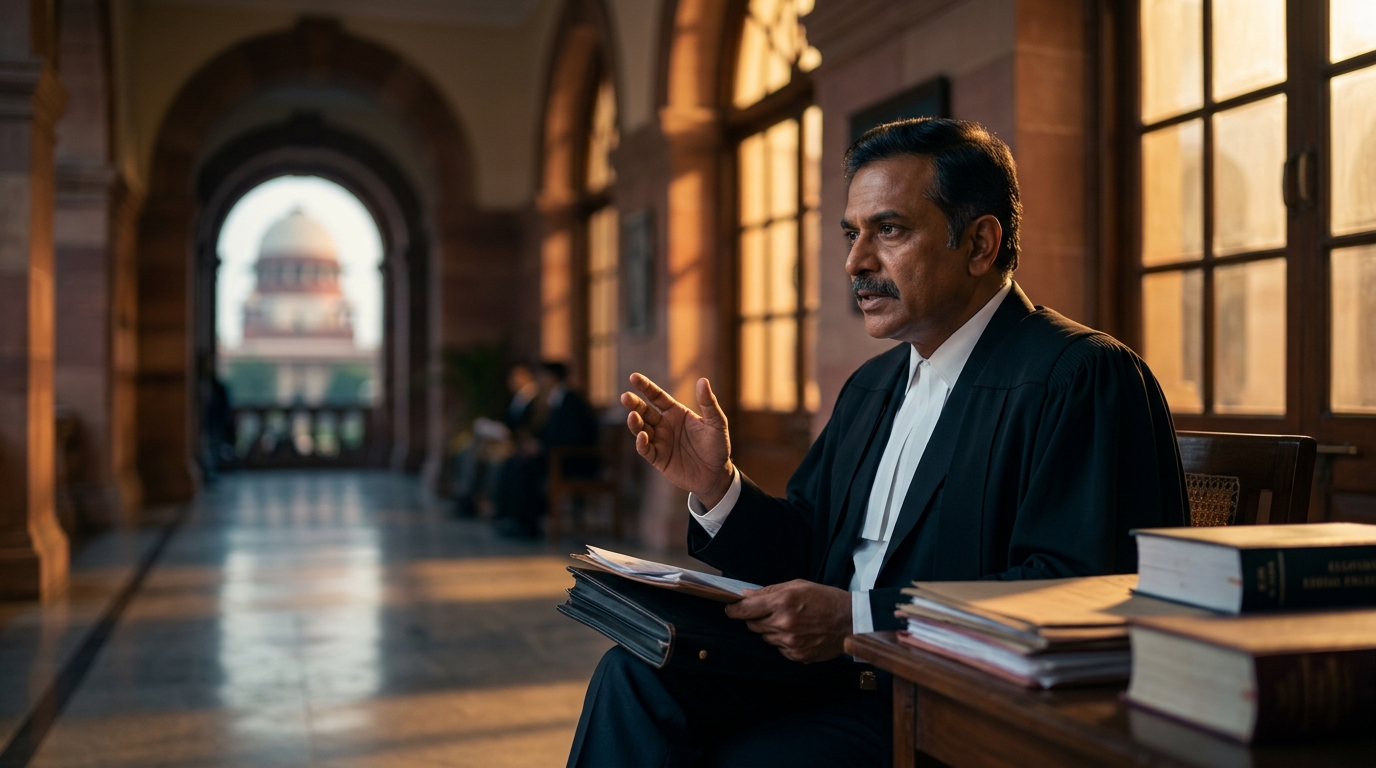
Senior Advocate MR Venkatesh argued before the nine‑judge Constitution Bench that women voluntarily abstaining from temples during menstruation is a matter of belief and discipline, not gender bias.
Key Developments
- Venkatesh highlighted that across South India, women observe a self‑imposed restriction from entering temples and puja rooms during their monthly cycle, describing it as a “non‑written rule”.
- He cited Dr. B.R. Ambedkar's speeches to argue that the Constitution treats temporary defilement differently from the social evil of untouchability.
- Reference was made to Rule 6 of the Travancore‑Cochin Temple Entry Rules, emphasizing that such rules stem from a denomination’s right to manage its own affairs.
- Venkatesh warned that a broad interpretation of Article 25(2) could erode religious autonomy, turning non‑denominational temples into mere public spaces.
- He distinguished between the right of entry under Article 25(2)(b) and the management rights protected by Article 26(b), using the Supreme Court’s own functioning as an analogy.
- He argued that “section of Hindus” in Article 25(2)(b) should be read broadly to include all pilgrims, noting that caste distinctions dissolve during the Sabarimala yatra.
- The concept of sampradaya was presented as a protected entity under the Constitution.
Important Facts
- The hearing is the fifth day of the Sabarimala judgment reference.
- The bench comprises CJI Surya Kant and Justices BV Nagarathna, MM Sundresh, Ahsanuddin Amanullah, Aravind Kumar, Augustine George Masih, Prasanna B Varale, R Mahadevan and Joymalya Bagchi.
- Venkatesh contended that regulation under Article 25(2)(a) must be limited to secular matters; any intrusion into core rituals would violate Article 13(2).
Exam Relevance
The debate touches upon three core areas of the UPSC syllabus: (1) Constitutional Law – interpretation of Articles 25 and 26, the doctrine of essential religious practices, and the balance between secular regulation and religious freedom; (2) Social Justice – Ambedkar’s distinction between untouchability and temporary impurity, reflecting the Constitution’s commitment to eradicate social evils; (3) Religion & Society – understanding diverse Hindu customs such as menstrual restrictions, pilgrimages, and the concept of sampradaya, which are essential for answering GS 2 and GS 4 questions on secularism and cultural diversity.
Way Forward
The bench is expected to deliver a judgment that clarifies whether menstrual restrictions qualify as a protected “essential religious practice” under Article 25(2) or whether they fall within the State’s power to regulate under Article 25(2)(a). A nuanced decision will shape future jurisprudence on religious autonomy, gender equality, and the scope of constitutional secularism, making it a pivotal reference for UPSC aspirants preparing for questions on constitutional interpretation and social reforms.