Overview
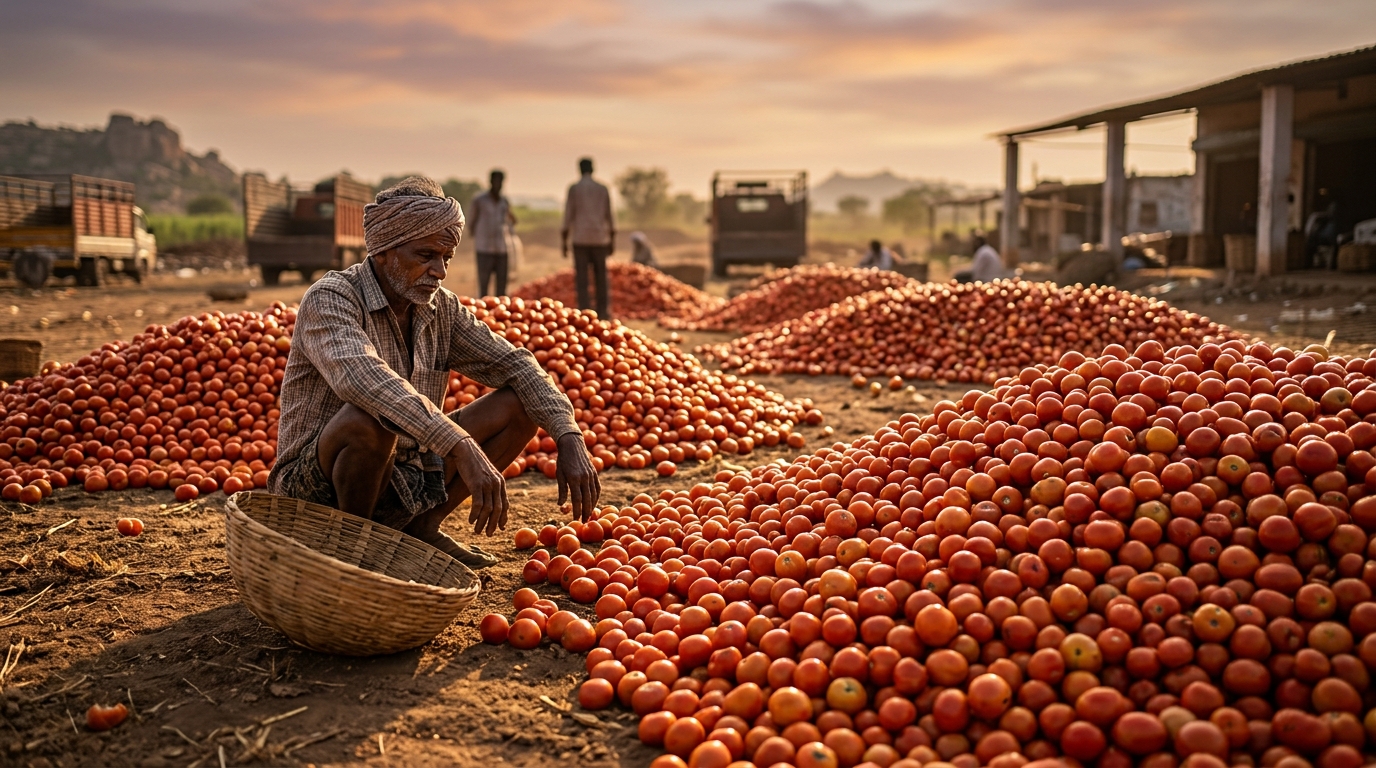
On 13 February 2026, a sharp decline in tomato prices in the open market of Yadgir district, Karnataka alarmed growers. Farmers were forced to sell to wholesale dealers at ₹6‑₹7 per kg, while retailers priced the same produce at ₹20 per kg. The episode highlights the vulnerability of perishable‑crop farmers to market glut, supply‑chain inefficiencies, and inadequate state support.
Key Developments
- Development 1: Extensive Rabi‑season planting on roughly 450 acres (mainly in Shahapur taluk) led to a surplus, compounded by inflows from Kalaburagi, Raichur, Maharashtra and Telangana.
- Development 2: Wholesale dealers purchase at ₹6‑₹7/kg, sell to retailers for ₹10‑₹15/kg, and retailers finally sell at ₹20/kg in the open market, squeezing farmer margins by up to 50%.
- Development 3: Farmers’ leader Channappa Anegundi demanded state intervention – establishment of cold storages and provision of refrigerated (reefer) vans – to mitigate post‑harvest losses and enable price‑realisation.
Important Facts
- Fact 1: Other vegetables (onion, potato, cucumber, beetroot, pumpkin, green chilli, chickpeas, lady’s finger) are retail‑priced between ₹40‑₹80 per kg, underscoring the relative price compression for tomatoes.
- Fact 2: A local vendor, Mohammad, expects price recovery during wedding seasons, indicating demand‑driven price cycles for tomatoes.
Exam Relevance
This case study touches upon several UPSC syllabus areas: GS Paper II (Polity & Governance) – role of state agencies and farmer‑producer organisations; GS Paper III (Economics) – price volatility, market structure, supply‑chain gaps; GS Paper IV (Environment & Disaster Management) – post‑harvest loss and cold‑chain infrastructure; and optional subjects like Agricultural Economics or Public Administration. Potential questions could explore policy measures for perishable‑crop marketing, the impact of interstate trade on local price formation, or evaluation of cold‑storage schemes under the National Horticulture Mission.
Way Forward
To safeguard farmer incomes, the Karnataka government should accelerate the creation of cold‑storage facilities and subsidise reefer vans under existing horticulture schemes. Parallelly, strengthening market‑information systems (e‑NAM, APMC reforms) can help growers time sales better. A coordinated inter‑state procurement mechanism could also balance surplus‑deficit dynamics, preventing future price crashes.