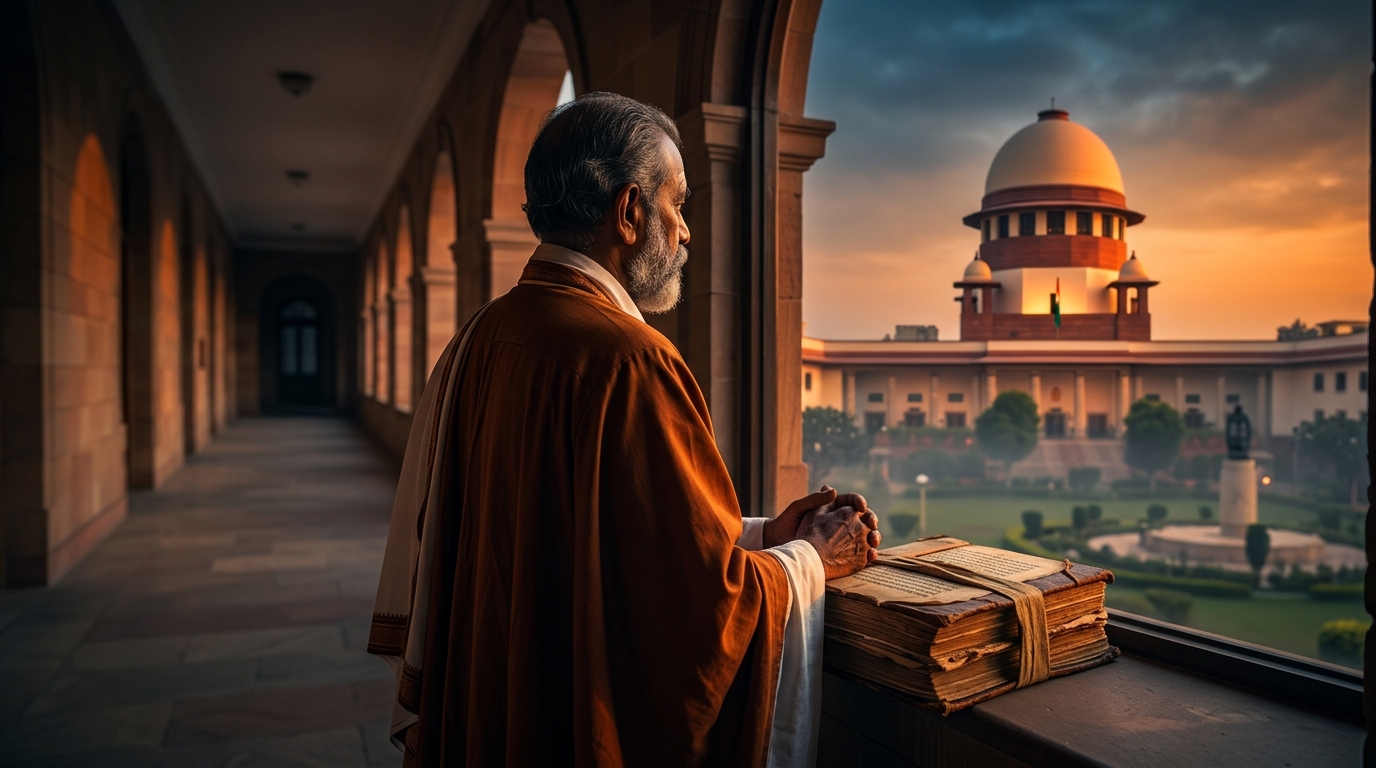
The Travancore Devaswom Board (TDB), the statutory autonomous body that administers over 1,000 temples in South India, appeared before the Supreme Court on April 15, 2026. Representing the interests of the historic Sabarimala temple, the board contended that religion comprises a set of beliefs and practices unique to a denomination, and that the judiciary cannot pass judgment on such subjective faith.
Key Developments
- The board submitted a written statement to a nine‑judge Constitution Bench headed by Chief Justice Surya Kant.
- It emphasized that the beliefs and practices of the Travancore Devaswom Board must be judged by the community’s own subjective standards.
- The board argued that the court is constitutionally bound to respect the community’s religious autonomy.
Important Facts
The Sabarimala temple is managed by the TDB, which operates under the statutory autonomous body framework. The Supreme Court’s Constitution Bench, the highest constitutional authority, is hearing the case that questions the extent of judicial intervention in religious matters.
Exam Relevance
Understanding this dispute is crucial for GS‑2 (Polity) and GS‑1 (History & Culture). It illustrates the balance between religious freedom under Article 25 of the Constitution and the judiciary’s role in safeguarding constitutional rights. Aspirants should note how statutory bodies like the TDB function within the federal structure and how the Supreme Court interprets the limits of its power over personal law and religious practice.
Way Forward
Future deliberations may address:
- Whether the Supreme Court will adopt a more deferential stance toward religious institutions.
- Potential legislative clarifications on the autonomy of statutory bodies managing religious endowments.
- Implications for gender‑rights litigations linked to temple entry, given past judgments on Sabarimala.
For UPSC preparation, candidates should track subsequent judgments, examine the interplay of Articles 25‑26 (freedom of religion) with judicial review, and assess how such cases influence policy‑making on religious institutions.