Loading page, please wait…
HomeCurrent AffairsEditorialsGovt SchemesLearning ResourcesUPSC SyllabusPricingAboutBest UPSC AIUPSC AI ToolAI for UPSCUPSC ChatGPT

© 2026 Vaidra. All rights reserved.

PrivacyTerms
Vaidra Logo
Vaidra

Top 4 items + smart groups

UPSC GPT
New
Current Affairs
Daily Solutions
Daily Puzzle
Mains Evaluator

Version 2.0.0 • Built with ❤️ for UPSC aspirants

U.S.-Iran Ceasefire and Reopening of Strait of Hormuz Offers Immediate Relief to Indian Exporters — UPSC Current Affairs | April 8, 2026
U.S.-Iran Ceasefire and Reopening of Strait of Hormuz Offers Immediate Relief to Indian Exporters
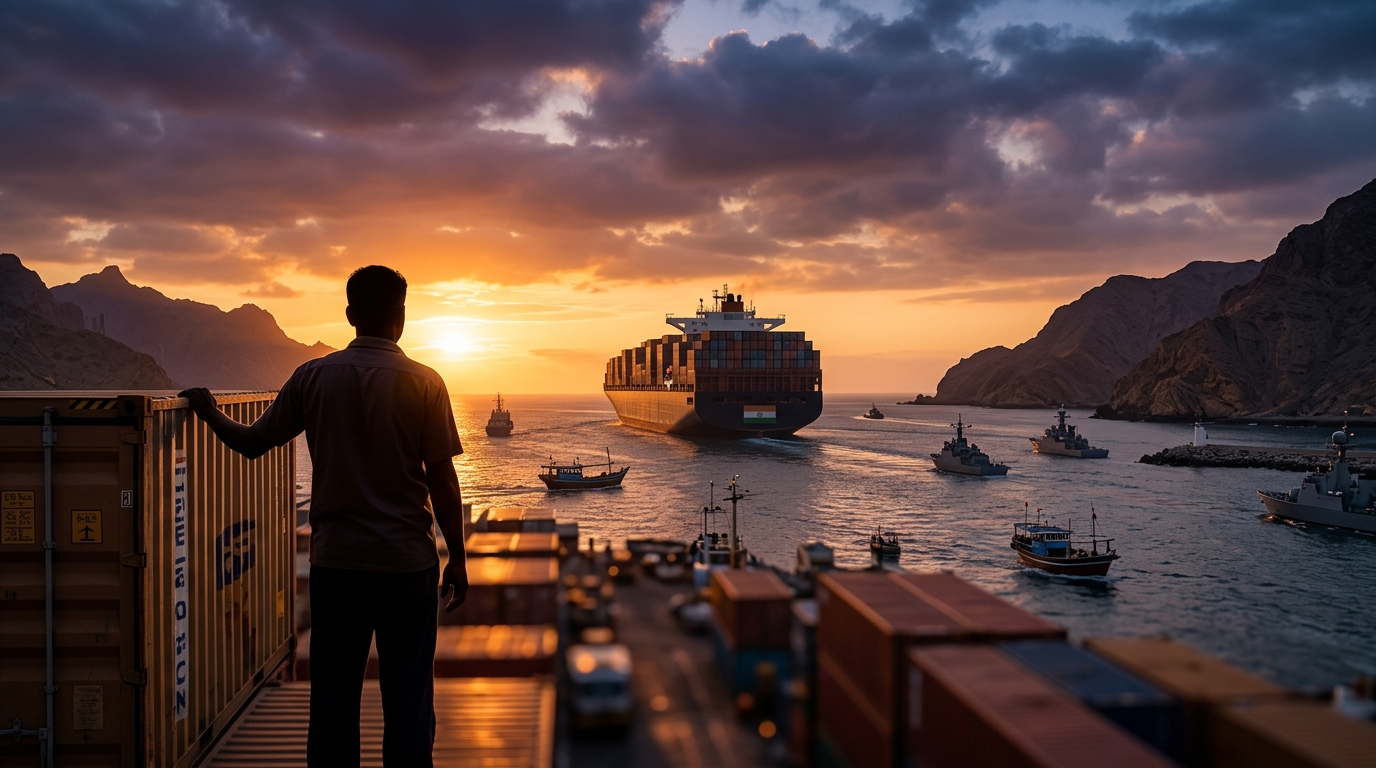
On 8 April 2026, the U.S. announced a two‑week ceasefire with Iran, and Iran agreed to allow safe navigation through the Strait of Hormuz. The move, hailed by the Federation of Indian Export Organisation, is expected to relieve shipping disruptions and stabilise oil, equity and currency markets, underscoring its relevance to India’s trade and energy security.
Overview The U.S. and the Iran have announced a two‑week ceasefire . During this period Iran will permit safe navigation through the Strait of Hormuz , a move welcomed by the Federation of Indian Export Organisation (FIEO) . The announcement is expected to ease shipping disruptions and stabilise market sentiment. Key Developments Two‑week suspension of U.S. military strikes against Iran, announced by President Donald Trump on 8 April 2026. Iran’s commitment to allow safe navigation through the Strait of Hormuz during the ceasefire. Immediate relief for Indian exporters, as highlighted by FIEO . Sharp movements in global oil, equity and currency markets following the news. Important Facts The Strait of Hormuz handles roughly 20% of the world’s petroleum trade. Disruptions in this waterway have historically led to price spikes in crude oil and volatility in emerging‑market currencies. India’s export sector contributes over 10% to GDP; any shipping bottleneck directly impacts trade balances. The ceasefire is limited to two weeks, after which diplomatic negotiations will determine further steps. UPSC Relevance Understanding the geopolitical dynamics of the Strait of Hormuz is essential for GS‑2 (International Relations) and GS‑3 (Energy Security). The role of bodies like FIEO illustrates the interface between trade policy and diplomatic outcomes, a frequent theme in the UPSC syllabus. Way Forward Policymakers should monitor the ceasefire’s impact on oil prices and adjust strategic petroleum reserves accordingly. The Ministry of Commerce, in coordination with FIEO , must communicate clear guidelines to exporters to capitalise on the reduced shipping risk. Simultaneously, diplomatic channels should be leveraged to convert the temporary ceasefire into a longer‑term de‑escalation framework, thereby safeguarding India’s trade interests and energy security.
  1. Home
  2. Prepare
  3. Current Affairs
  4. U.S.-Iran Ceasefire and Reopening of Strait of Hormuz Offers Immediate Relief to Indian Exporters
Login to bookmark articles
Login to mark articles as complete

Overview

gs.gs275% UPSC Relevance

US‑Iran ceasefire reopens Hormuz, shielding Indian exporters and energy security

Key Facts

  1. 8 April 2026: President Donald Trump announced a two‑week US‑Iran ceasefire.
  2. Iran pledged safe navigation through the Strait of Hormuz for the ceasefire period.
  3. The Strait of Hormuz handles roughly 20% of global petroleum trade (≈5 million bpd).
  4. India’s export sector contributes >10% to GDP; shipping bottlenecks affect trade balance.
  5. FIEO flagged immediate relief for Indian exporters as maritime risk eases.
  6. Global oil, equity and currency markets reacted sharply to the ceasefire news.
  7. Ceasefire is limited to two weeks; further diplomatic talks will determine next steps.

Background & Context

The ceasefire touches GS‑2 (International Relations) by illustrating how US‑Iran tensions impact global maritime security, and GS‑3 (Energy Security & Trade) by highlighting the strategic value of the Strait of Hormuz and its effect on India’s export‑driven economy. It also underscores the interface between trade bodies like FIEO and foreign policy outcomes.

Mains Answer Angle

GS‑2/GS‑3: Analyse the implications of the US‑Iran ceasefire on India’s trade and energy security, and evaluate the role of domestic trade organisations in shaping policy responses.

Full Article

<h3>Overview</h3> <p>The <span class="key-term" data-definition="United States of America — a global superpower whose foreign policy and military actions influence international security and trade (GS2: Polity, GS3: Economy)">U.S.</span> and the <span class="key-term" data-definition="Islamic Republic of Iran — a major Middle‑Eastern nation whose geopolitical stance affects regional stability and energy markets (GS2: Polity, GS3: Economy)">Iran</span> have announced a two‑week <span class="key-term" data-definition="Ceasefire — a temporary suspension of hostilities agreed by warring parties, often used to de‑escalate tensions and facilitate diplomatic negotiations (GS2: Polity)">ceasefire</span>. During this period Iran will permit safe navigation through the <span class="key-term" data-definition="Strait of Hormuz — a narrow maritime chokepoint between Oman and Iran through which about a fifth of the world’s oil passes, crucial for global energy security (GS3: Economy)">Strait of Hormuz</span>, a move welcomed by the <span class="key-term" data-definition="Federation of Indian Export Organisations (FIEO) — the apex body representing Indian exporters, voicing their concerns to the government (GS3: Economy)">Federation of Indian Export Organisation (FIEO)</span>. The announcement is expected to ease shipping disruptions and stabilise market sentiment.</p> <h3>Key Developments</h3> <ul> <li><strong>Two‑week suspension</strong> of U.S. military strikes against Iran, announced by President <strong>Donald Trump</strong> on 8 April 2026.</li> <li>Iran’s commitment to allow <strong>safe navigation</strong> through the <strong>Strait of Hormuz</strong> during the ceasefire.</li> <li>Immediate relief for Indian exporters, as highlighted by <strong>FIEO</strong>.</li> <li>Sharp movements in global <strong>oil, equity and currency markets</strong> following the news.</li> </ul> <h3>Important Facts</h3> <ul> <li>The <span class="key-term" data-definition="Strait of Hormuz — a narrow maritime chokepoint between Oman and Iran through which about a fifth of the world’s oil passes, crucial for global energy security (GS3: Economy)">Strait of Hormuz</span> handles roughly 20% of the world’s petroleum trade.</li> <li>Disruptions in this waterway have historically led to price spikes in crude oil and volatility in emerging‑market currencies.</li> <li>India’s export sector contributes over 10% to GDP; any shipping bottleneck directly impacts trade balances.</li> <li>The ceasefire is limited to two weeks, after which diplomatic negotiations will determine further steps.</li> </ul> <h3>UPSC Relevance</h3> <p>Understanding the geopolitical dynamics of the <span class="key-term" data-definition="Strait of Hormuz — a narrow maritime chokepoint between Oman and Iran through which about a fifth of the world’s oil passes, crucial for global energy security (GS3: Economy)">Strait of Hormuz</span> is essential for GS‑2 (International Relations) and GS‑3 (Energy Security). The role of bodies like <span class="key-term" data-definition="Federation of Indian Export Organisations (FIEO) — the apex body representing Indian exporters, voicing their concerns to the government (GS3: Economy)">FIEO</span> illustrates the interface between trade policy and diplomatic outcomes, a frequent theme in the UPSC syllabus.</p> <h3>Way Forward</h3> <p>Policymakers should monitor the ceasefire’s impact on oil prices and adjust strategic petroleum reserves accordingly. The Ministry of Commerce, in coordination with <span class="key-term" data-definition="Federation of Indian Export Organisations (FIEO) — the apex body representing Indian exporters, voicing their concerns to the government (GS3: Economy)">FIEO</span>, must communicate clear guidelines to exporters to capitalise on the reduced shipping risk. Simultaneously, diplomatic channels should be leveraged to convert the temporary ceasefire into a longer‑term de‑escalation framework, thereby safeguarding India’s trade interests and energy security.</p>
Read Original on hindu

Analysis

Practice Questions

GS2
Easy
Prelims MCQ

Strategic maritime chokepoints

1 marks
3 keywords
GS3
Medium
Mains Short Answer

Trade bodies and policy advocacy

5 marks
5 keywords
GS2
Hard
Mains Essay

Energy security, maritime diplomacy

20 marks
7 keywords
Related:Daily•Weekly

Loading related articles...

Loading related articles...

Tip: Click articles above to read more from the same date, or use the back button to see all articles.

Explore:Current Affairs·Editorial Analysis·Govt Schemes·Study Materials·Previous Year Questions·UPSC GPT