Loading page, please wait…
HomeCurrent AffairsEditorialsGovt SchemesLearning ResourcesUPSC SyllabusPricingAboutBest UPSC AIUPSC AI ToolAI for UPSCUPSC ChatGPT

© 2026 Vaidra. All rights reserved.

PrivacyTerms
Vaidra Logo
Vaidra

Top 4 items + smart groups

UPSC GPT
New
Current Affairs
Daily Solutions
Daily Puzzle
Mains Evaluator

Version 2.0.0 • Built with ❤️ for UPSC aspirants

US Rescues Downed F-15 Airman Amid Rising US‑Israel‑Iran Tensions Over Strait of Hormuz — UPSC Current Affairs | April 5, 2026
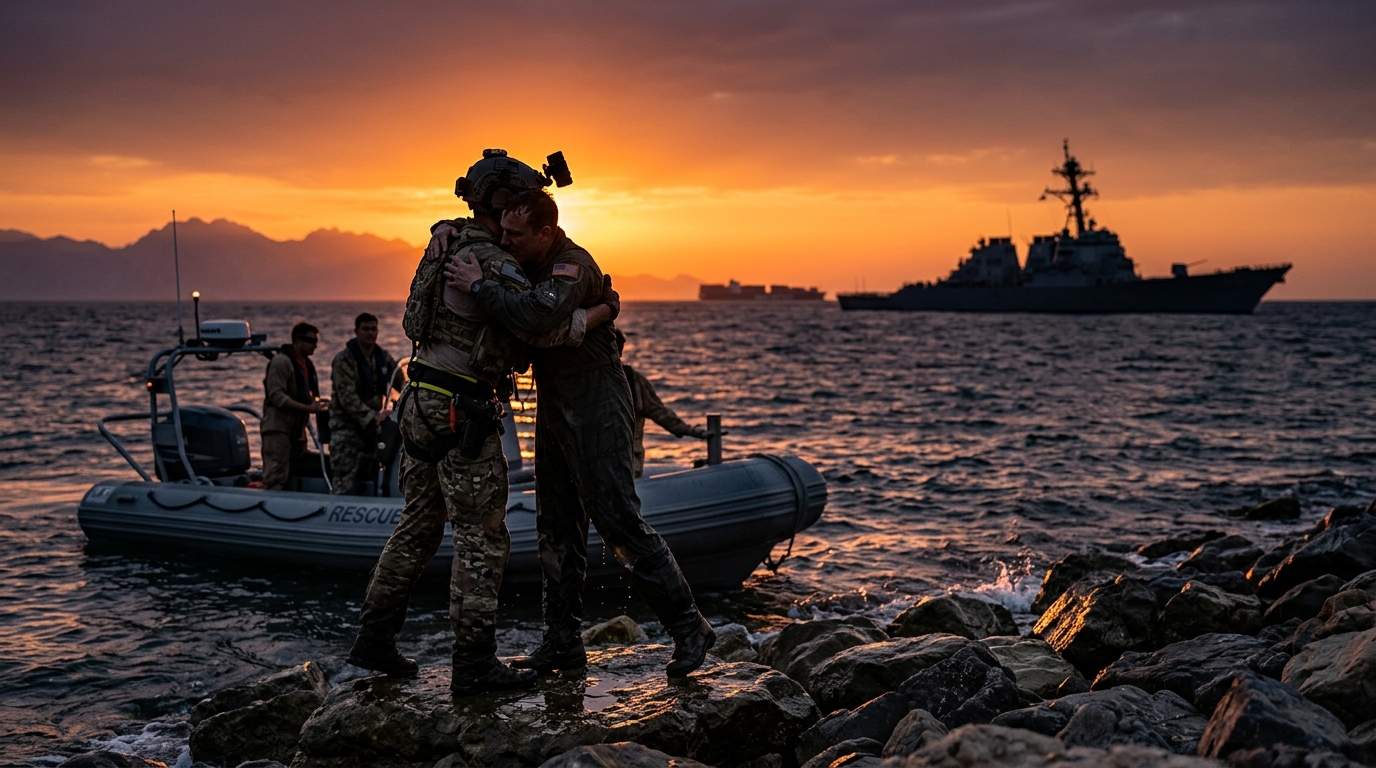
US Rescues Downed F-15 Airman Amid Rising US‑Israel‑Iran Tensions Over Strait of Hormuz
The United States rescued an airman after his <span class="key-term" data-definition="F-15 jet — A twin‑engine, supersonic fighter aircraft used by the United States Air Force; relevant to GS2: Defence and Security.">F-15</span> was downed by Iranian air defenses on 4 April 2026, amid escalating US‑Israel‑Iran tensions over the strategic <span class="key-term" data-definition="Strait of Hormuz — A narrow maritime chokepoint between Oman and Iran through which a significant portion of global oil passes; strategic importance in GS2: International Relations.">Strait of Hormuz</span>. Iran warned of regional retaliation and highlighted risks of a radiological release from the Bushehr nuclear plant, underscoring the geopolitical and security implications for UPSC aspirants.
Overview The United States announced the rescue of an airman whose F-15 was shot down by Iranian air defenses on 4 April 2026 . The incident coincides with heightened diplomatic and military posturing by the United States, Israel, and Iran, especially concerning the strategic Strait of Hormuz . Key Developments US officials confirmed the rescue of the downed airman but withheld operational details. Iran confirmed that its air defenses downed an F-15 on 3 April 2026, killing the second crew member. A senior Israeli defence official said Israel is ready to strike Iranian energy facilities within a week, pending US approval. Iran warned that any escalation would turn "the entire region into a hell for you," referencing potential retaliation against the US and Israel. Following a fourth strike near the Bushehr power plant , Iran’s foreign minister warned the UN of an "intolerable situation" that could cause a radiological release . Iranian media reported five civilian deaths after US‑Israeli strikes hit a petrochemical hub in the southwest. Important Facts • The rescued airman was part of a two‑person crew; the second member was killed. • Israel’s prospective attacks target Iranian energy infrastructure, a lever in Tehran’s revenue stream. • Iran’s diplomatic channel to the United Nations underscores the risk of nuclear‑related fallout. UPSC Relevance 1. Geopolitics of the Persian Gulf : Understanding the strategic importance of the Strait of Hormuz and how air‑space incidents can trigger broader regional crises (GS2). 2. India’s Energy Security : Disruptions in Middle‑East oil flows affect global oil prices, impacting India’s import bill and fiscal balance (GS3). 3. International Law & Conflict : The use of force, state sovereignty, and the role of the United Nations in de‑escalation (GS2). 4. Disaster Management : Potential radiological release from the Bushehr power plant highlights nuclear safety concerns (GS3). Way Forward • Diplomatic channels must be intensified to prevent a wider air‑to‑air or air‑to‑ground conflict; India can leverage its neutral stance to advocate for restraint. • Monitoring of oil shipments through the Strait of Hormuz is essential for anticipating price volatility. • Strengthening regional security frameworks, such as the Gulf Cooperation Council (GCC), can provide collective deterrence against unilateral strikes. • Preparedness for nuclear or radiological emergencies should be incorporated into India’s disaster‑management protocols, especially for ports handling Iranian oil.
  1. Home
  2. Prepare
  3. Current Affairs
  4. US Rescues Downed F-15 Airman Amid Rising US‑Israel‑Iran Tensions Over Strait of Hormuz
Must Review
Login to bookmark articles
Login to mark articles as complete

Overview

US rescue of downed F‑15 airman escalates US‑Iran tension, threatening Strait of Hormuz oil flow

Key Facts

  1. 4 April 2026: US rescued the surviving airman of an F‑15 shot down by Iran; the second crew member was killed on 3 April 2026.
  2. The downed aircraft was a US Air Force F‑15 fighter, a twin‑engine supersonic jet used for air superiority missions.
  3. Strait of Hormuz transits roughly 20% of global oil shipments; any disruption can cause sharp spikes in crude prices.
  4. A senior Israeli defence official said Israel is ready to strike Iranian energy facilities within a week, subject to US green‑light.
  5. Iran warned that escalation would turn the region into a "hell" for the US and Israel and cited possible retaliation.
  6. Following a strike near the Bushehr nuclear power plant, Iran warned the UN of an "intolerable situation" that could trigger a radiological release.
  7. US‑Israeli strikes on a petrochemical hub in southwest Iran resulted in five civilian deaths, highlighting collateral damage risks.

Background & Context

The incident underscores the volatile geopolitics of the Persian Gulf, where air‑space violations can quickly translate into maritime security threats affecting global energy markets. It also raises concerns under international law regarding the use of force, state sovereignty, and the role of the United Nations in conflict de‑escalation, while highlighting disaster‑management challenges linked to potential nuclear or radiological accidents.

UPSC Syllabus Connections

Essay•Media, Communication and InformationGS1•World Wars and redrawal of national boundariesEssay•International Relations and Geopolitics

Mains Answer Angle

GS Paper II – Analyse how the US‑Iran escalation impacts India’s energy security and regional stability, and suggest policy measures for diplomatic engagement and disaster preparedness.

Full Article

<h3>Overview</h3> <p>The United States announced the rescue of an airman whose <span class="key-term" data-definition="F-15 jet — A twin‑engine, supersonic fighter aircraft used by the United States Air Force; relevant to GS2: Defence and Security.">F-15</span> was shot down by <span class="key-term" data-definition="Iranian air defenses — Integrated missile and radar systems deployed by Iran to protect its airspace; pertinent to GS2: Defence and Security.">Iranian air defenses</span> on <strong>4 April 2026</strong>. The incident coincides with heightened diplomatic and military posturing by the United States, Israel, and Iran, especially concerning the strategic <span class="key-term" data-definition="Strait of Hormuz — A narrow maritime chokepoint between Oman and Iran through which a significant portion of global oil passes; strategic importance in GS2: International Relations.">Strait of Hormuz</span>.</p> <h3>Key Developments</h3> <ul> <li>US officials confirmed the rescue of the downed airman but withheld operational details.</li> <li>Iran confirmed that its air defenses downed an <span class="key-term" data-definition="F-15 jet — A twin‑engine, supersonic fighter aircraft used by the United States Air Force; relevant to GS2: Defence and Security.">F-15</span> on 3 April 2026, killing the second crew member.</li> <li>A senior Israeli defence official said Israel is ready to strike Iranian energy facilities within a week, pending US approval.</li> <li>Iran warned that any escalation would turn "the entire region into a hell for you," referencing potential retaliation against the US and Israel.</li> <li>Following a fourth strike near the <span class="key-term" data-definition="Bushehr power plant — Iran’s first nuclear power plant, located on the Persian Gulf coast; its safety is a concern under GS3: Energy Security.">Bushehr power plant</span>, Iran’s foreign minister warned the UN of an "intolerable situation" that could cause a <span class="key-term" data-definition="Radiological release — Uncontrolled emission of radioactive material, posing health and environmental hazards; relevant to GS3: Environment and Disaster Management.">radiological release</span>.</li> <li>Iranian media reported five civilian deaths after US‑Israeli strikes hit a <span class="key-term" data-definition="Petrochemical hub — Industrial complex producing chemicals derived from petroleum, crucial for Iran’s economy; falls under GS3: Industry and Trade.">petrochemical hub</span> in the southwest.</li> </ul> <h3>Important Facts</h3> <p>• The rescued airman was part of a two‑person crew; the second member was killed.<br> • Israel’s prospective attacks target Iranian energy infrastructure, a lever in Tehran’s revenue stream.<br> • Iran’s diplomatic channel to the <span class="key-term" data-definition="United Nations — International organization founded in 1945 to maintain peace and security; central to GS2: International Organisations.">United Nations</span> underscores the risk of nuclear‑related fallout.</p> <h3>UPSC Relevance</h3> <p>1. <strong>Geopolitics of the Persian Gulf</strong>: Understanding the strategic importance of the <span class="key-term" data-definition="Strait of Hormuz — A narrow maritime chokepoint between Oman and Iran through which a significant portion of global oil passes; strategic importance in GS2: International Relations.">Strait of Hormuz</span> and how air‑space incidents can trigger broader regional crises (GS2).<br> 2. <strong>India’s Energy Security</strong>: Disruptions in Middle‑East oil flows affect global oil prices, impacting India’s import bill and fiscal balance (GS3).<br> 3. <strong>International Law & Conflict</strong>: The use of force, state sovereignty, and the role of the <span class="key-term" data-definition="United Nations — International organization founded in 1945 to maintain peace and security; central to GS2: International Organisations.">United Nations</span> in de‑escalation (GS2).<br> 4. <strong>Disaster Management</strong>: Potential <span class="key-term" data-definition="Radiological release — Uncontrolled emission of radioactive material, posing health and environmental hazards; relevant to GS3: Environment and Disaster Management.">radiological release</span> from the <span class="key-term" data-definition="Bushehr power plant — Iran’s first nuclear power plant, located on the Persian Gulf coast; its safety is a concern under GS3: Energy Security.">Bushehr power plant</span> highlights nuclear safety concerns (GS3).</p> <h3>Way Forward</h3> <p>• Diplomatic channels must be intensified to prevent a wider air‑to‑air or air‑to‑ground conflict; India can leverage its neutral stance to advocate for restraint.<br> • Monitoring of oil shipments through the <span class="key-term" data-definition="Strait of Hormuz — A narrow maritime chokepoint between Oman and Iran through which a significant portion of global oil passes; strategic importance in GS2: International Relations.">Strait of Hormuz</span> is essential for anticipating price volatility.<br> • Strengthening regional security frameworks, such as the Gulf Cooperation Council (GCC), can provide collective deterrence against unilateral strikes.<br> • Preparedness for nuclear or radiological emergencies should be incorporated into India’s disaster‑management protocols, especially for ports handling Iranian oil.</p>
Read Original on hindu

Analysis

Practice Questions

GS2
Easy
Prelims MCQ

International Relations – Geopolitics of the Persian Gulf

1 marks
4 keywords
GS2
Medium
Mains Short Answer

Energy Security and Foreign Policy

10 marks
5 keywords
GS2
Hard
Mains Essay

International Organisations – UN and Conflict Management

25 marks
7 keywords
Related:Daily•Weekly

Loading related articles...

Loading related articles...

Tip: Click articles above to read more from the same date, or use the back button to see all articles.

Explore:Current Affairs·Editorial Analysis·Govt Schemes·Study Materials·Previous Year Questions·UPSC GPT