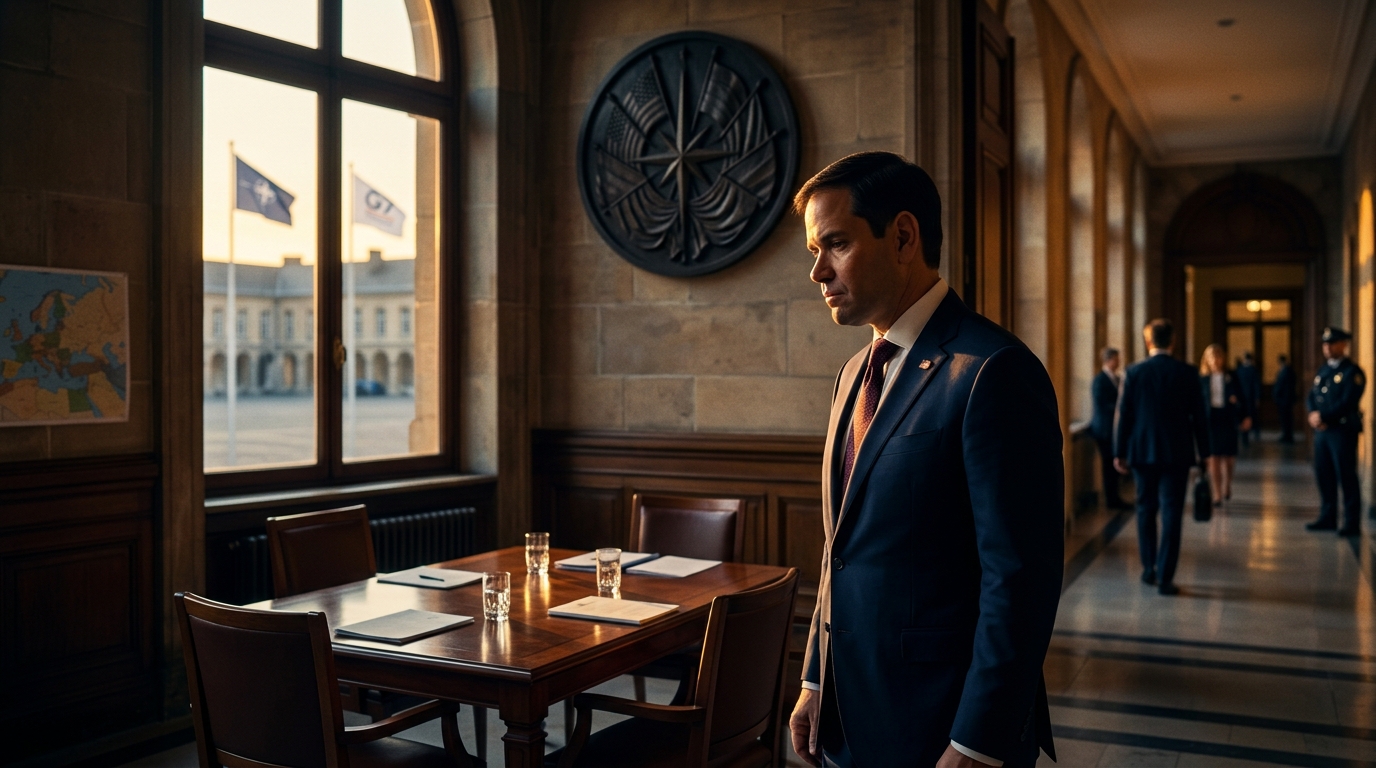
Overview: On 27 March 2026, U.S. Secretary of State Marco Rubio arrived in France for a summit of the G7 foreign ministers. The meeting comes hours after President Donald Trump publicly rebuked NATO members for what he termed a lack of support in the ongoing Iran‑Israel war. The diplomatic gathering therefore carries heightened stakes for trans‑Atlantic cohesion.
Key Developments
- Rubio met his counterparts at a 12th‑century abbey in Vaux‑de‑Cerney, posing for a group photo before bilateral talks.
- He emphasized that the United States is not seeking to “please” other nations but to safeguard American interests.
- Trump’s remarks in a cabinet meeting accused NATO of doing “absolutely nothing” to protect U.S. and Israeli interests in the Strait of Hormuz.
- French Defence Chief Gen. Fabien Mandon expressed surprise at the U.S. decision to intervene without prior consultation.
- Germany’s Foreign Minister Johann Wadephul warned that weakening support for Ukraine could jeopardise Euro‑Atlantic security.
Important Facts
The defence spending commitments of NATO allies have risen, a trend Trump has repeatedly urged. NATO Secretary‑General Mark Rutte reiterated that Iran’s nuclear and missile programmes remain a threat, and that the alliance is working to degrade those capabilities. France, while hosting the summit, has called for a multilateral dialogue to reopen the Strait of Hormuz once hostilities subside.
Exam Relevance
This episode touches upon several GS topics: International Relations – the dynamics of the G7 and NATO; Security Studies – the strategic importance of the Strait of Hormuz and the ripple effects of the Iran‑Israel war on global energy markets; and Defence Economics – the debate over burden‑sharing in collective security arrangements.
Way Forward
For the United States, the immediate task is to convince G7 partners that a coordinated response to the Iran crisis is compatible with their own security interests. Diplomatically, this may involve: (i) offering concrete intelligence and logistical support for securing the Strait of Hormuz; (ii) reaffirming commitment to the Ukraine war to allay European concerns; and (iii) establishing a transparent communication channel to avoid surprises like the one France cited. Simultaneously, NATO must balance its traditional Euro‑Atlantic focus with emerging Middle‑East flashpoints, ensuring that burden‑sharing does not erode alliance cohesion.