Loading page, please wait…
India’s Basmati Rice Cultivation Dispute and the Direct Seeded Rice - UPSC Agriculture Allied Sector
What is India’s Basmati Rice Cultivation Dispute and the Direct Seeded Rice in UPSC Agriculture Allied Sector?
India’s Basmati Rice Cultivation Dispute and the Direct Seeded Rice is a key topic under Agriculture Allied Sector for UPSC Civil Services Examination. Key points include: India's prized Basmati rice varieties, like Pusa-1121 and 1509, are reportedly being cultivated in Pakistan under new names.. This situation raises significant concerns among Indian agricultural scientists, particularly from the Indian Agricultural Research Institute (IARI).. Legal action is being urged to safeguard the interests of Indian farmers and exporters.. Understanding this topic is essential for both UPSC Prelims and Mains preparation.
Why is India’s Basmati Rice Cultivation Dispute and the Direct Seeded Rice important for UPSC exam?
India’s Basmati Rice Cultivation Dispute and the Direct Seeded Rice is a Medium-level topic in UPSC Agriculture Allied Sector. It is tested in both Prelims (factual MCQs) and Mains (analytical answer writing). Previous year UPSC questions have frequently covered aspects of India’s Basmati Rice Cultivation Dispute and the Direct Seeded Rice, making it essential for comprehensive IAS preparation.
How to prepare India’s Basmati Rice Cultivation Dispute and the Direct Seeded Rice for UPSC?
To prepare India’s Basmati Rice Cultivation Dispute and the Direct Seeded Rice for UPSC: (1) Study the comprehensive notes covering all key concepts on Vaidra. (2) Practice previous year questions on this topic. (3) Connect it with current affairs using daily updates. (4) Revise using key takeaways and mind maps available for Agriculture Allied Sector. (5) Write practice answers linking India’s Basmati Rice Cultivation Dispute and the Direct Seeded Rice to related GS Paper topics.
Key takeaways of India’s Basmati Rice Cultivation Dispute and the Direct Seeded Rice for UPSC
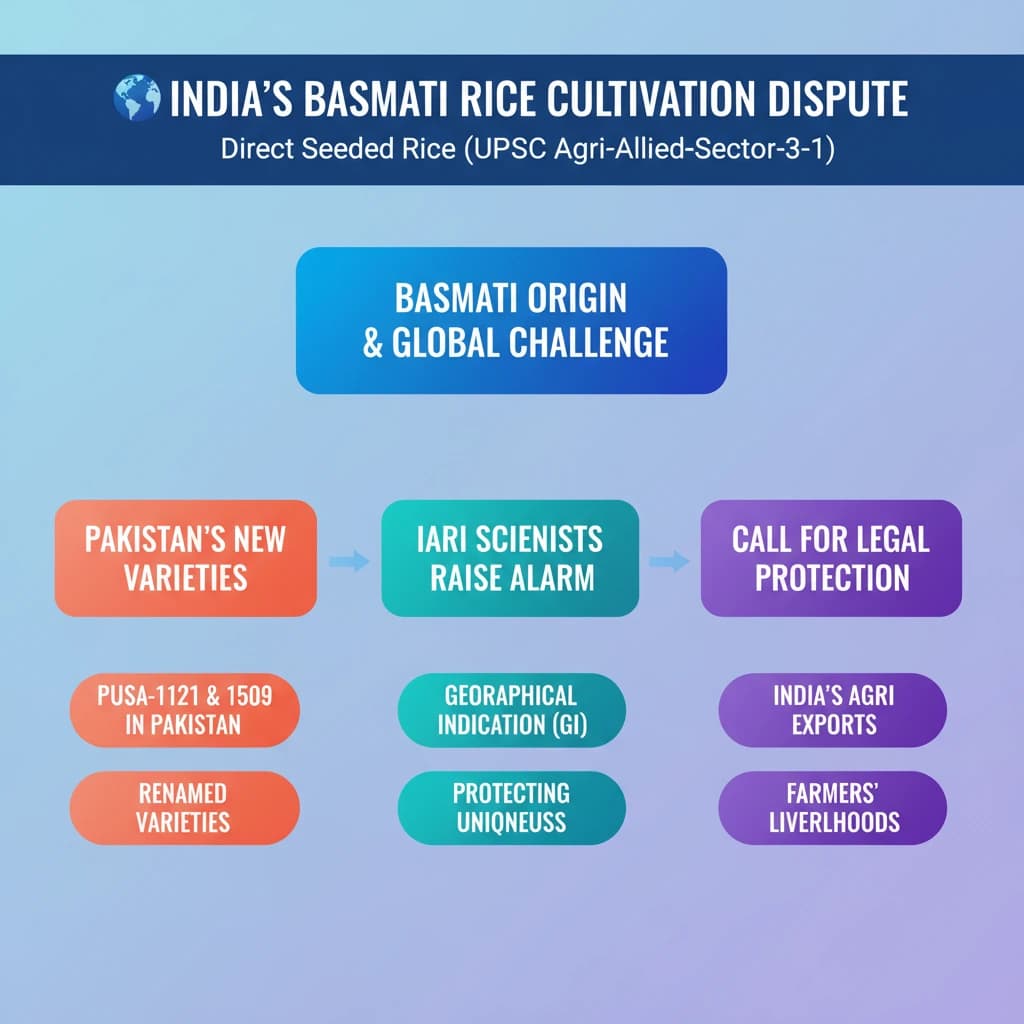
- India's prized Basmati rice varieties, like Pusa-1121 and 1509, are reportedly being cultivated in Pakistan under new names.
- This situation raises significant concerns among Indian agricultural scientists, particularly from the Indian Agricultural Research Institute (IARI).
- Legal action is being urged to safeguard the interests of Indian farmers and exporters.
- The dispute underscores the critical importance of Geographical Indication (GI) tags for protecting unique agricultural products.
- It impacts India's agricultural exports, brand value, and the livelihoods of millions of Basmati farmers.
- Robust Intellectual Property Rights (IPR) protection is essential for safeguarding India's agricultural heritage and economic interests in the global market.
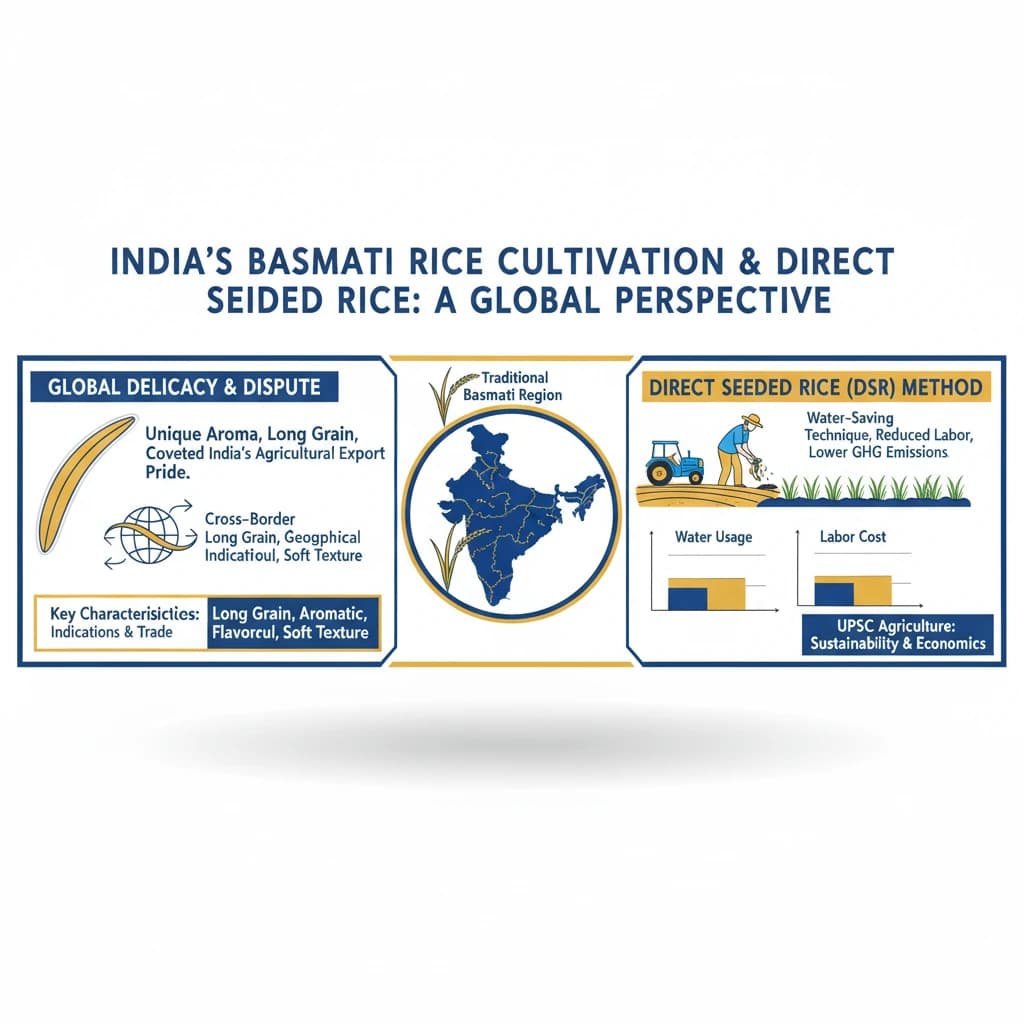
India’s Basmati Rice Cultivation Dispute and the Direct Seeded Rice
Medium⏱️ 8 min read
agriculture allied sector
📖 Introduction
India's Basmati Rice: A Global Delicacy
Basmati rice is a highly valued agricultural product from India, renowned for its unique aroma, long grain, and distinct flavour. It holds significant cultural and economic importance for the nation, particularly in its agricultural export portfolio.
Key Characteristics: Long grain, aromatic, unique flavour, soft texture upon cooking.
Concerns Over Cross-Border Cultivation
Recent reports have highlighted a concerning issue: India's prized basmati rice varieties are reportedly being cultivated in Pakistan. These varieties are then marketed under different names, potentially infringing on India's intellectual property.
This situation has raised significant alarm among agricultural scientists and stakeholders in India, particularly regarding the intellectual property and market rights associated with Basmati.
Specific Basmati Varieties at Risk
The varieties specifically identified in this cross-border cultivation issue include Pusa-1121 Basmati and 1509 Basmati. These are some of India's most popular and commercially successful Basmati strains, developed through extensive research.
Pusa-1121 and 1509 Basmati are high-yielding, aromatic varieties developed in India, contributing significantly to its agricultural exports.
Call for Legal Action and Safeguards
Scientists at the Indian Agricultural Research Institute (IARI) have expressed strong concerns over these developments. They are urging for immediate and decisive legal action to address the unauthorized cultivation and marketing.
The primary objective of such action is to safeguard the interests of Indian farmers and exporters. Protecting the unique identity of Indian Basmati is crucial for maintaining its market position and economic benefits.
This issue highlights the importance of Geographical Indication (GI) tags and international intellectual property rights in agriculture, a critical topic for UPSC GS-III.
💡 Key Takeaways
- •India's prized Basmati rice varieties, like Pusa-1121 and 1509, are reportedly being cultivated in Pakistan under new names.
- •This situation raises significant concerns among Indian agricultural scientists, particularly from the Indian Agricultural Research Institute (IARI).
- •Legal action is being urged to safeguard the interests of Indian farmers and exporters.
- •The dispute underscores the critical importance of Geographical Indication (GI) tags for protecting unique agricultural products.
- •It impacts India's agricultural exports, brand value, and the livelihoods of millions of Basmati farmers.
- •Robust Intellectual Property Rights (IPR) protection is essential for safeguarding India's agricultural heritage and economic interests in the global market.
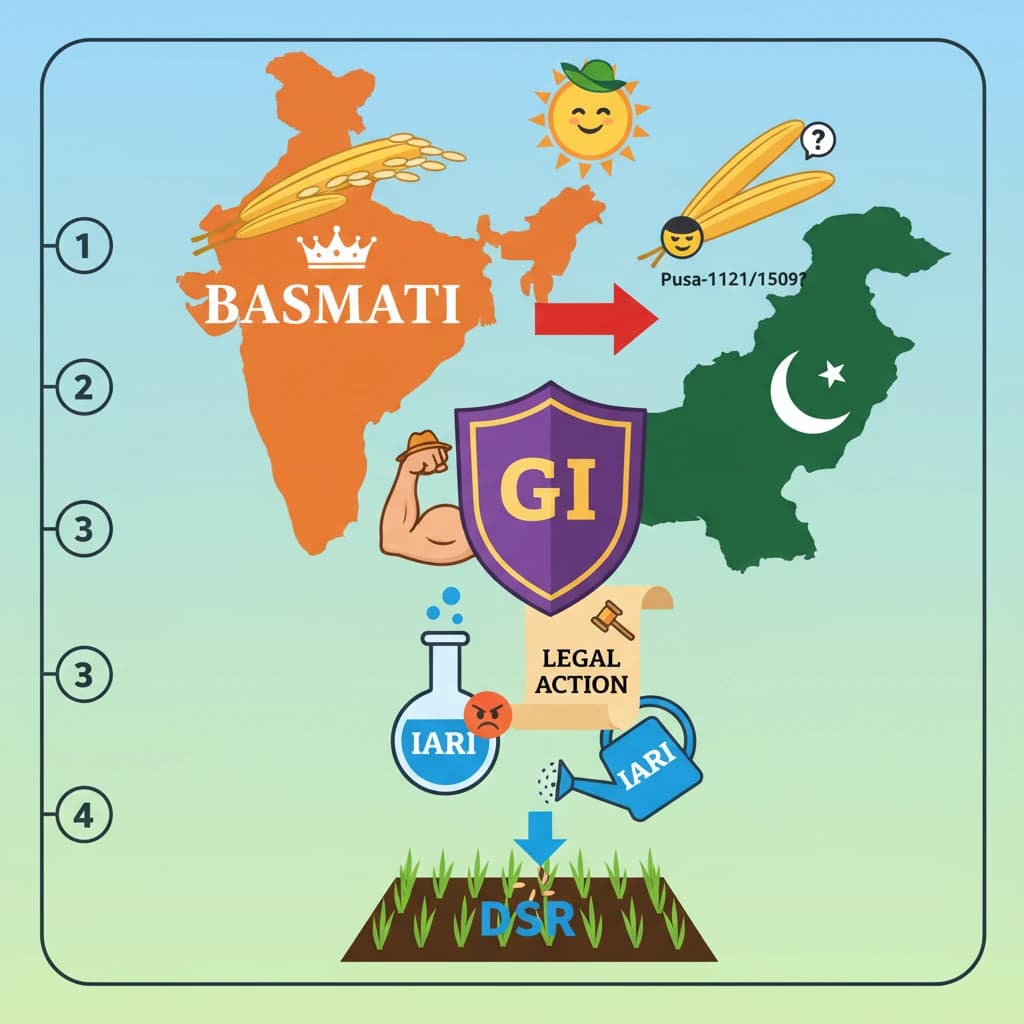
🧠 Memory Techniques
95% Verified Content
📚 Reference Sources
•Reports from Indian Agricultural Research Institute (IARI)
•News articles and reports on India-Pakistan Basmati dispute and GI tags